WHAT IS PINEAPPLE? ANANAS COMOSUS: HEALTH BENEFITS AND USES OF PINEAPPLE: HOW TO MAKE PINA COLADA


PINEAPPLE, ANANAS COMOSUS
The pineapple originated in South America, but spread through the continent and into the West Indies where it was discovered by Columbus and his crew in 1493 on the island of Guadeloupe. One of the crew wrote this description of it: - “…in the shape of a pine cone, twice as big, which fruit is excellent and it can be cut with a knife, like a turnip and it seems to be wholesome.” This description seems one of the best as it does resemble an overgrown pine cone, or a hand grenade.
   Columbus took it back to Spain with him and it was apparently much liked by Queen Isabella, however it could not be cultivated with any high degree of success. Magellan found it in Brazil in 1519 and it soon spread to Asia via the European explorers where it had better survival rates.
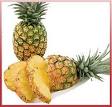
  It got the name ananas from the native Guarani and Tupi tribes that cultivated it. Their name for it, “nana” or “anana” meant “excellent fruit”. The Spanish called it Pina de Indies (Indian pine), so in English it became pineapple. However in Greek, Urdu and French it is called ananas.
  People in the Caribbean valued the fruit highly and would put it outside their houses to welcome guests and this tradition spread to Europe with sea captains. The pineapple became a fashionable motif and can be found in carvings and on gateposts in Europe.
In Malaysia the green core of the pineapple is considered an abortifacient, and this core, along with the stem of the pineapple plant have properties that are beneficial to us. An extract from the stem which contains bromelian has been found to have anti-inflammatory properties, and can lower the risk of thrombosis. It also exhibits anti-cancer qualities. The pineapple is the only edible fruit of the bromeliad plant family, and is actually made up of about 200 fruitlets. The outside peel and central core can be given to cattle so there is not much wastage, although the plant only produces two fruits in its lifetime and the second fruit is smaller than the first. It also takes two years to produce fruit and only flowers for one day. This makes pineapples expensive to produce and on 1st October 2010 The Guardian (a leading British daily newspaper) reported that “Workers in developing nations endure injury, chemicals, low wages and union repression so British consumers can pay less” for their pineapples. This is particularly true in Costa Rica, and the newspaper went on to say that consumers who welcomed recent price cuts in the cost of pineapples on supermarket shelves, did not want those cuts to be because of bad working conditions for those who pick and cultivate pineapples.
Pineapple flower
   One-third of the world’s pineapples come from Hawaii, where Captain James Cook introduced them in 1770. They are now America’s favourite fruit after bananas, although this is probably in the form of fruit juice, and canned pineapples rather than solely the fresh fruit.
   Pineapples contain Vitamin C the B-complex vitamins, Vitamins A, E and K as well as essential amino acids, and minerals, calcium, iron, magnesium, phosphorous, potassium, zinc, copper, manganese and selenium. They are especially high in potassium and vitamin C. They provide the body with powerful antioxidant activity and the proteolitic enzymes in the fruit aid digestion.
Pineapple bush
 They are particularly good in fruit salads with kiwi fruit, strawberries, bananas, cherries, melons, and lychees. They are useful with chicken too and you can make a side salad to go with this by grating a fennel bulb, and adding chopped fresh pineapple and cashew nuts. Below is a recipe for pina colada which has been adopted as Puerto Rica’s national drink.

PINA COLADA
Ingredients
4 parts light rum (either white or light gold)
3 parts unsweetened pineapple juice
2 parts coconut cream

Method
Put all ingredients into a shaker with crushed ice and shake.
Serve with a wedge of pineapple and/or maraschino cherries.
This has Taste and is a Treat.

WHAT IS MONG PHALI? PEANUTS OR GROUNDNUTS: HISTORY AND HEALTH BENEFITS OF PEANUTS: HOW TO ROAST YOUR OWN PEANUTS


PEANUTS, GROUNDNUTS, MONG PHALI, ARACHIA HYPOGAEA
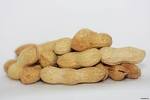
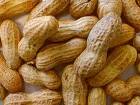
Peanuts are not actually nuts, but legumes (members of the bean and pea family) and actually grow underground, so are not tree nuts like walnuts and almonds. This is why they are called Earthnuts and groundnuts, although these names also apply to a tuber which is also called a pignut from the plant, Conopodium majus. In Urdu they are Mong Phali and in India they are known as China badem. They have their origins in South America and were cultivated in Argentina and Bolivia 4,000 years ago. They are also called Gooper Pea and Monkey Nuts. They were spread from South America by the European explorers in the 15th and 16th centuries and reached India which is still one of the largest producers of peanuts.
   In Britain when you bought them in their shells, children would take them to the cinema and throw the shells from the top tier of seats onto the audience below, so they were eventually banned from at least one cinema in the town I lived in.
    Whenever I see peanuts I am reminded of George Melly singing “The Peanut Man” and although I have searched on the Net for this song and his particular lyrics, it was to little avail, you’ll no doubt understand why when you read what I can remember of them: - “Nuts! Hot Nuts! get them from the peanut man,
    ….get them while you can…..
     …He’s got the hottest nuts in town,
   Buy them from the peanut man.”
   The plant above ground can grow to 18 inches tall and has yellow flowers, and the peanuts are ready to harvest when the leaves have yellowed. Peanuts can then be sold in their shells or unshelled, perhaps roasted or even honey roasted, and whichever way you have your peanuts, including in the form of peanut butter, they are very good for the body and brain. The oil is also good as it can withstand fairly high temperatures without burning and it has oleic acid in it as does olive oil, which is rich in antioxidant properties. Its antioxidant properties are similar to those of pomegranates, and they are more potent than from carrots and beetroot. These properties are boosted when peanuts are roasted. They also contain resveratol, a flavonoid which is present in red grapes and their finished product, red wine. This improves the blood flow to the brain and so reduces the risk of strokes.
   Peanuts are a good source of dietary fibre, protein and carbohydrates in the form of “good” fats, which include Omega-6 and -3 fatty acids. They also contain Vitamin E, and the B-complex vitamins particularly niacin, which when combined can decrease the risk of Alzheimer’s disease. As for minerals, peanuts contain iron, zinc, copper, magnesium, phosphorous and are potassium rich, with traces of selenium too. Nuts seeds (such as pumpkin seeds) help to lower blood pressure and peanuts are no exception.
    Peanuts also contain arginine, an amino acid which can help in cases of congestive heart failure, erectile dysfunction, upper respiratory ailments and type II diabetes. They have been used in some cultures as aphrodisiacs as well as anti-inflammatory agents and decoagulants.
peanut crop
  In the 19th century in the States, after the civil war, George Washington carver thought up 300 ways of using peanuts and advocated growing them instead of cotton as the cotton crops were being destroyed by the boll weevil. While we don’t use them in 300 different ways, they are used as biofuel, (the University of Georgia runs its fleet of buses for 8 hours a day on a 30% mix of peanut oil and diesel) as peanut oil is cheaper then some other oils. They are also used in the manufacturing of soap, cosmetics and lubricants, while the tops of the plants are used as fodder. The shells provide high fibre roughage in animal feed and are used in the manufacture of particle board and fertilizer, so there’s not much wastage from this plant.
  Peanuts can not only help to reduce the risk of heart disease, but can also help prevent cancer (antioxidant activities) and diabetes and may help reduce inflammation.
  At the end of the 19th century a physician in the US came up with peanut butter, although this had been made for centuries by people in other countries. Phineas T. Barnum sold bags of roasted peanuts to circus-goers in 1870 and now peanuts are served with drinks almost everywhere whether raw or roasted.
   Unfortunately many people suffer from peanut allergies, especially in the UK, so if you suffer with asthma or hay fever, you may be allergic to them. Some people also suffer from arachibutyrophobia which is the fear of getting peanuts stuck in the roof of the mouth. However for those with no peanut problem, November is designated as the month for Peanut Butter Lovers in the States.
   If you think that roasted peanuts are not worth the expensive, buy raw peanuts and use this recipe below to make your own roasted peanuts. Unsalted ones are good additions to soups and salads too, and are good in carrot halva, or added to breakfast cereals and muesli. When eaten in small amounts daily, peanuts can reduce the risk of many chronic diseases.
 
ROASTED PEANUTS
Ingredients
Shelled or unshelled peanuts
Freshly grated sea salt

Method
Freeze unshelled peanuts which still have their skin on overnight to make it easy to rub it off with your fingers.
Preunshelled they can be roasted.
Place the sheet in the oven and leave shelled peanuts for 15-20 mins, and unshelled ones for 20-25 mins.
Sprinkle with freshly grated sea salt and leave to cool.
Store them in an air tight container.
These have Taste and are a Treat.

PENNYROYAL- HEALTH BENEFITS OF PENNYROYAL, USES AND HISTORY


PENNYROYAL, MENTHA PULEGIUM
There are many varieties of pennyroyal among them the European ones and the American varieties. In Britain, pennyroyal is an endangered species, although in other parts of the world it is regarded as a pestilential weed. It is native to the Mediterranean regions and Britain is the furthest north it goes. It is rare in Ireland and probably doesn’t exist in Scotland. Apart from in Europe it is also found in North Africa and parts of Asia.
  In Britain, pennyroyal is also called Fleabane, Run-by-the-Ground and Lurk-in-the-Ditch, as it is found in such places. It is called fleabane because it was used in Roman times (according to Pliny) and afterwards (including in royal palaces) to repel fleas. Its Latin name comes from pulix meaning fleas. Pliny also said that it should be hung in bed chambers to purify the air. In Roman times physicians believed that it was better than the rose for health. It is a member of the mint family of which it is the smallest member.
  Pennyroyal has a dubious reputation as an arbortifacient, although you would have to take it in huge quantities to be effective, but it would, in such amounts, cause irreversible damage to the liver and kidneys.
  It had the reputation of being able to purify water and so sailors would take it to sea to make stagnant water potable. It was also used against sea-sickness. It is thought that it was used in witchcraft to make people have double vision. Gerard mentions that it was used to purify water, “If you have Pennyroyal in great quantities and cast it into corrupt water, it helpeth much, neither will it hurt them that drinketh thereof.” He also says that in his day (the 16th century) it was plentiful “on a common at Mile End, near London about the holes and ponds thereof, in sundrie places, from whence poore women bring plenty to sell in London markets.” He also said that “Pennyroyale taken with honey cleanseth the lungs and cleareth the breast from all gross and thick humours.” Indeed it has been thought of as a cure all in the traditional medicine of many countries.  Gerard also advocated using pennyroyal with wood betony and mead for getting rid of “putrid agues.”
   The Welsh physicians of Myddfai combined it with mugwort and southernwood as an emmenogogue and the tisane prepared from pennyroyal has been used by women for centuries to stop menstrual cramps and blockages. To make the tisane take 1 oz of pennyroyal, flowers and leaves and pour a pint of boiling water over them. Leave to steep for 15 mins and then strain. Drink a cupful and the problem should go. This tisane also has a reputation for relieving coughs, colds and bronchitis. The physicians of Myddfai also recommended this remedy for foul breath: “Take the juice of orpine, feverfew, angelica and pennyroyal, mix with honey and administer a spoonful to the patient night and morning fasting and he will recover.” They would have gathered the plant on Whit Sunday or St. John’s Eve as it was believed that it would be most effective when gathered at these times. The Welsh physicians believed that pennyroyal gathered at this time would benefit a “person who has lost consciousness in consequence of an illness.”
   In Italy pennyroyal is thought to protect against the evil eye, and in Sicily it was hung from fig trees to stop the fruit falling off the trees before it was ripe. It was also given to husbands and wives who quarreled a lot, so was the first marriage guidance herb.
  Culpeper says that taken in wine pennyroyal was good for “venomous bites” and “applied to the nostrils with vinegar revives those who faint and swoon. Dried and burnt it strengthens the gums…” He also said that it was good for gout and skin problems and mixed with vinegar could get rid of “foul ulcers” and removed bruises and black eyes. He also said that with salt it was good for the liver. Mixed with sugar-candy (presumably jaggery) he says that it was good for curing whooping cough.
   Throughout the ages pennyroyal has been added to sauces and stews and was known as Pudding Grass, although pudding here means a meat dish, perhaps made of offal rather than a dessert. It was used as an aid for the stomach, to promote sweating in cases of fever, as a stimulant and to cure headaches, when worn around the head. Its leaves yield an essential oil which is more bitter and less used than that of mint or spearmint. This is sometimes used in the cosmetic industry. If you rub the fresh bruised leaves on your skin, it should keep biting insects at bay. The juice of the leaves rubbed onto corns on the toes is said to get rid of them. Pennyroyal water which has been distilled from the leaves is supposed to be good to stop spasms of the muscles including those of the uterus, and good for hysteria and other nervous problems, as well as for coughs and colds and “affections of the joints” according to one of the old herbalists.

WOOD BETONY- HEALTH BENEFITS OF WOOD BETONY, USES AND HISTORY: HOW TO MAKE WOOD BETONY TONIC WINE


WOOD BETONY, STACHYA BETONICA/ STACHYS OFFICINALIS
Wood Betony is native to the British Isles and Europe and is known as Betonica officinalis (LINN), Stachya betonica (BENTH) or Stachys officinalis. It is a woodland plant like the bluebell and is one of the betony plants that grow in Britain. The others are Marsh Stachys or Clown’s Wort (Stachya palustris), the true Woundwort (Stachya germanica) which is perhaps not native to Britain, although it has become naturalized, Field Stachys (Stachya avensis) and Hedge Stachys or Hedge Wort (Stachya sylvatica).Here we deal only with wood betony.
  This plant has been used in medicine for centuries, and was written about by Dioscorides in the first century AD and was mentioned by Pliny the Elder who called it Vettonica. The ancient Greeks praised its healing powers and used it for protection against evil too. In the Middle Ages it was commonly worn around the neck as an amulet, and the Renaissance Humanist, Erasmus, wrote that it protected “those that carried it about them.” He also said that it was good as protection against having “fearful visions.” He may have been quoting Apuleius Platonicus (c.550-625) who wrote the following lines about wood betony;
    “It is good whether for man’s soul or for his body, it shields him against visions and dreams, and the wort (plant) is very wholesome, and thus thou shalt gather it in the month of August without the use of iron; and when thou hast gathered it shake the mold till nought of it cleaves thereon, and then dry it in the shade very thoroughly and with its root altogether reduce it to dust; then use it and take of it when thou needest.”
   However now it is recommended that the flowering plant is gathered in July in the early flowering season after the dew has evaporated from it on a bright day. Having done that you should tie it in bundles of 6 stems with leaves and flowers and tie it in a fan-shape so that the air can penetrate and hang them in an airy hot room or outside until they are dry. If you dry them outside you should bring them in at night so that they don’t get wet because of the dew. After they are dried, pack them loosely in wooden boxes or tins carefully so that they don’t crumble.
   It was seen as a herbal panacea in ancient times and used to cure many illnesses. Apothecaries and herbalists planted it in their herb gardens so they could mix it with herbs such as yarrow (to stop a nosebleed) and coltsfoot for different remedies. It was so popular in Europe that the Italians had an old saying, “Sell your coat and buy betony” while in Spain it was said of a good man, “He has as many virtues as betony.” The chief physician of the Roman Emperor Augustus, Antonius Musa, claimed in a medical treatise that betony could cure 47 diseases which he listed.
   The following is a quotation from the book of the Physicians of Myddfai who were equally familiar with wood betony.
    If the juice “is boiled in white wine and drunk, it will cure the colic and the swelling of the stomach. Pounding it small, expressing the juice and apply it with a feather to the eye of a man will clear and strengthen his sight, and remove specks from his eye. The juice is a good thing to drop into the ears of those who are deaf.”
  They also wrote that the powder of the dried plant when mixed with honey could help get rid of coughs and “benefit many diseases of the lungs.”
  The word betony comes from the Celtic words bew meaning head and ton meaning good. This was one of the main uses for wood betony-curing all head problems be they physical or mental.
   One superstitious belief is that if snakes were put into a circle of betony they would fight to the death (of both). This was said to be because betony had the power to get rid off all evil and of course the snake was the symbol of evil in mediaeval Europe and it was the snake or serpent which gave Eve the apple to eat which led to Adam and Eve being ejected from Paradise and the Garden of Eden.
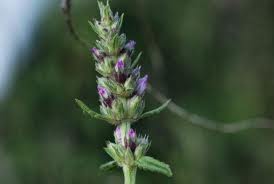
   Wood betony grows to between 1 and 2 feet tall and has purple-red flowers which bloom in the months of July and August. Previously all the plant was used by herbalists, but now the roots are not used. It was used in snuff because it makes you sneeze violently and so clears the nasal passages. It is claimed that the fresh leaves have an intoxicating effect, which is why the tisane is always prepared with the dried leaves and flowers.
   Gerard believed that it protected people from “the danger of epidemical diseases” such as the plague, and “It helpeth those that loathe and cannot digest their food.” He also says that it cures jaundice, epilepsy, gout, palsy, dropsy, as well as coughs, colds and flu and respiratory problems including consumption. He suggested that using it with mead and pennyroyal was “good for putrid agues” and made a good vermifuge for getting rid of internal parasites such as worms. Apart from these remedies he also believed that it was good for “obstructions of the spleen and liver.” The juice from the leaves was good for the bites “of mad dogs” he says and for the relief of toothache. As a wound healer the juice can be applied directly to the skin, or the tisane can be used for this purpose.
  Wood betony has tannins and so astringent qualities making it a good treatment for diarrhoea and also the tisane can be used as a mouthwash and gargle for sore throats. The whole plant contains flavonoids and glycosides which have a hypotensive action (they lower blood pressure) and so can be effective in reducing stress and anxiety, which was clearly recognized by our ancestors.
   The Chinese use one of the betonies, Stachys sieboldii to relieve colds and flu, and in European folk medicine the use of betony as a herbal tonic for the nerves has a long history. Very little modern medical research has been done on wood betony, although one Russian study showed that it increased women’s ability to produce milk when breast-feeding.
   Medical research suggests that wood betony can be helpful for neuralgia especially that caused by medical treatment or therapy, as well as shingles (a variant form of chicken pox). It has been traditionally used to treat urinary tract inflammation and is good for cystitis. The leaves contain a volatile oil and exude this when bruised and it is this which might give the plant its wound healing properties. The whole plant can also be used as a yellow hair dye, and this is especially good for giving grey hair a blonde tint.
  A tisane can be made with 1 or 2 tsps of the dried leaves and flowers and a cup of boiling water. Pour the water over them and leave to steep for 15 mins, then strain and drink. This is good for respiratory ailments, coughs, colds and flu (add a little honey), digestion, and to improve appetite, and if you mix 1 tsp dried wood betony with a tsp of dried chamomile flowers (or 2 tsps fresh) this will stop menstrual cramps. You can take two cups per day of the betony tisane for any of the above-mentioned cures, as well as using it as a gargle and mouthwash. It can also be used to clean wounds and staunch bleeding.
  A few of the fresh leaves can be added to salads, but they have a mildly bitter taste, so should be finely shredded. They help to stimulate the digestive system and boost the functioning of the liver. If you pound the leaves to a pulp they are good to apply to wounds and bruises as a poultice, and can be used as a temporary dressing instead of lint.
   The following recipe is a “nerve tonic” and relieves anxiety, nervous headaches and stress. Older herbalists prescribed it for “hysterics” and other nervous disorders.
 

WOOD BETONY TONIC WINE
Ingredients
1 bottle white wine
50 gr wood betony
25 gr vervain
25 gr hyssop

Method

Combine all the ingredients into a glass bottle and leave to stand in a sunny place such as on a windowsill for two weeks.
Take ¼ cup to relieve nervous headaches, stress etc.
This has Taste and is a Treat(ment).