WHAT IS WOLFBERRY? GOJI BERRY: MEDICINAL BENEFITS AND USES OF WOLFBERRY


WOLFBERRY, GOJI BERRY, LYCIUM BARBARUM
Perhaps this berry is best known as the goji berry, a red berry that has been hailed as one of nature’s superfruits along with the cranberry and pomegranate, among others. The Latin name, Lycium barbarum, means the thorn from Lycia which was an ancient city in what is now the southern Anatolian region of modern Turkey. It gets its name “wolfberry” from the fact that lycos in Greek means wolf (although it is lupus in Latin), so wolfberry is a misnomer. The plant originated in southeastern Europe and Asia, notably in Tibet and China, around the Himalayan region. Whether or not it comes from the Himalayan region or Tibet, it is often sold under the name, Himalayan or Tibetan goji berry.
   It was introduced into Britain by the Duke of Argyll sometime during the 1730s and is known as The Duke of Argyll’s Tea Tree. Now it grows wild in southern counties of England and is sold legally in Britain as it has been eaten for almost 300 years there.
    You usually buy it in the dried form and it is good in a tisane combined with the root bark. It is usually cooked before eating and is a useful addition to sweet rice dishes instead or as well as sultanas. It is rather like a raisin in texture, and has that kind of chewy consistency.
  At the beginning of the 21st century the Himalayan goji berry was hailed as a superfruit and has since been sold as a health food and as a dietary supplement. It contains vitamins A, B2 (riboflavin of the B-complex group), E, minerals including iron, potassium, zinc, phosphorous, calcium and selenium as well as bioflavonoids and carotenoids such as zeaxanthin. It contains more vitamin C than an orange per serving and so helps to strengthen the immune system. It also has the essential amino acids and fatty acids, and the polysaccharides it contains help to maintain normal blood pressure levels. Both beta-carotene and zeaxanthin which help to protect the retina in the eye by absorbing blue light, and this may decrease the risk of macular degeneration, in much the same way as wimberries do.
Wolfberry flower
   The bioflavonoid Betaine calms nervousness, enhances muscular growth and helps the liver function. Physalin is active against all types of leukaemia and this is also in goji or wolfberries. It is also used in the treatment of Hepatitis B. Solavetivane is a powerful anti-fungal and anti-bacterial compound while Beta-Sitoserol is an anti-inflammatory used to treat impotence and prostate enlargement, and it is this combined with the potent antioxidant activities of the berry that has given it the reputation for enhancing the libido and being an aphrodisiac. Cyperone, a sesquiterpene is good for the heart, normalizes blood pressure and may help in the treatment of cervical cancer.
Dried Wolfberry
   It is claimed that the ripe fruit is a tonic, boosts sperm production and benefits the complexion, as well as helping the liver and kidneys to function well. It also demonstrates some anti-cancer activity and improves blood circulation. The Beta-carotene helps to prevent the skin from becoming sun damaged and it has been touted as a great way to keep a young-looking skin and slow the aging process.
   This fruit has been used for 6,000 years in the Indian subcontinent, China and Tibet to protect the liver, improve sexual performance and health, improve vision strengthen the legs and to increase longevity.
   The root bark is used to lower the body’s temperature in fevers, regulate high blood pressure, and lower cholesterol levels. It has the reputation of being good for coughs and colds as well as being used as a diuretic and purgative. A tonic tisane is made from the leaves and is used also to stop genital itching.
Wolfberry plant
    Goji berries are expensive though, but if you live where they grow wild, you could do worse than to go and forage for the berries and then dry them during the autumn months.

LILY OF THE VALLEY: HEALTH BENEFITS AND USES OF LILY OF THE VALLEY


LILY OF THE VALLEY, MAY LILY, CONVALLARIA MAJALIS
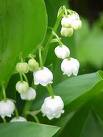
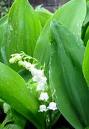
Lily of the valley is known by many names including Jacob’s Ladder, as the bell shaped flowers form a ladder shape at the top of the stem. They normally flower in May, in the UK which is why they are sometimes called May Lilies, although they have been known to flower earlier than this. Some people rather fancifully, call them Fairy Cups, as the delicate flowers could be used by fairies as cups, and some people call them Our Lady’s Tears. Their red berries are poisonous and should not be ingested. Modern medical science also warns about this plant and it should only be used under the direction of a qualified homoeopathist as an overdose can cause cardiac failure.
   Stems grow to a height of between 15 and 30 centimetres and the leaves can be 10 to 25 centimetres long. There are between 5 and 15 flowers on the stem, and these are pollinated by bees and then develop into red berries. It is native to Europe, North Asia and the eastern US.
  The most potent part of the plant is the leaf, but the flower and root are the parts mostly used especially in tisanes, to relieve fevers, and as a diuretic, a sedative and as an emetic. A root ointment has traditionally been used on burns to prevent scarring. It was used in mediaeval times instead of foxglove as it is less likely to cause poisoning, and has similar properties to digitalis found in those flowers. It is safer for the elderly with heart problems than foxglove remedies, and it has been used for cardiac problems for centuries.
   In aromatherapy the essential oil is used to lift depression and create a feeling of well-being; it is also believed to improve the cognitive processes and can, it is claimed, help counter the effects of ageing of the brain. The substance which is similar to digitalis in its effects is convallamarin, and the asparagin in the plant is responsible for its diuretic action. The bioflavonoids in the plant stimulate the arteries, and are good to lower blood pressure.
   In Culpeper’s time lilies of the valley grew on Hampstead Heath, but I doubt they can be found there now. There is a legend that comes from southern England which states that lilies of the valley grew from the blood of St. Leonard who fought a long, hard battle with a dragon in the woods at Horsham, Surrey. Another legend says that the fragrance of the flowers attracts the nightingale which finds its mate in groves and woods where the flowers bloom.
   Lilies of the valley were known to Apuleius in the 4th century AD and a Greek myth states that Apollo found the plant and gave it to the physician Aesculapius. The whole plant is gathered when the flowers are blooming and dried together with the flowers on the stalk. The plant was used for soldiers of the First World War who had come into contact with poisonous gas.
   A decoction of the flowers (½ an ounce boiled for 20 mins in a pint water) has been used for obstructions in the urinary tract and is said to be effective. The British herbalists, such as Gerard and Culpeper believed that the distilled water of the flowers, called Aqua aurea (golden water) was a cure all. Coles, writing in 1657 recommended that the flowers be steeped in new wine for a month and then distilled three times, as the ensuing water was “more precious then gold” especially for apoplexy especially if mixed with six “grains of Pepper and a little Lavender water”; this was supposed to be effective for a month.
   Prior to that in 1560 Dodoens said that this same water “doth strengthen the Memorie and comforteth the Harte.” Gerard had yet another way of making lily of the valley water: “a glasse being filled with the flowers of May Lilies and set in an Ant Hill with the mouth close stopped for a month’s space and then taken out, ye shall find a liquor in the glass which being outwardly applied, helps the gout very much.” This was also used externally for rheumatism and sprains. The bruised root was boiled in wine and used in cases of fever.
  Culpeper of course, had something to say about these flowers, and the last word goes to him.
“It without doubt strengthens the brain and renovates a weak memory. The distilled water dropped into the eyes helps inflammation thereof. The spirit of the flowers distilled in wine, restoreth lost speech. Helps the palsy, is extremely good in the apoplexy, comforteth the heart and vital spirits.”

WHAT IS COMMON BARBERRY? RASOUT: MEDICINAL BENEFITS AND USES OF COMMON BARBERRY


COMMON BARBERRY, EUROPEAN BARBERRY BERBERIS VULGARIS
The common barberry is native to the British Isles, most of Europe and North Africa and temperate Asia, and grows in Pakistan along with Berberis lycicum and has similar properties to it and Berberis aristata. However it has red, not blue black berries, which are oblong and slightly rounded. In Urdu it is called Rasout and Kwarai in Pashto. The Common Barberry grows to a height of about 8 to10 feet, and has a woody stem the colour of ash, the outer covering of which is shaved off and dried, either on trays in the sun outdoors or threaded and strung across a room which is airy and gets direct sunlight.
   It is a sensitive plant, though not in the same way as Tickle Me or Wood Sorrel, its stamens move away from the petals and close to the pistil. When bees try to get their nectar, they trigger the mechanism and the anther strikes the stigma which releases pollen. In the UK it was common to see the Common Barberry in copses and hedges, but farmers didn’t like it because it is sometimes host to the rust fungus, and they believed that it would infect their crops, particularly wheat. It used to be cultivated for its fruit, which has a pleasant, acidic taste, and in the 16th century, Gerard tells is that its leaves were used “to season meat with and instead of salad.” Birds, pigs and horses tend to avoid it because of its acidity, but it’s a bee and butterfly plant. In this respect it is rather like tamarind or imli.
  The fruit was used in sweet dishes and Rouen in France was renowned for its Confiture d’ epine vinette. The Victorian cook, Mrs. Beeton recommends the berries as garnishes “The berries arranged on bunches of nice curled parsley, make an exceedingly pretty garnish for supper dishes particularly for white meats…”
   The roots, when boiled with lye make a yellow dye used in Poland for colouring leather and elsewhere for dying wool. If you chew the stem bark it will turn your saliva yellow, as does turmeric. In fact it has similar medicinal properties to turmeric (haldi). In Italy it is called Holy Thorn as it is believed that it was the Crown of thorns worn by Jesus during his crucifixion. Other trees also have the same thorns on their branches and have been given similar names, for example, the hawthorn.
   It has been used in medicine for at least 2,500 years in all countries where it grows, and the leaves are used to treat jaundice, and in Iran it is valued for its effects on the gallbladder. The berries contain malic acid and vitamin C and so far 22 alkaloids have been identified in these plants which are thought to be of medical importance, but they are still being investigated. So far it has been suggested that it may help with erectile dysfunctions as it has potent antioxidant properties because of the flavonoids it contains, and it is beneficial to the veins and arteries in general.
   You can make a jelly with the fruit using the same quantity of sugar as fruit and as it contains pectin it doesn’t need any to be added. (See recipe for plum jam and when it has cooled a little, strain through muslin or cheesecloth into sterile glass jars.) This aids digestion and helps relieve sore throats, although a gargle made from a syrup made from the berries can be diluted and also used in this way. It contains berbamine, which has positive effects on the cardio-vascular system, and is deemed to be good for arrhythmia, angina pectoris and other heart problems. Berberine is also found in this plant and this is has anti-bacterial properties and may be helpful in boosting the functions of the immune system and could aid digestion and prevent epileptic fits and convulsions. It may also be effective against candida and inflammation in the urinary tract.
  The Common barberry also regulates blood pressure and is used in Pakistan for morning sickness during pregnancy. In traditional medicine it is used on the skin to treat skin diseases such as psoriasis, and it is believed that it can help reduce the effects of aging on the brain. In homeopathy it is sometimes used for gall stones and other gall bladder problems. Like the Indian Barberry and the berberry it is also known to assist the liver and is given in cases of jaundice. The infusion of the leaves is used to relieve bronchial problems including asthma and coughs, and a tincture made from them has been used for snake bites, rheumatism and sciatica.
    In Europe the powdered root bark has traditionally been used to cure dyspepsia and aid digestion, as well as to stop sickness and diarrhoea. It is thought that the daily dose for jaundice and general debility and sickness is ¼ tsp of powdered bark taken 3 or 4 times a day. The tisane from the bark or leaves may be used as an antiseptic, as can the fruit as it has astringent properties.
   It can also be used in the same ways as the Indian Berberry.

MORELLO CHERRIES OR SOUR CHERRIES: MEDICINAL BENEFITS AND USES OF MORELLO CHERRIES: CHERRIES JUBILEE RECIPE


MORELLO CHERRIES, SOUR CHERRIES, PRUNUS CERASUS
There are many varieties of morello cherries or sour cherries and some of the most famous are the English morello cherries. The other variety of sour cherry is the amarelle but these are a paler colour than morellos which are black, with dark red flesh. They have a tart flavour in comparison to the red sweet cherries, Prunus avium (meaning bird’s plums). They are soft, succulent and used in preserves, tarts, Black Forest gateau and kirsch, among other things. It is thought that the word, kirsch comes from the Mesopotamian word “ karshu” where the first cultivated cherries grew in the 8th century BC.  Like the sweet cherry they are members of the rose family and a relation of the plum.
   The name, cerasus, shows the origin of these cherries, which was Cerasus on the black Sea coast in what is now Turkey, and the name has changed to Gireson. Cerasus was famous for its cherries in ancient Greece, but it is believed that the Romans took cherries to Britain from Persia in the first century AD. Legend has it that you can trace the old Roman roads by the wild cherry trees, as soldiers in the Roman legions spat out the cherry stones as they marched.  
   The sour cherry tree is much hardier than the red cherry tree as it can withstand extremes in temperatures and as it flowers later the fruit is less likely to be harmed by frost.
  In the Middle Ages cherries were widely grown in monastery and private gardens and it is only in recent years that the cherry trees have suffered a decline in Britain which now imports the majority of cherries consumed there.
   Cherry juice is extremely beneficial for us and tastes good, unlike beetroot juice which is something of an acquired taste. They have antioxidant and anti-inflammatory properties, and a rich in B-complex vitamins and vitamin C and also contain vitamin A and are rich in the minerals phosphorous and calcium. They also contain iron and if you drink a glass of morello cherry juice every day you will ensure the healthy functioning of the gall bladder and liver. The anthocyans they contain can inhibit the growth of cancerous tumours and can slow cardiovascular disease.
   The poet A.E. Housman (1859-1936) was born in Worcestershire and would have seen many flowering morello cherry trees. He wrote these lines: -
     Loveliest of trees, the cherry now
Morello-Cherry-Flower
     Is hung with bloom along the bough
     And stands about the woodland ride
     Wearing white for Eastertide.”
Cherries were the inspiration for Robert Herrick (1591-1674) the poet who wrote the lines which were set to music in the 19th century.
    “Cherry ripe! Cherry Ripe,
     Cherry ripe I cry,
     Come fools and fair ones, come and buy.”                                                            The cherry was seen as a symbol for the hymen and virginity, so this particular poem has a double meaning which it would seem the staid Victorians had not realized, as the song became very popular - or maybe they weren’t as prudish as we believe. Cherry trees have also been seen as symbols of fertility and at one time there was a superstition that if a woman who had just given birth ate the first cherry from a tree, the tree would yield a very good crop for its owner. In Elizabethan times and later, the stones from cherries were heated and put in bed pans to warm beds. As the tree bark and stems of cherries smell faintly of almonds, the stones would probably also have had this aroma which was left on warm bed sheets.
   Of course Anton Chekhov wrote a play called “The Cherry Orchard” which used the symbolism of the cherry.
   The recipe below was created by the famous chef, Escoffier on the occasion of Queen Victoria’s Jubilee.


CHERRIES JUBILEE
Ingredients
2 lbs morello cherries, pitted
¼ pint morello cherry juice
½ cup sugar
3 tbsps butter
½ cup kirsch or cherry brandy
grated zest of ½ an orange (optional)
grated zest of  1 lemon (optional)

Method
Put the cherries, juice and sugar in a pan over a medium heat and stir until the sugar has dissolved. (3-5mins)
Add the butter and stir until it has melted and is thoroughly mixed into the liquid.
Remove the pan from the heat and add the kirsch then return to a medium heat and bring to the boil.
Put ice cream into bowls and top with the cherry mixture and serve immediately.
This has Taste and is a Treat.