CHEESE TREE ( BUTTONWOOD ) - INFORMATION - POSSIBLE ANTI-CANCER TREATMENT


CHEESE TREE, BUTTONWOOD, GLOCHIDION FERDINANDI VAR. FERDINANDI
 The Cheese tree gets its name from its seed capsules which look like small cheeses-of the miniature kind, with a manufactured red rind. Actually they look more like little pumpkins or squashes. The Cheese tree is native to Australia and New South Wales in particular. It is an evergreen rainforest tree with a spreading crown. It usually grows to around 10 metres tall, although it can reach 30 metres, and live for more than 60 years. It can resprout after bush fires, and flowers at any time of year, with the seed pods ripening between November and February.
  The name Glochidion comes from the Greek glochis meaning protruding point or the barb of an arrow. It got the name Ferdinandi as it was named in honour of Ferdinand Jakob Heinrich von Mueller (1825-96) who was the first government botanist of Victoria. There are around 200 species of Glochidion and these were classed as Euphorbiceae, although they have now been moved to the Phyllanthaceae family, the plants of which typically have seed capsules which explode, ejecting the two flattened seeds in each of the capsules segments. This species is spread through the tropical regions of the world and occur in tropical Asia, the Pacific Islands and Malaysia with a few in tropical Africa and America. They typically have triterpenoid saponins, sesquiterpenoids, glycosides and alkaloids which vary from one plant to another.
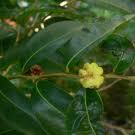
  The Cheese Tree had a surprise for scientists though as they found two new xanthones in it and in the outer bark there is a “new” fungal metabolite Trichodermamide C which seems to have cytotoxicity actions on colorectal carcinomas and human lung carcinoma. The bark is flaky and grey-brown, and the tree is fast-growing, with the cheeses starting off green then turning white-pink, changing to deep red when fully ripe. These are a favourite of birds, including the Australian King Parrot, which cracks open the seeds capsule to get at the seeds inside. Some other birds eat the whole pod. The tree attracts butterflies and other insects including ladybirds which feed on the aphids it hosts.

CALLA LILY ( ARUM LILY ) - SYMBOL OF MAGNIFICENT BEAUTY: USES AND BENEFITS OF CALLA LILY


CALLA LILY, ARUM LILY, EASTER LILY, ZANTEDESCHIA AETHIOPICA
The name lily still stays with this beautiful flower, despite the fact that it is not, in fact a true lily. It was first classified botanically by Linnaeus the Swedish botanist in 1753, as Calla aethiopica in the lily family, but the error was corrected in 1826 by Sprengel who renamed it Zantedeschia and placed it in a genus of its own. It is believed that he named it in honour of the Italian botanist of that name, Giovanni Zantedeschia, who lived during the early 19th century. It was named aethiopica because it was native to southern Africa. It is in the Araceae family of plants. They come in a wide range of colours and include the yellow Calla or Arum lily, a purple-black variety and even the one named the Green Goddess. It is a relative of the Flame Lily, gloriosa superba.
Green Goddess
  As a child I was fascinated by this plant which grew in a neighbour’s garden, but I thought then that it was simply a garden variety of the wild cuckoo pint.
   Its parts are toxic and will cause burning to the mouth, tongue and lips if ingested as it contains calcium oxalic crystals. It can also cause vomiting and can make it difficult to swallow.Young children should be kept away from it, although they are fascinated, as I was, by the flowers. Cats also like to play with it and it is toxic to them too. The only edible part is the rhizome.
  Despite this, the old Physicians of Myddfai found a use for it; to treat burns and scalds; here is their remedy: -
"Put the leaves of the lily, in boiling milk, and apply to the part till it is well."  
  In southern Africa, where it is indigenous and grows wild, the leaves and rhizomes are used in traditional medicine in dressing for sores and wounds, and in oral preparations for a variety of ailments.
   In Afrikaans this plant is called Varkoor which means pig’s ear. It thrives in the humidity of Madagascar, and can bloom all year if it has enough nutrients and water. It likes to live in shallow water or in moist soil, but failing that, needs rich soil and shade. The British Royal Horticultural Society has given it their Award of Garden Merit, which means that they recommend it to gardeners. It has become naturalized in all parts of the world and is considered invasive in Western Australia.
  The Romans believed that this plant was a symbol of lust and sexuality, no doubt due to its phallic stalks and the yellow spadix in the centre of the flower. They used it in the winter solstice and forced its growth indoors so that it would bloom at this time. In contrast, for early Christians the flower was a symbol of purity and chastity, and although it used to be associated with funerals (so in Wales it was considered bad luck to grow it in gardens, which was why I had only seen the one plant) it is now associated with weddings and can frequently be seen in bridal bouquets and in churches etc. It is also associated with the sixth wedding anniversary for some reason (the one before the seven-year-itch) perhaps because the husband may still think of his spouse as a magnificent beauty, which is what it symbolizes in the language of flowers.
  It is also a symbol of rebirth and resurrection, perhaps because in the Northern hemisphere at least it usually blooms around Easter time, and this is also why it is known as the Easter Lily. It was also planted on the graves of young people and children who had died an untimely death.
  This elegant flower is usually put into a single tall stem vase as its simplicity is its beauty. It needs no foliage to set it off. It has been painted by artists throughout history because it really is a magnificent beauty.

SNAKE FRUIT TREE ( SALAK) - INFORMATION AND BENEFITS


THE SNAKE FRUIT TREE, SALAK, SALACCA ZALACCA
The Snake Fruit tree is native to the Indonesian island of Java and Sumatra where it grows wild. It is given this name because its fruit has skin which looks scaly like a snake’s skin. It is a palm tree in the Arecaceae family and is related to the date palm. However it has a shallow root system and although it loves humidity and rain, it is not tolerant of floods. Salak means tree bark, and the dark brown scaly skin of the snake fruit or salak is similar to the colour of bark.
  Snake Fruit is cultivated in Thailand, Malaysia and has been introduced to Queensland, Australia, New Guinea, the Philippines, and Ponope Island in the Caroline Archipelago. It is reported as growing in the pacific Island of Fiji. Now it is grown throughout Indonesia and two of the most famous cultivars are those of Bali (Salak Bali) and Salak Pondah from Java. Salak Pondah is dry and crumbly in texture, while that of Salak Bali is moist and crunchy. They are said to taste like a combination of apple, pineapple and banana. Most of the fruit is consumed in the countries where it grows, as it needs to be eaten within a week of picking to be at its best. A very small fraction of the fruit is exported to Singapore, from whence it may go further afield. It can be found in pickles “asinan salak” as these are called in Indonesia, and candied, known as “manisan salak.” The fruit is also canned and juice is also sold.
   Even where it is cultivated this fruit is not common, and in November 2010 the production of the Salak Pondah was hit when Mount Merapi erupted and volcanic ash destroyed the fruit trees in Yogyakarta province where there are around thirty cultivars of Snake Fruit trees. There is an area of 20 kilometres in diameter around Mount Merapi where crops have bee decimated by the ash from the volcano, and as these trees take three or four years to bear fruit, the farmers are in the region have been hard hit.
   The Snake Fruit trees need to be grown under shade trees and are often interspersed with banana and mango trees. The fruit grows in clusters at the base of the tree and they weigh on average about 90 grams each. The fruit is pointed at each end, and has seeds in it. The seeds of the unripe Salak Pondah fruit are edible, but those of other cultivars are not. The fruit is rich in vitamin C in the form of ascorbic acid, and contains flavonoids and phenolic compounds.  Little research has been done on this tree and its fruit, although what has been done suggests that it has potent antioxidant properties. This is perhaps that the palm is a relatively recent discovery to the world, as it was only found in the 1980s. Unlike tropical fruits like the mangosteen, rambutan and lychee, the snake fruit is not soft and succulent, but on the contrary is generally firm and crisp. Unripe snake fruit is pickled and also used in a salad called rujak.

WATER AVENS ( INDIAN CHOCOLATE) - AN ANCIENT HERB: HEALTH BENEFITS AND USES OF WATER AVENS HERB


WATER AVENS, INDIAN CHOCOLATE, GEUM RIVALE
Water Avens is native to northern Europe, including the UK, Siberia and North America. It’s a member of the rose family of plants and is also known as Indian Chocolate in the States as the Native Americans used to make a chocolate type drink out of it, which was adopted by colonists as a substitute for chocolate. They also used the powdered root to treat malaria and the colonists also adopted this use, mixing it with either water or brandy. The roots were also used to cure a sore throat, giving rise to another of its names, Throat Root. This was the Physicians of Myddfai’s remedy for a sore throat:

  “For hoarseness. Take the water avens, and St. John's wort, boil in pure milk, mixing butter therewith when boiling. Boil a portion thereof briskly every morning and drink.”

 You can make a cold infusion of this by soaking the powdered root in cold water for 24 hours, and drinking ½ a cupful. For a tisane, take 1 tsp of the chopped root and pour a cup of boiling water over it. Let it steep for 30 minutes and take half a cup at night, or a tablespoon 3 times a day.  An infusion of the whole plant can be made by chopping it and pouring boiling water over it, and then allowing it to steep for 30 minutes. This is said to be good for respiratory complaints and to stop feelings of nausea. However you should not take more than ½ a cupful at a time, as it may have some bad side effects.
   In the past water avens was used to treat diarrhoea, and this probably worked as it has tannins which have astringent properties. It was also used during fevers and given for intestinal problems.
   The physicians of Myddfai used it in remedies for patients recovering from the worst effects of pneumonia,
 
  “Afterwards let a medicine be prepared, by digesting the following herbs in wheat ale or red wine: madder, sharp dock, anise, agrimony, daisy, round birthwort, meadow sweet, yellow goat's beard, heath, water avens, woodruff, crake berry, the corn cockle, caraway, and such other herbs as will seem good to the physician. Thus is the blessed confection prepared.”

  They also used it to cure profuse menstruation when it was used with the herb “stinking goose foot”; the physicians did not use a decaying goose’s foot. This was their remedy:
 “A woman who is subject to profuse menstruation, should take the reddish bastard balm, small burdock, orpine, stinking goose foot, pimpernel, water avens, with the ashes of a hart's horns, that has been killed with his antlers on, boiling them, as well as possible in red wine, straining the liquor carefully, and drinking it daily, till it is finished, abstaining (the while) from stimulating food. Being restrained by the above means, the blood will be habitually diverted to the thighs and ankles.”

Water avens and Seeds
   The seeds of the plant are like burrs and stick on the fur or wool of passing animals, and are thus dispersed. They prefer to live in moist places, and inhabit woodland, ditches and canal banks. The avens and water avens have much the same properties, although in 2002 a new compound was found in the water avens. The Latin name Geum means giving off a fragrance and this is thought to refer to the smell of the freshly dug up root which is like cloves. Geum urbanum is the avens, and there are other varieties too. Water avens has been found to have antimicrobial and antifungal properties in vitro, but more research is needed into its properties. It also contains Eugenol in its volatile oil and gein or humin is one of its phenolic glycosides. Eugenol is also found in cloves, allspice and bay oil.
 Water avens is said to have been used against the plague in the Middle Ages, and it is also believed to be put into casks of Augsburg Ale to give it its distinctive flavour.
.