SUGAR PALM AND TODDY SEEDS NUTRITIOUS AND HEALTHY: HOW TO MAKE COOLING TODDY PALM SEEDS AND COCONUT WATER DRINK


SUGAR PALM, ASIAN PALMYRA PALM, BORASSUS FLABELLIFER
This fan palm is notable for the fact that its sap is used to produce gur (jaggery) but what is little known outside its natural habitat, South and South-East Asia, is that its fruit when immature, has jelly-like seed kernels inside it, called toddy seeds, considered a delicacy in India, and sold in markets in early summer for a limited period only. You can find these in cans in Asian stores, but they are usually canned in sugar syrup which makes them too sweet. When fresh they are moderately sweet and are a little crunchy, so are sliced into thin strips or chopped into small pieces and then used to make cooling drinks or in desserts with fruits such as papaya, pineapple and mangoes with vanilla ice cream.
   The fruits themselves resemble coconuts, which is not surprising as the trees are in the same botanical family of Arecaceae along with the date palm. The Borassus genus has seven known members, which are native to Asia, Africa (including the island of Madagascar) and New Guinea.
  In India the sugary sap from the tree is called toddy, as is the liquid that can be sucked from the fruit through the wiry fibres. These white fibres are either coated with white or orange pulp and inside there are the toddy seeds. When the fruit is young the toddy seeds are hollow, translucent and soft. They have a jelly-like consistency and are translucent. They are extracted from the fruit by roasting then breaking open the fruit, and peeling the pale brown skin from them.
  In drinks, with coconut water, like in the recipe below they rival sattu, gond katira (Tragacanth gum) and tukh malanga (basil seeds) as coolants for the body in the heat of a South Asian summer. The fruit contains B-complex vitamins, vitamin C in the form of ascorbic acid and vitamin A, plus the minerals zinc, iron, potassium, calcium and phosphorous. A recent study (2011) has concluded that this fruit if grown on a larger commercial scale could help solve the world’s malnutrition problem.
  The whole tree has positive benefits for us as another recent study has shown that some of the traditional uses of parts of this tree in medicine have some basis. It could have anti-diabetic properties; it has antioxidant, and anti-inflammatory ones. The male flowers have anti-inflammatory properties, and contain dioscin and steroid saponins and studies are underway to discover what other properties and constituents different parts of Borassus flabellifer have.
  In traditional medicine practices, the young plant is used to stop vomiting and nausea, for dysentery and gonorrhoea, while the young roots are used to get rid of internal worms and as a diuretic. A decoction of the roots is said to be god for some respiratory diseases. When mixed with black salt the decoction of bark is used as a mouth wash. Even the sap from the flower stalk is used as a tonic, diuretic, stimulant, laxative and expectorant. Also sugar from this sap is supposed to be an antidote to poisoning and used for liver problems. The fresh toddy is heated to fermentation point and bandaged onto ulcers too, while the pulp from the mature fruit is used on the skin for dermatitis. Different parts of the tree are used for spleen and liver enlargement. 
  It has uses outside of the medicinal field too, as the fronds can be used for thatching and mats. Parts of the tree are used to make jewellery, and baskets are woven with it. Fans, hats and parasols are made with it too, and of course if you require a temporary shelter, then the palm fronds can be utilized for this purpose too. In ancient India a kind of papyrus was made from the tree for the sacred writings, so it has a special place in history and religion. The tree is reputed to have 800 uses, both medical and more practical ones, as the timber is strong too and can be used in construction. The sugary sap or “toddy” can be fermented to make arrach an alcoholic beverage.
  So this tree caters to a person’s physical, spiritual and recreational needs in one way or another.

TODDY PALM SEEDS AND COCONUT WATER DRINK
Ingredients
4 young seeds cut into small pieces
2 cups fresh coconut water
½ cup crushed ice
sugar to taste if necessary
4 mint leaves, shredded  
mint sprigs to garnish

Method
Blend all the ingredients together and garnish with the sprigs of mint.
This has Taste and is a cooling Treat.

BEECH TREE - SQUIRREL'S FAVOURITE TREE: HISTORY, USES AND HEALTH BENEFITS OF BEECH TREE


COMMON OR EUROPEAN BEECH TREE, FAGUS SYLVATICA
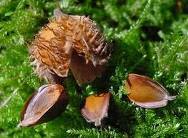
The beech tree is a common sight in southern England and parts of South Wales. The name comes from the Old English Boc through to the Anglo-Saxon Boece and has left its mark on place names. There is the famous Burnham Beeches, near Slough, just outside London and Buckholt in Hampshire, and Buckhurst in Essex, both meaning ‘beech wood’ as well as Bockhampton in Berkshire which means ‘settlement where beech trees grow.’ The beech tree is a member of the Fagaceae family along with the oak trees, and sweet chestnut tree (Castanea sativa). “Fagos” is the Greek word which means to eat, and the trees are so-called because they bear edible nuts. In the case of the beech, these are known as beech masts, probably referring to the triangular shape of the two nuts that are contained in a prickly outer casing. The word sylvatica comes from the Latin for wood, sylvis. It is a distant relative of the witch hazel as they are part of the wider family of Hamamelidadae.
Copper beech
  The other beech tree that can be found in the British Isles is the Copper beech (Fagus sylvatica var. purpurea) which is a spectacular tree with purple-copper leaves. These can be dried and preserved with glycerine to make attractive decorations.
  The nuts from the tree are bitter tasting, but I used to enjoy looking for them when I went for walks up the mountain with my grandfather, who would open the cases for me. We would often see squirrels in the tree, and badgers and small rodents would feed on then nuts when they fell. Apparently they are toxic and you shouldn’t eat too many of them.
  In times of scarcity the nuts can be ground to powder and used with flour to make bread etc. They can also be roasted and ground as a coffee substitute. It is said that the oil extracted from the nuts can be used to stimulate hair growth too.
  The tender young shoots and leaves may also be eaten raw in a mixed salad, so the tree provides ‘famine food’ for humans and in autumn, food for animals and birds. In that season its leaves are golden and are a wonderful sight with the sun streaming through them.
  The branches can produce a creosote or tar through a dry distillation process, which is a stimulant, antiseptic and expectorant, which can be used also for skin diseases.  It is said that the pure creosote brings fast relief from toothache, but it tastes vile.
 The leaves may be boiled and made into a hot poultice for headaches, while the buds of the beech tree are said to help the kidneys function well as well as having diuretic properties.
  It has been found that there are lignans in the bark of the tree, which have powerful antioxidant properties. These are found in flax seeds, pumpkin seeds and broccoli among other vegetables. It also contains suberin which is a fatty, waxy substance which gases and water cannot permeate, found in cork.
Beech in autumn
  Pollen from the catkins (flowers) of this tree has been found in fossils from the Pleistocene period, so like the yew it is a prehistoric tree. It has male and female flowers on the same tree, like the hazel.
   This tree can grow to heights of 40 metres and is a shade tree, it lets little light through to the forest floor, and beech woods are very dark places. Beeches grow along with oaks and hazel trees in ancient woodlands in Britain. They can live for at least 300 years, but are babies in comparison to the ancient yews and Jurupa oak in California.

RAMBUTAN - EXOTIC FRUIT: HEALTH BENEFITS AND USES OF RAMBUTAN: EXOTIC FRUIT SALAD RECIPE


RAMBUTAN, NEPHELIUM LAPPACEAE
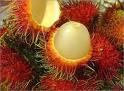
Rambutans look and taste like large juicy lychees, although they come in a hairy or spiny outer case, which is how they got their name; from a Malay word, rambut which means hair. The tree is a member of the Sapindaceae of which reetha, or the soapnut tree (Sapindus mukorossi) is a member. Synonyms for the rambutan tree are Euphoria nephelium DC and Dimocarpus crinita Lour.
  It is a large evergreen tree that can reach heights of between 15 – 25 metres (50 to 80 feet).It bears fruits every alternate year and has long leaves (10-30 cm) which consist of 3-11 leaflets. It is a native of South East Asia where it is now cultivated, but the fruits are rarely exported. It is also cultivated in Ecuador, Colombia, Honduras, Costa Rica, Trinidad and Cuba as well as in Australia. 
    They like humidity and a well-distributed rainfall, which is why, I suppose they have the name Nephelium. In Greek mythology, Nefeli or Nephele was a nymph married to Athamantia, lord of Boetia, which was the central part of the Greek mainland, and she had two children, Frixus and Ellie. Alternatively she was shaped from clouds by Zeus into the form of his wife, the goddess Hera. She had complained to Zeus that King Ixion had attempted to rape her, and to test the truth of her story Zeus made the cloud woman, Nephele, and sent her to the king, who raped her. She conceived and gave birth to the Centauri, the tribe of centaurs, during a rain storm on Mount Pelion. Either way, Nephele has the association with rain and clouds.
  The rambutan was introduced into the Philippines in 1912 from Indonesia and again introduced in the 1930s and then more plants were exported from Malaysia. They were introduced into the US too, but are not grown there.
  Normally people eat the fruit raw, but they can be stewed and made into jams too. They are also used in traditional medicine, for a number of ailments. A decoction can be made from the bark of the tree and used to get rid of thrush or candida. Internal worms can be removed with a decoction made from the roots it is said. The leaves are made into a poultice and applied to the forehead, to relieve headaches, and a decoction of the dried skin, which contains tannins, is used for dysentery and diarrhoea. The seeds are said to be toxic and so should not be eaten raw, although they are OK roasted and are used in the treatment of diabetes. The leaves can be dried and made into a paste with a little water and this can be used on the scalp and hair to condition it. The dried skin is also used for fevers and is sold in markets in Malaysia.
  The fruit may help in a weight loss diet and may also help to lower blood pressure. Eating the fruit is also supposed to help you have softer skin and to improve its health.
  The young shoots from the tree can be used to produce a green dye on silk which has already been dyed yellow with turmeric (haldi), while the fruit produces a black dye for silk. The seed oil, which looks like cacao butter, can be used to make candles and soap.
  Rambutans are high in vitamin C and eating ten of them will give you twice as much of his as is recommended for your daily diet. It also contains niacin B1 and traces of the vitamin A. It also contains the minerals, iron, phosphorous and calcium.


EXOTIC FRUIT SALAD
Ingredients
10 rambutans, skin and stone removed
2 kiwi fruit, peeled
1 small ripe pineapple,
250 gr strawberries, hulled
1 bunch black grapes,
orange liqueur

Method
Slice the pineapple at 2 inches from the top and use a sharp knife to remove the flesh. Keep the shell to put the fruit in. Chop the pineapple into bite sized chunks.
Slice the kiwi fruit.
Put the fruit (not the grapes) into a bowl and pour orange liqueur over them- don’t overdo it!
Leave the bowl, covered in the fridge tossing the fruit in the liqueur every so often to make sure it is coated.
Put the fruit in the pineapple shell and serve.
This has Taste and is a Treat.

WHAT IS BAIKAN OR DHARAIK? CHINABERRY TREE - CULTURAL AND MEDICINAL SIGNIFICANCE


CHINABERRY TREE, BAIKAN, DHARAIK, MELIA AZEDARACH
This tree is native to northern India, Pakistan, Myanmar and northern Australia. It was introduced into the US in the latter half of the 18th century as an ornamental and is now considered invasive in some states. Like the English yew tree and the aak and datura plants it is poisonous and should be treated with extreme care. 
It is a sacred tree in Iran, Malaysia, India and Pakistan, and is revered like the Neem tree. The Baikan is a fast-growing shade tree, which doesn’t usually last for many more than twenty years.
  Its timber can be used to make small items of furniture, and beams, but it rarely is, perhaps because it is considered to be sacred, rather like its “sister” the neem tree (Azadirachta indica). It grows extensively in Pakistan and India and is used by local people for its shade. To sit and gossip under, like the bohar or banyan tree, although this fast-growing tree does not reach such great heights or girths. Its leaves resemble those of the ash tree, but this chinaberry tree is a member of the mahogany family.
  It has cherry-like green fruits which wrinkle and turn yellow when they mature, and as the leaves fall they are clearly seen, the hanging drupes, await small boys who play marbles with them and then pelt each other with them if an argument ensues. These fruits are called tarkona in Punjabi, while the tree is called dharaik. It is bakain in Urdu. In English it is known as the Ceylon Cedar, the Persian Lilac tree, Pride of India and the Bead tree.
  It got the name bead tree, because when the pulp is boiled away from the 5 seeds it hides, the seeds have round holes in their middles, which are just right to make necklaces, prayer beads (tespih) bangles and earrings.
  Even though the tree’s parts are poisonous medical preparations are prepared by the traditional healers, or hakims, who know exactly what they are doing. The leaves and flowers are used to relieve nervous headaches, applied in a poultice, while the leaves, bark and fruit are natural insect repellants. The oil extracted from the seeds is used for rheumatism, and extract of the bark is given for asthma. A decoction of the leaves is used to treat skin problems such as eczema, acne and ulcers as they have antiseptic qualities.
  The berries produce a highly inflammable gas which gives a clear light, and the roots produce oil which can also be used for lighting. The hakims use the oil to promote hair growth and it is applied to bald spots.
  Medical research has proved it to have antiviral properties, and to be good at ridding the body of tapeworms. The antiviral properties come from the meliacine extracted from the leaves. Extracts from the tree have also shown that it can be used as an alternative to pharmaceutical medication for the HSV-2 genital infection. It may even have anti-cancer properties, but this is far from conclusive as yet.
  Despite the poisonous nature of this tree, it has health benefits for us, but it should nonetheless be treated with due care and respect.