ROCK SAMPHIRE - ONCE HIGHLY PRIZED FOOD:HEALTH BENEFITS AND HOW TO COOK ROCK SAMPHIRE


ROCK SAMPHIRE, CRITHMUM MARITIMUM
Rock samphire is the only plant in its genus, Crithmum, just as the Wood Apple is in its. However, rock samphire belongs to the Umbelliferae or Apiceae family of plants which includes fennel, carrots and lovage. It is native to coastal Europe including the British Isles and southern parts of Ireland as well as the Mediterranean and the Black Sea coasts.
  The Celts of France, Wales and Cornwall ate this plant and it was popular in 16th century Britain as a pickle mainly. In the 19th century it was the victim of over-harvesting and so fell out of use in the UK. As its name suggests it grows in rocky places where it can be touched by the salty sea spray and it is now making a comeback both in terms of its abundance and popularity. In Britain it is a protected species so you are not actually supposed to harvest it from the wild.
  In the past it was harvested in the Isle of Wight off the south coast of Britain and transported to London to be sold in the street markets in casks of salt water. The street cry for this herb was “Crest Marine.” It is mentioned in Samuel Pepys diary and Shakespeare clearly saw it being harvested on his journey to Dover, where one of the famous White Cliffs in the region is named after him: Shakespeare Cliff. At the time a rope was tied to a child’s ankles and he was dangled over the cliff to pick the rock samphire that grew in crevices and clefts in the rocks. Shakespeare gives Edgar in “King Lear” (Act IV scene VI) these lines: -
  “There is a cliff whose high and bending head looks fearfully in the confined
      deep.......The crows and choughs that wing the midway air scarce so gross as beetles;
      halfway down hangs one that gathers samphire, dreadful trade!”  
  Today samphire grows again near the White Cliffs of Dover on reclaimed land, which was formed after the building of the Channel Tunnel, it is aptly called Samphire Hoe (a Hoe is a promontory, or piece of land that juts out into the sea).
  The seed pods which can be found from August to October can be pickled and used as a substitute for capers. Rock samphire flowers from June to August, but the young leaves are best for cooking and should be gathered in May. These can be sprinkled with salt, after they have been removed from the stems, boiled and then put in a jar and covered with spices and vinegar. They are best cooked simply as you would asparagus as in the recipe below.
Seed pods
   William Coles (1626-1662) writes that “there is such great plenty [of rock samphire] that it is gathered (yet not without danger) for some have fallen down and broken their necks…” He goes on to say that rock samphire is good for digestion and the “breaking of the stone and voiding of Gravell in the Reines [kidneys] and Bladder.” John Gerard writing in the 16th century and Coles’ contemporary Nicolas Culpeper agree with this use of rock samphire. However Culpeper writes (50 years after Gerard) that it had gone out of fashion in his day and deplores this, describing it as “very pleasant to taste and stomach.”
  It got the name samphire from a corruption of Saint Pierre (French), the patron saint of fishermen (Saint Peter) and this is reflected in its Italian name, Herba di San Pietro (Herb of Saint Peter) or Sanpetra. It is also called Sea Fennel (Meerfenchal in German), Sea asparagus, Sea bean (It resembles a green bean when cooked) and Sea pickle.
  It reduces flatulence, purifies the blood and removes toxins from the body. In fact rock samphire has similar properties to karella and has a similar, but not quite as strong, bitter flavour. It is currently thought that it may be good for a weight loss diet and obesity, just as chong (Caralluma fimbriata) is and the taste of rock samphire is a little reminiscent of this plant too.
  This simple recipe is very good but if you wish you can serve it with melted butter instead of olive oil. It goes well with meat and fish, especially sea bream and bass.

BOILED ROCK SAMPHIRE
Ingredients
½ kilo rock samphire use leaves only
olive oil
lemon juice
freshly ground black pepper

Method
Clean the samphire, and strip the leaves from the stems. Discard any flowers. There is no need to add salt.
Bring a pan of water to the boil, throw in the samphire and cook for about 7 minutes at simmering point.
Drain and serve with a dressing of olive oil and lemon juice and black pepper.
This has Taste and is a Treat.

BLUEBERRIES - TASTY AND GOOD FOR HEALTH: INDIVIDUAL BLUEBERRY-CINNAMON CHEESECAKES RECIPE


BLUEBERRIES, VACCINIUM GENUS
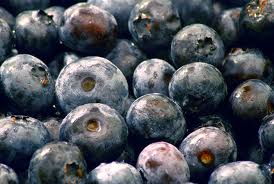
Blueberries are in the same genus of plants as the British bilberry (also known as whinberry and wimberry) and the cranberry, both of which have amazing health benefits. The blueberry, like all black fruit, blackberries, black grapes and blackcurrants among them, contain anthocyanins which give these berries their blue-black colour.
  There are three basic types of blueberry, all native to the North American continent, mainly distributed in the eastern states.
There is the High-Bush blueberry, Vaccinium corymbosum L., which has astringent qualities so is good for diarrhoea and other digestive disorders, and may also be used for respiratory diseases such as bronchitis and asthma. The Low Sweet Blueberry V. angustiflorum - Aiton, is used in traditional medicine to hasten uterine contractions during childbirth and as a blood tonic and purifier. The third variety is V. constablael – A. Gray which is native to the eastern parts of North America.
   Blueberries have a high vitamin C content and also contain some of the B-complex vitamins, notably B1, B2, B3, B5 and B6. Vitamins E and A are also present and these protects the retina in the eye from damage by oxygen and sunlight. As for minerals these berries contain calcium, copper, iron, magnesium, manganese, phosphorous, potassium, selenium, sodium and zinc. Omega-3 and -6 fatty acids are also present as are 18 amino acids, and the flavonoids kaempferol, quercetin along with others. Apart from these other phytonutrients are also present such as resveratol.
  In two separate studies on the elderly, with the average age of 76, drinking between 2 and 2 ½ cups of blueberry juice a day increased memory and cognitive powers. It is believed that this is because of the antioxidant properties of blueberries, although Dr. Jeremy Spencer, a molecular nutritionist at the University of Reading UK, believes that the flavonoid rich blueberries and other foods such as chocolate, spinach and some other fruit juices can increase the blood flow to the brain and can restructure it so warding off the loss of memory associated with Alzheimer’s disease.
  Blueberries can help prevent cardio-vascular disease because they lower bad cholesterol but increase the good variety and they can also help to regulate blood sugar levels, making them good for people suffering from Type-2 diabetes. They can also help to regulate blood pressure and maintain normal blood pressure.
  Just as bilberries do, they can help prevent macular degeneration, an eye disease which affects many people as they grow older, and can help with night vision. In fact bilberries do much the same as blueberries and the reason they have become so popular in Britain is because of the health news which hails them as a superfood. In fact in 2010 they overtook sales of one of Britain’s favourite fruits, the red raspberry, and in the US they are the second most popular berry after the ubiquitous strawberry.
  It should perhaps be pointed out that any food which is hailed as a superfood has to be eaten in a well-balanced healthy, nutritious diet to have real health benefits.
 Eating a lot of one fruit or vegetable but still eating a lot of unhealthy trans-fats and fast food will not have any lasting health benefits.
  You can use the recipe below for bilberries too and the bilberry recipe for blueberries.


INDIVIDUAL BLUEBERRY – CINNAMON CHEESECAKES
Ingredients
150 gr blueberries
1 tbsp caster sugar
1 tsp freshly ground cinnamon
6 digestive biscuits, crumbled
25 gr melted butter
250 gr thick natural yoghurt
2 tbsps honey
1 lemon, zest removed and juiced

Method
Cook the blueberries with the caster sugar and cinnamon for 2-3 minutes. You can add more sugar if you have a sweet tooth.
Combine the crumbled biscuits and melted butter and press this crumble mixture into the bottom of 4 glasses.
Mix the natural yoghurt (Greek yoghurt is good) with the honey and lemon zest and juice. Combine well, blend in a food processor if you have one.
Now put a layer of the yoghurt mixture on top of the biscuits, then a layer of blueberries and repeat until all are used.
This has Taste and is a Treat.

MEETHAY FRUIT - TYPE OF PERSIAN LIME: HEALTH BENEFITS AND HOW TO USE MEETHAY FRUIT


MEETHAY, PERSIAN LIME VARIETY, CITRUS LATIFOLIA
In Urdu this fruit is called meethay, but this is a misnomer as meethay means sweet and this citrus fruit is far from being that. The nearest I could get to an English name for this is Persian Lime of which it might be a variant that is commonly grown in Pakistan and the rest of the subcontinent. It is ripe in monsoon season, which is now, and is used as a medicine or at least a health tonic, rather than for eating for pleasure.
  It looks like an under-ripe orange as it has a thin green skin, and segments like an orange or other citrus fruit, but the juice is pale orange while the flesh might be yellow-orange tinged with green. The traditional medicine practitioners or hakims as they are called recommend that you have as much of this fruit as you can when it is in season so that you will be healthy for the rest of the year. It is good to detoxify the whole system, and is said to have a quinine-like effect so that if you eat this you are protected from malaria, just as you would be if you took quinine.
  It is said to have antibiotic qualities and to protect against cholera and to be useful for all fevers. It is rich in vitamin C and the B-complex vitamin B6, and the minerals potassium and iron, and also contains many other health-promoting nutrients. It will help stave off colds and flu and generally boosts the immune system. Its astringency means that it is a good remedy for diarrhoea and dysentery.
  It also contains flavonoids with potent antioxidant properties which may inhibit the growth of cancerous cells in the body, by combating the free radicals which damage healthy cells.
  It doesn’t seem to be the exact same thing as a Tahiti lime which is used as a synonym for a Persian lime in the US as this fruit has seeds. It is used in Ayurvedic medicine for all the above-mentioned ailments and also used to stimulate the secretion of gastric juices in the digestive tract, and to help if you have been exposed to the sun for too long. It also has antiseptic qualities.
  When you cut this fruit you have to eat or drink the juice quickly, so, for example only one fruit is cut into quarters and shared at a time, then it is rubbed with salt and eaten as prolonged exposure to the air makes it even sourer than it already is naturally. When one meethay is finished you cut another and share it. When you use the juice, instead of cutting all the fruit at one time and then juicing it, the traditional way is to cut one fruit at a time and extract the juice and make enough for one glass, then it is drunk with salt. After that you make another glass of juice and so on.
  It tastes rather like an especially tart grapefruit with lemon juice added, although this doesn’t quite describe the tart, astringent taste quite accurately. It isn’t used in cooking here to the best of my knowledge, although it might be a useful addition to a pickle, and if you have never tried one, then don’t get anxious about the fact!

ASARABACCA - ONCE FAMOUS MEDICINAL HERB: HISTORY, USES AND HEALTH BENEFITS OF ASARABACCA


ASARABACCA, ASARUM EUROPAEUM LINN.
Asarabacca is a member of the Aristolochiaceae family and is native to Europe being naturalized in the British Isles. It has also been called ‘wild nard’; Pliny wrote about it as nardum rusticum or country nard. (This is not to be confused with Indian spikenard or jatamansi.) The name asarabacca comes from the Greek ασαρον and βακχάρις, (spicy) and the root was a source of perfume βακάρις although as it has a camphor smell it would seem that tastes in perfume have changed since those times. (Who would want to smell of mothballs and ginger?)The plant has a mildly peppery and ginger smell, and was also used in medicinal drinks in ancient Greece.
  Today it is mainly used in homeopathy to treat anxiety and excitability. However at one time it was widely used, especially in the Middle Ages. Hildegard of Bingen (1098 – 1179) sometimes described as the German Mother of Botany, mentions it in her two medical books (“Physica” and “Causea et Curae”), which she wrote between 1151 and 1161, and judging by the number of copies of these manuscripts still in existence, they were widely read.
She recommended asarabacca to be used in a bathing regime for skin eruptions due to lust or (sexual) incontinence with agrimony Agrimonia eupatoria, hyssop Hyssopus officinalis, asarum Asarum europaeum and menstrual blood added to a bath.
  The Physicians of Myddfai used it in combination with other herbs for pneumonia: -
    “There are three kinds of lung disease; — simple pneumonia, white pneumonia (bronchitis) and black  pneumonia, (phthysis) which is marked by pain below the mamma, under the armpit, and in the top of the
shoulders, with (hectic) redness of the cheeks. And thus are they treated. Let (the patient) take, for three successive days, of the following herbs; hemlock, agrimony, herb Robert, and asarabacca, then let him
undergo a three day's course of aperients. When the disease is thus removed from the bronchial tubes, an emetic should be given him (daily) to the end of nine days.”
 Actually asarabacca is a purgative and a fairly violent one at that, and as it contains toxins, should not be used. The information here is for interest’s sake only. It has also been used for bronchitis, but gained a lot of attention as it was used in snuff to provoke sneezing and to clear the nasal passages. It has been used for silicosis and as an expectorant as well as to promote sweating during fevers.
  The British herbalist Culpeper writing in the 17th century says that it is a purgative and if boiled in whey will remove “obstructions of the liver and spleen,” and suggested that it was good for jaundice and other liver complaints. If steeped in urine he believed it was good for fever and said that its volatile oil obtained from the roots when mixed with laudanum (opium) was an antidote to snake bites. 
He also wrote that the “leaves and root being boiled in lye and the head often washed therewith whilst it is warm, comforteth the head and brain that is ill affected by taking a cold and helpeth the memory.”
  The American cousin of asarabacca is Asarum canadensis which is known as wild ginger. It has different properties to the European plant, so don’t confuse it. The European asarabacca is a small plant rather like the Lesser celandine in height, but it has browny-purple flowers, which remind me of the Water Avens, (Geum rivale) which is also known as Indian Chocolate. It is a protected species in Europe and lives in shady woodlands, although now it is a popular garden ornamental planted because its kidney-shaped evergreen leaves make good ground cover. It has one single drooping flower on its stems, and this blooms in May. Later come the red berries and the seed capsules, which contain numerous boat-shaped seeds.
   In traditional medicine systems in Europe and other parts of the world this little plant has been used as a remedy for asthma, angina, coughs, migraines, dehydration and to induce vomiting, as well as the ailments already mentioned above.
  It contains toxins which are neutralized by the drying process, although β-asarone, one of its constituents is thought to be carcinogenic. The volatile oil from the roots is made up of 50% of toxic phenyl-propane asarone with mono and sesquiterpenoids. The old herbalists were aware of the dangers in plants and warned of them as well as extolling a plant’s virtues.
  This plant has gone out of fashion in herbal remedies, perhaps because there are so many others we know are safer to use, and because it is an endangered species.