BLACKTHORN TREE AND SLOES - HEALTH BENEFITS AND USES: HOW TO MAKE SLOE GIN AND SLOE CHOCOLATE LIQUEURS


BLACKTHORN TREE, PRUNUS SPINOSA
The blackthorn tree is native to Europe and the British Isles, Scandinavia and parts of western Asia and extends its range into Iran and Siberia. It is a pioneer tree and can spread into fields and help woodlands regenerate. It has a special place in Celtic mythology and is, according to Irish legends, the home of the “little people” or faeries, the Lunantishees who live in its branches and protect it especially between November 11th and May 11th from being cut for its branches.
  There are many superstitions surrounding the Blackthorn tree, with some saying that it formed Christ’s crown of thorns, as if pricked by these, the wound is likely to become septic. When it grows together with the hawthorn, or May tree, the place where they grow is magical. It was believed that if someone pointed a blackthorn staff at a pregnant woman or animal they would miscarry. In Wales we believe that bringing a branch of blackthorn into the house is unlucky and foretells the death not just of a household member, but of a relative. (It is called Draenon ddu in Welsh and in Scots Gaelic it is Draighiann, while in Irish Gaelic it is Draighean.) However, it brings good fortune if entwined with mistletoe in December. Crowns and garlands were made from it and thrown into the May Day fires at Beltane, and the ashes were scattered over the fields to ensure that crops were good.
   It was thought to be one of the trees which crossed the barriers between this world and the spirit world, and if you meditate under it you can communicate with spirits, but you should have an amulet of it so that you can return.
  The Irish use it to make shillelaghs, walking sticks or cudgels and it is valued because of its knotty wood. There are many other legends associated with this tree, but too numerous to mention here.
   The fruit of this tree are called sloes, and these are picked after the first autumn frosts in October to make sloe gin, jellies and jams. They can be made into conserves and are good with apples. They can also be pickled and preserved, like olives. These berries contain stones, which should not be eaten as they contain amygdalin and prunasin which, when broken down in water form hydrocyanic acid (prussic and cyanide). If taken in small doses however, they can stimulate the digestive system, promote a feeling of well-being and the respiratory system.
  Prunus spinosa is a member of the Rosaceae or rose family of plants and is a very close relative of the plum, as well as the apricot, damson, greengage and almond. The fruit, a sloe, is rich in vitamin C and anthocyanins, like the bilberry (whinberry or wimberry), blueberry, blackcurrant, blackberry and black grapes. It can help prevent prostate enlargement, as can the other black fruits, and it has potent antioxidant properties, so can help fight the free-radicals that cause damage to healthy cells and are cancer-causing. The skin is astringent and can be used on irritated skin and skin problems.
  Sloes were eaten by our Neolithic ancestors as archaeologists have found pits that used to be lined with straw to put sloes in for a few months, so that they would ripen and become sweeter.
  The white flowers appear before the leaves and it is their stark contrast with the black bark of the tree that led people to believe that the tree was a symbol of both life and death. These flowers are edible and are the most used part of the tree in herbal medicine.
Sloe syrup is used to relieve the pain of rheumatism, and to help when people have flu. The fruit is used for dysentery and diarrhoea, sometimes in combination with the dried flowers, as the fruit has astringent properties. The bark of the tree contains tannin and so can also be useful in a decoction for these problems. The berries have been used for stomach disorders and to purify the blood, and the dried juice has been made into gum acacia. The sloes can also be made into a paste to whiten teeth and the juice is used for mouth irritations and ulcers as well as gum problems, In the Middle Ages it was used to make teeth firm in the gums.
  You can dry the flowers and leaves and make a tisane with them for stomach cramps, while a tisane of the flowers is made to break up stones in the kidneys and gall bladder. It is purgative and can stimulate a jaded appetite. This is also used as a blood purifier and for catarrh. A decoction of the bark is used in fevers as it is said to promote sweating. The skin of the sloe has antibacterial properties so can be applied to the skin if there is an infection.
  A friend of mine went up a tree to harvest sloes one autumn and disturbed a squirrel which clearly didn’t want to share the harvest. It sat close to my feet and chattered angrily up at the person in the tree, not noticing, or caring about my presence. We used the fruit to make sloe gin, and then sloe gin-soaked chocolates for Christmas.
  To make sloe gin you have to have a bottle of gin, an empty bottle and a couple of pounds of sloes. Pour half the gin into the empty bottle and after washing the fruit, pile it into the bottles, cover tightly and leave for 6-8 weeks, turning it twice a day at first, then once a day. Leave the bottles in a cool dark place. Strain, pour the gin into one bottle and use the sloes in the recipe below.

SLOE CHOCOLATE LIQUEURS
Ingredients
Sloes that have been macerated in gin
  (as described above)

Method
Melt the chocolate in a pan and throw in the sloes.
Remove from the heat and stir well to mix.
Take a dessert spoon and put a circle of chocolate and sloes on greased paper on a tray.
Take care to keep the chocolate separate.
Refrigerate until the chocolate is set, store in a tin and eat them whenever you fell like it.
These have Taste and are a Treat.

WOOD APPLE - UNIQUE CITRUS FRUIT: HEALTH BENEFITS AND USES OF WOOD APPLE


WOOD APPLE, ELEPHANT APPLE, FERONIA LIMONIA (SWINGLE)
This is a very curious-looking citrus fruit, and has many names both in English and Latin. Whatever you choose to call it this citrus fruit is unique in that it is the only one in its genus. It is like the lemon, grapefruit, meethay, kinnow, and pommelo a member of the Rutaceae family, and was previously known by the Latin name Limonia acidissima L., although according to the agro Forestry database it is now called Feronia limonia. It is also known as Feronia elephantum CORREA and Sehinus limonia L. In English it is also called the Indian Wood Apple, Monkey fruit, Curd fruit, and kath bel and a variety of other names in Indian dialects and languages. In French it is called pomme d’elephant pomme de bois or citron des mois. It looks a little like the Bael fruit (Aegle marmelos) when on the tree, but it is a totally different fruit.
  The tree this fruit grows on is a slow-growing one which is erect with sharp spines on its bark. The flowers are a greeny colour or dull red. The fruit has a very hard rind which has to be cracked open with a hammer or other tool, and the sticky pulp, with its small, numerous white seeds can then be scooped out and eaten raw. This pulp is brown, with a mealy texture, and has an astringent taste. It can be bitter or a little sweet, and can be made into jam, jelly or chutney. The jelly made from the pulp looks like blackcurrant jelly when it is made as it goes a dark purple colour. The leaves smell a little of aniseed.
  It was known to the ancient Greeks and Romans and has been used in Ayurvedic medicine for hundreds, if not thousands of years. In this system of medicine it is used to protect the liver, and clinical studies have recently shown that it can protect the liver and kidneys of rats in the lab, although studies have not yet been carried out on humans. It is also used as a cardiac tonic, and given the antioxidant properties of this fruit it should be of benefit to the cardio-vascular system. It contains iron, phosphorous, calcium, tannins and pectin, and its astringent qualities mean that the unripe fruit is a good treatment for chronic diarrhoea and dysentery. It is prescribed for hiccoughs, sore throats and gum diseases. In a poultice the pulp is used to help with venomous insect bites and stings, as is the dried, powdered rind.
  The pulp is blended with coconut milk and palm sugar syrup as a refreshing drink, and it can be frozen and made into ice cream.
  Juice from the young leaves is mixed with milk and gur (jaggery) and given to children to stop vomiting and other gastric problems. Powdered leaves are also mixed with honey and given to children with diarrhoea or dysentery. Again children are given a decoction of the leaves to aid digestion, and oil from the leaves is said to stop itching.
  The leaves, bark, roots and fruit pulp of this tree are, when combined used as an antidote to snake bites. An extract of the bark of the tree is used in cosmetics to help prevent sun burn and to protect from UV rays.
  The leaves contain flavonoids, polyphenols, coumarin and glycosides, but their properties and constituents are still being studied. In one study it was shown that extracts of the leaves could inhibit nitric oxide production in the body, and in another the extract was found to have antifungal properties.  In rats it also helped reduce gastric ulcers.
  When the monsoon and rainy season is over the tree produces a gum which can be used as a substitute for or an adulterant of gum Arabic, and is used in artist’s watercolours as well as in inks and varnishes. The wood from the tree is hard and durable, a yellow-grey colour which is used for construction, making agricultural implements and many other items as well as being used for fuel. The rind can be made into decorative items such as small boxes too, if it is not dried and powdered for medicinal use.
  This tree and its fruit may have as yet unknown medicinal benefits, and the traditional uses of it may be proved scientifically.

ROCK SAMPHIRE - ONCE HIGHLY PRIZED FOOD:HEALTH BENEFITS AND HOW TO COOK ROCK SAMPHIRE


ROCK SAMPHIRE, CRITHMUM MARITIMUM
Rock samphire is the only plant in its genus, Crithmum, just as the Wood Apple is in its. However, rock samphire belongs to the Umbelliferae or Apiceae family of plants which includes fennel, carrots and lovage. It is native to coastal Europe including the British Isles and southern parts of Ireland as well as the Mediterranean and the Black Sea coasts.
  The Celts of France, Wales and Cornwall ate this plant and it was popular in 16th century Britain as a pickle mainly. In the 19th century it was the victim of over-harvesting and so fell out of use in the UK. As its name suggests it grows in rocky places where it can be touched by the salty sea spray and it is now making a comeback both in terms of its abundance and popularity. In Britain it is a protected species so you are not actually supposed to harvest it from the wild.
  In the past it was harvested in the Isle of Wight off the south coast of Britain and transported to London to be sold in the street markets in casks of salt water. The street cry for this herb was “Crest Marine.” It is mentioned in Samuel Pepys diary and Shakespeare clearly saw it being harvested on his journey to Dover, where one of the famous White Cliffs in the region is named after him: Shakespeare Cliff. At the time a rope was tied to a child’s ankles and he was dangled over the cliff to pick the rock samphire that grew in crevices and clefts in the rocks. Shakespeare gives Edgar in “King Lear” (Act IV scene VI) these lines: -
  “There is a cliff whose high and bending head looks fearfully in the confined
      deep.......The crows and choughs that wing the midway air scarce so gross as beetles;
      halfway down hangs one that gathers samphire, dreadful trade!”  
  Today samphire grows again near the White Cliffs of Dover on reclaimed land, which was formed after the building of the Channel Tunnel, it is aptly called Samphire Hoe (a Hoe is a promontory, or piece of land that juts out into the sea).
  The seed pods which can be found from August to October can be pickled and used as a substitute for capers. Rock samphire flowers from June to August, but the young leaves are best for cooking and should be gathered in May. These can be sprinkled with salt, after they have been removed from the stems, boiled and then put in a jar and covered with spices and vinegar. They are best cooked simply as you would asparagus as in the recipe below.
Seed pods
   William Coles (1626-1662) writes that “there is such great plenty [of rock samphire] that it is gathered (yet not without danger) for some have fallen down and broken their necks…” He goes on to say that rock samphire is good for digestion and the “breaking of the stone and voiding of Gravell in the Reines [kidneys] and Bladder.” John Gerard writing in the 16th century and Coles’ contemporary Nicolas Culpeper agree with this use of rock samphire. However Culpeper writes (50 years after Gerard) that it had gone out of fashion in his day and deplores this, describing it as “very pleasant to taste and stomach.”
  It got the name samphire from a corruption of Saint Pierre (French), the patron saint of fishermen (Saint Peter) and this is reflected in its Italian name, Herba di San Pietro (Herb of Saint Peter) or Sanpetra. It is also called Sea Fennel (Meerfenchal in German), Sea asparagus, Sea bean (It resembles a green bean when cooked) and Sea pickle.
  It reduces flatulence, purifies the blood and removes toxins from the body. In fact rock samphire has similar properties to karella and has a similar, but not quite as strong, bitter flavour. It is currently thought that it may be good for a weight loss diet and obesity, just as chong (Caralluma fimbriata) is and the taste of rock samphire is a little reminiscent of this plant too.
  This simple recipe is very good but if you wish you can serve it with melted butter instead of olive oil. It goes well with meat and fish, especially sea bream and bass.

BOILED ROCK SAMPHIRE
Ingredients
½ kilo rock samphire use leaves only
olive oil
lemon juice
freshly ground black pepper

Method
Clean the samphire, and strip the leaves from the stems. Discard any flowers. There is no need to add salt.
Bring a pan of water to the boil, throw in the samphire and cook for about 7 minutes at simmering point.
Drain and serve with a dressing of olive oil and lemon juice and black pepper.
This has Taste and is a Treat.

BLUEBERRIES - TASTY AND GOOD FOR HEALTH: INDIVIDUAL BLUEBERRY-CINNAMON CHEESECAKES RECIPE


BLUEBERRIES, VACCINIUM GENUS
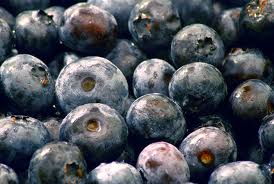
Blueberries are in the same genus of plants as the British bilberry (also known as whinberry and wimberry) and the cranberry, both of which have amazing health benefits. The blueberry, like all black fruit, blackberries, black grapes and blackcurrants among them, contain anthocyanins which give these berries their blue-black colour.
  There are three basic types of blueberry, all native to the North American continent, mainly distributed in the eastern states.
There is the High-Bush blueberry, Vaccinium corymbosum L., which has astringent qualities so is good for diarrhoea and other digestive disorders, and may also be used for respiratory diseases such as bronchitis and asthma. The Low Sweet Blueberry V. angustiflorum - Aiton, is used in traditional medicine to hasten uterine contractions during childbirth and as a blood tonic and purifier. The third variety is V. constablael – A. Gray which is native to the eastern parts of North America.
   Blueberries have a high vitamin C content and also contain some of the B-complex vitamins, notably B1, B2, B3, B5 and B6. Vitamins E and A are also present and these protects the retina in the eye from damage by oxygen and sunlight. As for minerals these berries contain calcium, copper, iron, magnesium, manganese, phosphorous, potassium, selenium, sodium and zinc. Omega-3 and -6 fatty acids are also present as are 18 amino acids, and the flavonoids kaempferol, quercetin along with others. Apart from these other phytonutrients are also present such as resveratol.
  In two separate studies on the elderly, with the average age of 76, drinking between 2 and 2 ½ cups of blueberry juice a day increased memory and cognitive powers. It is believed that this is because of the antioxidant properties of blueberries, although Dr. Jeremy Spencer, a molecular nutritionist at the University of Reading UK, believes that the flavonoid rich blueberries and other foods such as chocolate, spinach and some other fruit juices can increase the blood flow to the brain and can restructure it so warding off the loss of memory associated with Alzheimer’s disease.
  Blueberries can help prevent cardio-vascular disease because they lower bad cholesterol but increase the good variety and they can also help to regulate blood sugar levels, making them good for people suffering from Type-2 diabetes. They can also help to regulate blood pressure and maintain normal blood pressure.
  Just as bilberries do, they can help prevent macular degeneration, an eye disease which affects many people as they grow older, and can help with night vision. In fact bilberries do much the same as blueberries and the reason they have become so popular in Britain is because of the health news which hails them as a superfood. In fact in 2010 they overtook sales of one of Britain’s favourite fruits, the red raspberry, and in the US they are the second most popular berry after the ubiquitous strawberry.
  It should perhaps be pointed out that any food which is hailed as a superfood has to be eaten in a well-balanced healthy, nutritious diet to have real health benefits.
 Eating a lot of one fruit or vegetable but still eating a lot of unhealthy trans-fats and fast food will not have any lasting health benefits.
  You can use the recipe below for bilberries too and the bilberry recipe for blueberries.


INDIVIDUAL BLUEBERRY – CINNAMON CHEESECAKES
Ingredients
150 gr blueberries
1 tbsp caster sugar
1 tsp freshly ground cinnamon
6 digestive biscuits, crumbled
25 gr melted butter
250 gr thick natural yoghurt
2 tbsps honey
1 lemon, zest removed and juiced

Method
Cook the blueberries with the caster sugar and cinnamon for 2-3 minutes. You can add more sugar if you have a sweet tooth.
Combine the crumbled biscuits and melted butter and press this crumble mixture into the bottom of 4 glasses.
Mix the natural yoghurt (Greek yoghurt is good) with the honey and lemon zest and juice. Combine well, blend in a food processor if you have one.
Now put a layer of the yoghurt mixture on top of the biscuits, then a layer of blueberries and repeat until all are used.
This has Taste and is a Treat.