HAREBELL - THE BLUE BELL OF SCOTLAND: SUPERSTITIONS AND MEDICAL USES OF HAREBELLS


HAREBELL, CAMPANULA ROTUNDIFLORA 
Harebells are the Bluebell of Scotland, although they are not called bluebells elsewhere. These are delicate flowers that grow on a long, thin stem which produces a milky sap when cut. The stem is so thin that the weight of the flowers makes them bend; the flowers themselves are paper thin however and do not weigh much. They have been little used in traditional medicine in the UK as there are various superstitions attached to them. In Scotland they are known as Aul Man’s Bells and the old man in question is the Devil. They have sinister reputations and are linked with witches, as it was believed that they put the juice from the stems in ointments to make flying potions. In Scotland the plant is also known as Milk-ort, or milk plant, the name deriving from the sap found in the plant.
  More benignly these delicate bell-shaped flowers were also associated with fairies in Victorian times, and were said to be fairies’ sleeping bowers, or their drinking goblets, for dew. Some superstitions say that these plants help you to see the fairies or the little people and it was believed that they could help transport a mortal to Faerieland. It was supposed that they could part the veil between this world and that of the faeries.
   Some of the Native American tribes used the sap from these flowers to cure earache and a decoction of the plants was used as eyewash. The root was chewed for heart and lung problems.
  It is said that the plants have antifungal and antiviral properties, as well as possibly having compounds in them which might help in the battle against cancer. The leaves are edible and so are the flowers which can be added to salads.
  It has been considered unlucky to pick the plants in the UK because of their associations with witches and fairies, and it was believed that their wrath would fall on people who picked the flowers.
  For those of you who are interested, here are the lyrics to the Blue Bells of Scotland song.
   
  Blue Bells of Scotland
 
Oh where, tell me where, is your Highland laddie gone?
He's gone wi' streaming banners where noble deeds are done
And it's oh, in my heart I wish him safe at home

Oh where, tell me where, did your Highland laddie dwell?
He dwelt in Bonnie Scotland, where blooms the sweet blue bell
And it's oh, in my heart I lo'ed my laddie well

Oh what, tell me what, does your Highland laddie wear?
A bonnet with a lofty plume, and on his breast a plaid
And it's oh, in my heart I lo'ed my Highland lad

Oh what, tell me what, if your Highland laddie is slain?
Oh no, true love will be his guard and bring him safe again
For it's oh, my heart would break if my Highland lad were slain

DOCK LEAF - ANTIDOTE FOR NETTLE STINGS: HISTORY, USES AND HEALTH BENEFITS OF DOCK LEAF


DOCK LEAF, BROAD-LEAVED DOCK, BUTTER DOCK, RUMEX OBTUSIFOLIA

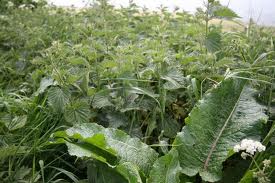
Dock leaves are commonly found growing with stinging nettles and are a useful antidote when you get stung. I always did as a child because I couldn’t understand how stinging nettles worked. My father would crush a dock leaf and wrap it around the area that had been stung which gave instant relief. There seems to be some debate about whether this actually works, but it does, although the red dock and crispy or yellow dock don’t. Perhaps the wrong dock leaf has been applied to the sting?
  Here is a poem about the dock leaf which I think is apt: -

The Dock
Come here, son: look! that leaf is dock,
Beside the dandelion clock.

Wherever stinging nettle grows
There, too, the healing dock leaf blows

As if to show some grand Design
Of Mother Nature, all benign,

Who suffers with her children's pain
And longs to make them well again:

Who cannot but provide relief
As in this sting-­removing leaf.

      ………………………..

Or are there flowers that can abate
The pain when people love, or hate?

No: men and towns to dust return:
The fires drink up the clouds, and burn.

Oh no, relief is never there.
Come, we must go: and son, beware,

For where the balmy dock leaves stand
Are stinging nettles close at hand. 

Or perhaps the dock leaf didn’t work because this rhyme wasn’t said when the dock leaf was applied?

'Nettle in, Dock;
Dock in, Nettle out
Dock rub Nettle out,”
This is a traditional rhyme that country people used to say on such occasions.
  Nicholas Culpeper writing in the 17th century wrote about docks in particular and in general, and although the red dock, or bloodwort was commonly used in medicine he says that other docks such as the common one had similar properties: -
“The seed of most of the other kinds, whether gardens or fields, doth stay laxes and fluxes of all sorts, the loathing of the stomach through choler, and is helpful for those that spit blood. The roots boiled in vinegar helpeth the itch, scabs, and breaking out of the skin, if it be bathed therewith. The distilled water of the herb and roots have the same virtue, and cleanseth the skin from freckles, morphewa, and all other spots and discoloured rings therein. All Docks being boiled with meat, make it boil the sooner.”
 While it is true that young dock leaved can be used as a pot herb, it isn’t to be recommended as even grazing animals avoid them.
  The dock is related to sorrel as both belong to the Rumex genus, and so are also related to rhubarb as they are in the Polygonaceae family of plants. The dock leaf contains an antihistamine, chlorphenamine, which is responsible for it astringent action. The bruised leaves have been used to treat burns and scalds too by country people throughout the ages as they have cooling properties. The plant is called Butter dock because farm made butter was wrapped in the big, broad leaves to keep the butter cool while it was transported to markets. Mention of this use is made by George Eliot in her 19th century novel, “Adam Bede” in chapter 8 when Mrs. Poysner summons Molly.
   “Molly,” she said rather languidly, “just run out and set me a bunch of dock leaves: the butter’s ready to pack now.”
  Dock leaves have had many uses in the past, and next time you get stung by nettles, make sure you pick the right kind of dock leaf to treat the sting!


CLARY (SAGE) - HISTORY, USES AND HEALTH BENEFITS


CLARY (SAGE), SALVIA SCLAREA
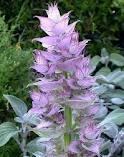
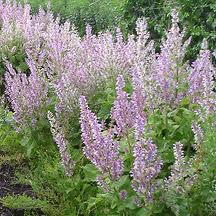
It is thought that Clary originated in Syria or south west and central Europe where it can still be found growing wild. It was known to the ancients and the essential oil was prized by Dioscorides, Theophrastus and Pliny. This is still used in cosmetics and the perfume industry as a fixer and cultivated for these industries in France and Russia. It is a member of the sage family and closely related to the sage we commonly use in cooking. Clary can be used in exactly the same way if you have any growing in your garden, or know where to find the herb growing wild.
  These days clary is little used except for its essential oil in aromatherapy. It seems that it acts on the hypothalamus, a ‘primitive’ part of the brain and is used to relieve anxiety, fear and paranoia. It also provokes vivid dreams and gives clarity to them so that you will easily recall those dreams that have troubled you during the night. The calming effect of clary was known to the Physicians of Myddfai who had this to say about its use.
  “If you would never be in an envious mood, drink as much as would fill an egg shell of the juice of the herb called wild clary, and you will not after fall into an evil temper. If you would be always in good health, drink a spoonful of the juice of the herb mallows, and you will always be so.”
  Many Internet sites say that clary can be used to make fritters, and I suppose you could put them in pakoras, but tastes have changed over the centuries, so clary might be something of an acquired taste. The idea that you can cook fritters with them seems to have originated from the Complete Herbal by Nicholas Culpeper, who wrote this in the 17th century. He wrote this about clary.-
  “The seed put into the eyes clears them from motes and such like things gotten within the lids to offend them, and it also clears them from any white and red spots which may be on them. The mucilage of the seed made with water, and applied to tumours or swellings, disperseth and taketh them away. It also draweth forth splinters, thorns, or other things got into the flesh. The leaves used with vinegar, either by itself or with a little honey, doth help boils, felons, and the hot inflammations that are gathered by their pains, if applied before it be grown too great. The powder of the dried root put into the nose provoketh sneezing, and thereby purgeth the head and brain of much rheum and corruption. The seeds or leaves taken in wine provoketh to venery. It is of much use both for men and women that have weak backs, and helpeth to strengthen the reins; used either by itself or with other herbs conduces to the same effect, and in tansies often. The fresh leaves dipped in a batter of flour, eggs, and a little milk, and fried in butter and served to the table, is not unpleasant to any, but exceedingly profitable for those that are troubled with weak reins, and the effects thereof. The juice of the herb put into ale or beer, and then drunk, bringeth down women's courses and expelleth the after-birth.”
  It is from Culpeper then that we learn about the use of clary as an aphrodisiac (“venery” is sexual activity), as well as its use for kidney (reins) problems. There is no medical evidence to support these statements, so if you use clary for any of these ailments, remember that such uses belonged in the 17th century. Please also note that pregnant women should not use this herb as it acts on oestrogen production and the uterus. While it may help some menopausal problems it is not advised to take it while pregnant as its effects are not known.
  The herb has been used not only to flavour ale (which didn’t traditionally use hops), but also some liqueurs and vermouth. Wine can be made from the flowering plant too, but it taste better when mixed with other flowering herbs and blossoms such as elderflowers. Also the herb may be infused in other white wine to give it a muscatel flavour.
   It is also found in some cosmetic products such as shampoos to increase sebum production and in some ointments and creams.
  The Latin name “sclarea” is a corruption of “clarus” meaning “clear” and it is thought it got this name because it was used to get foreign bodies out of the eyes. Salvia means salvation or to save, and this is because of the reputation the plants of the sage family had in ancient times. It is thought to be a native of south western and central Europe and parts of Asia; in other places such as Britain it is naturalized.
  The leaves when young can be eaten raw, or you can add them to dishes as you would sage, but use the young, tender leaves only, as older ones tend to have a bitter taste. The flowers are also edible and can be added to salads.
  Clary is a herb which has been overlooked in modern times, but perhaps we should be using it more as it was so prized by the ancients, who, when all is said and done, knew a thing or two about medicine that we have forgotten.

ROSE BAY WILLOW HERB - PROLIFIC HERB WITH MEDICINAL BENEFITS; HISTORY AND USES OF FIREWEED


ROSE BAY WILLOW HERB, EPILOBIUM ANGUSTIFOLIUM
Rose Bay willow herb is also called Fireweed, as it is a pioneer species, which is one of the first to sprout after a fire. It was a common sight on London bombsites during the Second World War. In the 16th century John Gerard writes that it was a rarity in Britain, although he got some for his garden from a friend in Yorkshire.
  Seemingly the plant has now grown much more common all over the UK and Ireland where it is called Lus na tine or in English Blooming Sally, perhaps because it has leaves like the willow tree, of the genus Salix. It has often been remarked that the leaves actually look a little like those of the bay tree too. Some have referred to it as a “bothersome weed” as it spreads easily.
  It spreads by seeds which are attached to white hairs which have been used for stuffing, like kapok. These appear in autumn when the seed pod splits into four and ejects the hairs and seeds which are carried on the wind to new blooming places.
  Despite its apparent rarity, Culpeper used it in the 17th century for its antispasmodic properties for asthma and whooping-cough. An infusion of the leaves is used for these purposes. The plant is native to parts of Europe and southern Asia and also grows in North America, although whether it has been introduced or is a native species is open to debate.
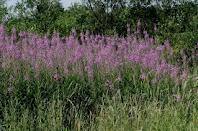
  In Britain it was cultivated in Victorian gardens because of its spikes of pink-mauve flowers and perhaps it escaped from these gardens to become the prolific plant we have now. It can be seen along railway tracks with buddleias and in waste ground almost everywhere. The flowers, which are in bloom for about a month, are a haven for bees which collect the nectar and mice nest in thick patches of this plant so it is good for wild life in Britain.
  The leaves can be made into a tisane but have been used as an adulterant in some tea. The root can, like chicory roots, be made into a coffee substitute. It is a member of the Onagrariaceae family of plants, and is also known by the Latin name Chamaenerion angustifolium, although this is sometimes misspelled as Chamerion. The stems look red, and this has given rise to another name for this plant, Blood Vine, although it is an erect plant and certainly not a vine. It can grow to heights of between four and eight feet.
  The French Canadians of the Gaspe Peninsula call the plant ‘wild asparagus’ and eat the young shoots in the same way that you would asparagus. The roots are edible and can be boiled and eaten as you would a Jerusalem artichoke, or added to soups and stews. The leaves can be made into a tisane and these contain vitamins A and C as well as at least one of the B-complex vitamins, riboflavin. They also contain the mineral phosphorous.
  The powdered root has been used to stop internal bleeding, but the plant is mainly used now in tisanes- leaves and roots for diarrhoea, dysentery and stomach cramps, while an extract of the leaves may have anti-inflammatory properties scientists believe. A poultice of the leaves has been used in folk medicine for mouth ulcers and in Germany and Austria the Rose Bay willow herb has been traditionally used for prostate gland problems. The stems are edible and have laxative properties, apparently! A poultice of the peeled roots has been used to heal burns and other skin problems.
  It’s a very attractive plant and it seems to have health benefits too, as well as most of it being edible.