SALSIFY - ROOT VEGETABLE FROM PURPLE GOAT'S BEARD: HEALTH BENEFITS AND HOW TO COOK SALSIFY


SALSIFY, PURPLE GOAT’S BEARD, TRAGOPOGON PORRIFOLIUS
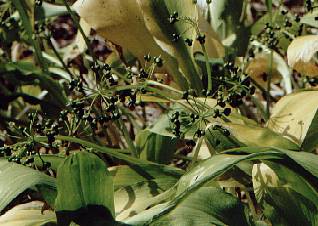
Salsify is the edible root of the Purple Goat’s Beard plant which is native to Europe. It is a close relative of the yellow goat’s beard, which also has an edible root. Both plants are related to the dandelion and salsify was a popular vegetable in the 16th century, although its use fell into decline in the 20th century. However it has had a resurgence in popularity as people have rediscovered its oyster-like flavour. In some places it is known as the Oyster plant or the Vegetable oyster plant. It is a member of the Asteraceae or daisy family of plants, and the purple flower looks a little like the globe artichoke. In fact, it can be substituted for artichoke hearts, or asparagus. It has a nutty flavour and the root contains inulin just like the Jerusalem artichoke, making it good for diabetics.
  The roots grow in clumps and are beige-white. They are best left in the soil until you are ready to use them, but if you buy them you should use them that day, although you can keep them in a cool dark place and cover them with sand, as you might a chicory root.
  The whole plant is edible and the petals are good in salads. The root can be grated and added to salads too and can be chewed like chewing gum. You can sprout the seeds to and add them to salads or sandwiches- they are good with eggs. The flowering shoots and the young shoots before the flowers appear can be cooked and eaten like asparagus. It is said that the roots have diuretic properties, so perhaps you shouldn’t eat too many of them.
  The word salsify has an interesting history and probably comes from the Latin, solsequium or sun-following as, like the sunflower, the purple flowers turn to follow the sun. In Old Italian, salsifica was the name of this vegetable, and this means salt (sal) and rub (fricare) and clearly this is close to salsify. This salsify is said to be inferior to black or Spanish salsify, although it is very palatable.
  It has been used in medicine to remove obstructions of the gall bladder and for jaundice, and is believed to be good for sufferers of arteriosclerosis and high blood pressure.
  The 17th century herbalist, Nicholas Culpeper had this to say about Purple Goat’s Beard:-
 “The virtues of this are the same as the other, only less pleasant, therefore more bitter, astringent, detersive and medicinal. This, however, may be eaten in great quantities, and so will be useful in chronic complaints. The roots are particularly specific in obstructions of the gall and the jaundice; the best way to use them is stewed like chardoons (cardoons).”
   To cook them you first need to clean the roots under cold running water and peel them, putting the pieces of salsify in cold water with a squeeze of fresh lemon juice in it. You should cut them into short pieces and put them in boiling water and simmer them for about 30 minutes or until they are tender. Then drain the pieces of salsify and sautĂ© them in a little butter. You can also then put them in a bĂ©chamel sauce and top with cheese to brown in a moderate oven. In Greece they are sometimes served in avgolemno sauce (egg and lemon sauce) and are also served cold with carrots and peas in a vinaigrette dressing. It is low in calories but contains lots of dietary fibre, vitamins B2 riboflavin, and B6, folate and the minerals potassium, magnesium, iron and calcium.
  Why not try this root vegetable and let us know what you think?


YELLOW GOAT'S BEARD - EDIBLE ROOT WITH MEDICINAL PROPERTIES


YELLOW GOAT’S BEARD, TRAGOPOGON PRATENSIS
At first sight Yellow Goat’s Beard looks rather like a dandelion and it has a clock of seeds like dandelions do too, which gives rise to another country name for the plant, Shepherd’s Clock. It is also called Meadow salsify as it is closely related to the Purple Goat’s Beard which gives us the salsify root. It is a member of the daisy family of Asteraceae or Compositae plants and is indigenous to Europe, including Britain, as well as Iran and Siberia and is naturalized in the US. It can grow to heights of between one and two feet, and has golden yellow flowers which bloom in June and July. It is notable in that the flowers open at dawn and close around noon, unless it is cloudy. This has given rise to the names “(Jack) go-to-bed-at-noon” as described by the 16th century
English herbalist, John Gerard, and “Noon flower.”
  Abraham Cowley, the 17th century English metaphysical poet (1618-1667) wrote these lines about the plant in his poem which mentions many of Britain’s wild flowers “Helleborus Niger, or, Christmas Flower”:-
   “The goat’s beard, which each morn abroad doth peep
     But shuts its flowers at noon and goes to sleep.”
   The juice of the plant has been used for stomach upsets, and is said to be beneficial to the liver and gallbladder. The roots can be eaten like parsnips although the roots of the salsify plant are better. The young leaves and shoots can be used as pot-herbs to flavour soups and stews, and the young stalks including the flower buds before they open may be cooked like asparagus, and are said to have a similar taste. The roots can be dug up in autumn and kept in sand, as you would keep chicory roots. The high inulin content of the roots means that these roots are good for diabetics, and they are used as detoxifiers in traditional medicine. However the younger the root, the better it tastes.
  The yellow petals can be steeped in boiling water and left for 20 minutes or so and then the liquid should be strained and left to cool. The water can be used to lighten freckles and as a cleanser.
   The Physicians of Myddfai found uses for this plant, and this one was for pneumonia
“Let (the patient) take, for three successive days, of the following herbs; hemlock, agrimony, herb Robert, and asarabacca, then let him undergo a three day's course of aperients. When the disease is thus removed from the bronchial tubes, an emetic should be given him (daily) to the end of nine days. Afterwards let a medicine be prepared, by digesting the following herbs in wheat ale or red wine: madder, sharp dock, anise, agrimony, daisy, round birthwort, meadow sweet, yellow goat's beard, heath, water avens, woodruff, crake berry, the corn cockle, caraway, and such other herbs as will seem good to the physician. Thus is the blessed confection prepared.”
 Clearly this would kill or cure given that they prescribed hemlock!
 This was a prescription of theirs for fevers: first of all they suggested taking
   “The mugwort, madder, meadow sweet, milfoil, hemp, red cabbage, and the tutsan, all these seven herbs enter into the composition of the medicine required.
Any of the following herbs may be added thereto, butcher's broom, agrimony, tutsan, dwarf elder, amphibious persicaria, centaury, round birth wort, field scabious, pepper mint, daisy, knap weed, roots of the red nettle, crake berry, St. John's wort, privet, wood betony, the roots of the yellow goat's beard, heath, water avens, woodruff, leaves of the earth nut, agrimony, wormwood, the bastard balm, small burdock, and the orpine.”
  Culpeper used this plant in medicine too and wrote of it:-
 “A large double handful of the entire plant, roots, flowers and all bruised and boiled and then strained with a little sweet oil, is an excellent clyster in most desperate cases of strangury or suppression of urine. A decoction of the roots is very good for the heartburn, loss of appetite, disorders of the breast and liver, expels sand and gravel, and even small stone. The roots dressed like parsnips with butter are good for cold, watery stomachs, boiled or cold, or eaten as a raw salad; they are grateful to the stomach strengthen the lean and consumptive, or the weak after long sickness. The distilled water gives relief to pleurisy, stitches or pains in the side.”
  However the plant has fallen out of use both for its edible and medicinal qualities.

RED DOCK, CULPEPER'S BLOODWORT; HISTORY OF USES OF RED DOCK


RED DOCK, BLOODWORT, RUMEX AQUATICA
Red dock is native to Europe although not to Italy and the Balkans, and to Northern Asia. As its botanical name suggests it likes living on the edges of swampy ground and can be found in damp ditches and along margins of fields. It can grow up to 6 feet tall when it is in flower during July and August. As the English name says, it has red flowers and these give way in September to red-cased seeds. It is related to Rumex acetosella or sorrel and more distantly to rhubarb as they are all members of the Polygonaceae family of plants. It is also closely related to yellow or crispy dock and to the common dock (Rumex obtusifolia) which is the antidote to nettle stings.
  The leaves may be cooked and eaten as this will remove most of the oxalic acid present in them; they can be used like spinach, if necessary. However it is not advisable to ingest this plant if you suffer from rheumatism, gout or arthritis. An infusion of the whole plant can be used externally however on sores and ulcers to cleanse them. If taken internally this infusion is said to detoxify the body. The roots can be boiled and used as a poultice on rheumatic joints to alleviate the pain, and the powdered root has been used as toothpaste.  The root has also been used in the treatment of mouth ulcers, as has the dock leaf R. obtusifolia.
  The root can be harvested in spring when it is said to be at its most potent in medical terms, and dried for later use. The tannin in the plant makes it a useful astringent and can be used for diarrhoea and stomach upset, while the anthraquinones in the plant make it a good laxative, which is milder than senna and, of course jamalgota. If you take an overdose of the plant you will suffer nausea, stomach pains and gastric problems and perhaps dermatitis if used externally.
  Culpeper recommended the red dock or bloodwort: -
“All Docks are under Jupiter, of which the Red Dock, which is commonly called Bloodwort; cleanseth the blood and strengthens the liver.”
 He emphasizes this by ending his description of the docks by saying: -
   “Bloodwort is exceeding strengthening to the liver, and procures good blood, being as wholesome a pot herb as any growing in a garden.”
   However all docks have gone out of culinary use; the information here is for curiosity's sake only.

RAMSON, WILD OR BEAR'S GARLIC, EUROPEAN NATIVE: HISTORY,USES AND HEALTH BENEFITS OF WILD GARLIC


WILD GARLIC, BEAR’S GARLIC, RAMSON,ALLIUM URSINUM
I grew up in a place where wild garlic proliferated, and hated the smell when the plant was in flower. I was amazed that such pretty flowers could smell so awful. I’m not sure that the acrid smell is like that of garlic, but it is strong and hangs heavily in the air around the growing plants.
  Apparently it is called bear’s garlic in Latin because the European brown bears were partial to the bulbs and would gorge on them when they awoke from their hibernation period. It is a native to Western and Central Europe and parts of Asia. In Germany there has been a movement to use edible wild plants in haute cuisine and chefs have been putting bear’s garlic in their dishes, which seems a bit of a waste, as, like fresh coriander leaves, the broad chopped leaves are best added to piping hot food and stirred into it just before serving. Cooking it like spinach or leeks rather diminishes the flavour. You can add the leaves to soups as you would sorrel, but again you lose most of the flavour, but do have a smelly kitchen.
  All parts of the plant are edible and our ancestors seemed to have utilized it as remains of pollen have been found in Neolithic settlements in Sweden and in Mesolithic ones in Denmark. It is a member of the onion family and closely related to chives.
  The plant leaves are high in vitamin C and also contain vitamins A and the minerals, manganese, copper, iron, magnesium and traces of selenium. The leaves also contain adenosine which is believed to play a key role in regulating high blood pressure and tachycardia.
   Throughout history the plant has been used as a spring tonic to cleanse the blood and boost the immune system, as it is believed to work to boost the functioning of the internal organs. It was named “1992 Medicinal Plant of the Year” by the Association for the Protection and Research on European Medicinal Plants, and there have been some clinical trials carried out on this plant along with true garlic Allium sativa. Bear’s garlic comes out top in terms of sulphur content although most of the relevant literature says that it has a weaker medicinal action than Allium sativa.
  If you go foraging for this plant simply follow your nose. There have been reports of people suffering the effects of poisoning from confusing the leaves of Bear’s garlic with those of lily-of-the-valley, or cuckoo pint and even dying after eating too many leaves of the autumn crocus, or meadow saffron (Colchicum autumnale). The smell of garlic will come from this plant and doesn’t from the others, which don’t really bear it too much resemblance, so if you follow your nose on this you shouldn’t encounter a problem.
  If you use the bulb it is best harvested between the months of July and December or early January, although if you start to dig up bulbs you are depleting the wild stock of plants. It’s best to just stick to eating the leaves. The plant has antifungal and antiviral actions and has been used in the past as household disinfectant - the juice from the plant is good for this, although you still have to deal with the odour. The plant itself is useful in gardens as it repels insects and burrowing moles.
  The juice is said to be good for weight loss, and its mild action can be a counter irritant if applied to places where you have rheumatic pains. It increases the blood circulation locally and does ease pain in arthritic joints.
  The plant has been used for asthma and emphysema sufferers as well as in cases of bronchitis, and is said to be effective.
  The name ramson which is the plant’s English name gives rise to some confusion as there is a plant called rampion, which is a member of the Campanulaceae family, and not a relation to this one, and in the US in the Appalachians there is a plant locally called ramps which is a relative of this, but they are not the same plant. The US plant is a wild onion and its botanical name is Allium tricoccum.