POKEWEED, "GOURMET" FOOD: HISTORY, USES AND HEALTH BENEFITS OF POKEWEED


POKEWEED, PHYTOLACCA AMERICANA 
Pokeweed is a member of the Phytolaccaceae family, also called by a number of other names such as Poke root and American nightshade. Like Belladonna it is poisonous and if handling it, especially if you have scratches on your hands, wear gloves. It is native to North and Central America but has naturalized in parts of Britain where it is a garden escapee. It is a relative of the Guinea hen weed.
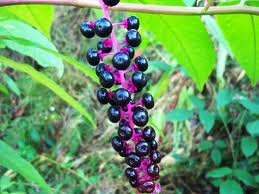
  It can grow to heights of six feet (around 2 metres) and may have a spread of around 5 feet. It flowers in August and September, and these are followed by fruit, which looks tasty but is poisonous to children and animals. Only birds seem immune to it and scatter the seeds through their droppings.
  Despite its poisonous nature the young shoots and leaves are considered “gourmet” food as is asparagus, and are the basis of “poke sallet” in southern US states. It is said to taste a little like asparagus or spinach. You should only take the shoots in spring from plants that are less than 8 inches tall, as the toxicity increases and the taste becomes bitter later in the year and in taller specimens. If you do cook these spring greens you will need to boil them thoroughly in two changes of water so that the toxins are leached out. Apparently they are available in cans too.
   The leaves are rich in vitamins A and C and some of the B-complex ones, including thiamin (B1), riboflavin (B2) and niacin (B3). They also contain the minerals calcium, phosphorous and iron.
  The juice from the berries (which have the least amount of poison than the rest of the plant) has been used by Native Americans to dye feathers and arrow shafts and they produce an attractive red dye which is temporary and can be washed out. A red ink can also be obtained from the berries, but again this, like the dye is not permanent.
 The Native Americans used the extremely poisonous roots externally in poultices for sprains and swellings, and in preparations for skin troubles and rheumatism. These are violently emetic and purgative and may be fatal, causing paralysis of the respiratory organs. However were also employed by Native Americans as cancer and syphilis remedies and as a heart stimulant in the same way as digitalis from the foxglove is used.
  In traditional medicine pokeweed has been used for breast cancer, mastitis, mumps, sore throats, swollen glands, bronchitis, constipation, fungal infections, inflammation of the joints, and externally for skin problems, piles and itching.
  Clinical studies have discovered a protein called pokeweed antiviral protein (PAP) which has had anti-tumour effects on mice and this has also shown some activity against the HIV virus. However as yet there are no indications that this is effective in humans. The plant’s extracts have proved to be effective against water snails which carry bacteria and studies into this activity are ongoing as are the other studies mentioned.
  The roots infusion was used for swellings and sprains and harvested in the autumn for these purposes and dried for later use. These have narcotic, expectorant, anti-inflammatory, hypnotic and purgative properties. The fruit with its milder action than the root has been used for cancer, tumours and sore breasts. The leaves also have emetic and expectorant properties.
  The poisonous substances are saponins-like and the roots can be chopped and boiled to produce a soap substitute, as can other plants such as soapwort and reetha (soap nut). This plant should not be used for home remedies but may be safe in homeopathic remedies for muscular tissues, throat, breast and painful joint.

AFRICAN SHEA TREE - TREE OF LIFE: HISTORY, HEALTH BENEFITS AND USES OF THE SHEA TREE


AFRICAN SHEA TREE, KARITE, VITELLARIA PARADOXA 
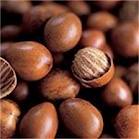
The Shea tree is native to the African continent and is propagated by fruit bats. It was formerly called Butyrospermum parkii or Butyrospermum paradoxa although it is now known as Vitellaria paradoxa. The name Butyrospermum means butter seed which is a good description as the seeds is the producer of shea butter which is used in cosmetics. The parkii part of its former name was in honour of the Scot, Mungo Parks, the explorer who set out to find the source of the Niger River and who was the first European to describe this tree in the 1790s in his book “Life and Travels of Mungo Park in Central Africa.”
  The tree has spreading branches resembling an oak tree and the fruit looks a little like chikoo or sapodilla to which it is related as both trees are members of the Sapotaceae family. The tree can grow to heights of between 25 and 75 feet (7.6 metres to 22.7m.) Trees begin to produce fruit when they are between 10 and 15 years old, and reach peak production when they are 20 to 30 years old, although they can continue producing fruit the size of large plums, for two hundred years.
  It is the kernels which are enclosed by the pulpy flesh which produce the shea oil or butter which is called ‘women’s gold” in the countries where it is grown as money from producing the oil and butter goes to the women who process the kernel painstakingly. Nowadays there are initiatives helping women to market their produce to European and Asian countries where it is valued not only for its inclusion in cosmetics but also as a partial substitute for cocoa butter and used in chocolate making.
  The tree, like the baobab tree is known as the tree of life, karite, as it provides food and medicine for the people who live in the regions where it grows wild.  The fruit contains four times as much vitamin C as oranges, and the oil has vitamins A and E in it. The kernel is rich in oleic, arachidic, palmitic, stearic and linoleic fatty acids.
  All parts of the tree are used in medicine, for skin diseases including leprosy, dermatitis and eczema, to protect from sunburn, as the oil can counter harmful ultra-violet rays from the sun, and also soothe sunburn. It is also used for wounds and to massage into stiff joints, as well as to treat sore and injuries of animals. The roots are used for cleaning the teeth and oral health in the same way as the walnut tree bark is used in Pakistan, and the dried ground roots are used to treat jaundice, diarrhoea, dysentery and other stomach upsets. The bark of the tree is used to treat leprosy and stomach upsets too, and for eye problems and to get rid of parasites which attack the bare feet. The nut husks are used for fertilizer and fuel, and the inferior oil which may be produced is used for lighting and to waterproof beehives. The oil and butter can also be used in cooking, while the wood can resist the ravages of termites and is used in furniture making and construction.
  The oil and/or butter is also used in religious ceremonies or spiritual purification and to anoint the dead. The rubbery sap or latex from the tree is used as glue and for children’s balls and as chewing gum, while the black residue from the butter-making process is used to fill cracks and to waterproof buildings.
  The European Union’s 2003 directive allows a percentage of shea butter to be substituted for cocoa butter in the chocolate industry and even as early as the 1940s shea butter was used in the West to make margarine. The tree is protected but is sometimes felled illegally because of the need to survive, whether that is to clear land to plant crops or to use the wood for fuel to cook food.
  An Australian study published in the Journal of Phytotherapy Research in 2010 concluded that a supplement containing shea butter could help to relieve joint inflammation. Other research indicates that the stem bark has antimicrobial properties, as do the leaves to a lesser degree. (“Phytochemical and antimicrobial screening of the crude extracts from the root stem bark and leaves of Vitellaria paradoxa (GAERTN. F)” African Journal of Biotechnology Vol. 6 (16) pp 1905-09; 20th August 2007)
  Other studies have shown that the butter or oil can be rubbed into the interior of the nose to give relief from nasal congestion and sinusitis for several hours, and the vitamin E content of the butter helps to prevent wrinkles, protect from atmospheric pollutants as well as being a useful sunscreen.
  If you ever get to eat the fruit, which according to some reports tastes a bit like a fig, then you will benefit from its antioxidant properties which are believed to be caused by the catechins (phenolic compounds or bioflavonoids) in it.
  Clearly this tree has potential for future medicinal use as well as being of economic and religious importance to the people in the regions where it grows. The fruit is also important for its vitamin content and nutrition.

JOJOBA PLANT - NOT ONLY FOR HAIR CARE: HISTORY, HEALTH BENEFITS AND USES OF JOJOBA


JOJOBA PLANT, SIMMONDSIA CHINENSIS
Everyone reading this has probably used shampoo or hair conditioner containing jojoba (with the ‘j’ pronounced as ‘h’) oil at some time or another. It is used in the cosmetics industry for hair and skin products.
  It is the only one of its genus and the only one of the Simmondsia family, although it is sometimes put in the Buxaceae or boxwood family. Although its name is Simmondsia chinensis, it is not a native of China, but originated in north western Mexico and southern Arizona and southern California in the US.
  Native Americans and Mexican Indian tribes used the seeds for medicine to treat colds, sores, skin problems, wounds and to promote hair growth. They also used the plant and oil from the seeds as remedies for cancer, obesity, and kidney problems. Apparently it is also effective against poison ivy, warts and relieves sore throats. They ate the seeds either raw or roasted and made a coffee substitute from them too, which is why the fruit is sometimes called coffeeberries. Another name for it is goatnut, as browsing animals such as goats, deer and cattle feed on the young shoots and leaves of this evergreen bush or multi-stemmed tree.
  The jojoba plant has long tap roots so can extract water and minerals from deep below the ground’s surface helping it to survive in arid regions. It can grow to heights of six metres but is often found wild at heights of half to one metre.
  Although it has been used for centuries by indigenous peoples, it came into wider use after the ban on sperm oil in 1971 when a substitute was needed in the cosmetic industry and others. It is now considered to be superior to sperm whale oil, which is just as well for those whales! It was after this ban that jojoba was domesticated in the US and it is now grown in several countries; it can be found in cultivation throughout South America, Israel, the Middle East, South Africa and India.
  The seed meal left after the oil has been extracted is toxic (three toxic glycosides have been identified) and so as yet cannot be used for animal fodder. However research is being done into the oil, which is actually a pale yellow liquid wax and it seems that, like jatropha and Croton tiglium, it could be a useful biodiesel in the future.
  The oil is unique and contains not only fatty acids, as does shea butter which comes from a different continent and tree, but also iodine (usually present in seaweeds such as bladderwrack, laver bread etc.) which is probably responsible for its health benefits for skin, including acne treatment. It also contains vitamin E (useful to smooth out wrinkles and halt the ageing process of the skin) and some B-complex vitamins along with several trace minerals. It also contains 19 amino acids including lysine, typtophan and arginine which means that it has antioxidant properties. The leaves contain flavonoids including isorhamnetin and narcissin. The oil has fungicidal properties and can be used to get rid of mildew.
  Other uses of the oil are in candle-making, the leather industry as transformer oil, plasticizers and fire retardants. In future, if the toxins can be isolated effectively it could have many more uses.

GREAT HAIRY WILLOW HERB - HISTORY OF HEALTH BENEFITS AND POSSIBLE FUTURE USES


GREAT HAIRY WILLOW HERB, EPILOBIUM HIRSUTUM
The Great hairy willow herb is also known as the hairy willow herb and the great willow herb, and is as the name suggests a relative of Epilobium angustifolium or the Rose bay willow herb. It is a member of the Onagraceae family of plants so is also related to the Evening primrose, and the plant does resemble this as you can see from the pictures. It has a hairy stem and leaves, so the genus was given the name hirsutum which means hairy or hirsute in Latin. Its native habitat is in Europe including Britain, Scandinavia, eastern and southern Africa and temperate Asia. In the US it has become naturalized and is another invasive species in some states.
  The leaves are edible and are used in Russia to make tisane, or tea, although there have been reports that the plant and leaves are poisonous. If you do use this plant for any purpose, remember that it could be toxic. It can cause epileptic-like convulsions it is said.
  There are several other local names for this plant in Britain including Son-before–the- Father, which it is called because the seed pods appear before the flowers, or at least it used to seem so to people. It is also called codlings and cream (a codling is an elongated green apple which is used in Britain in cooking). Nicholas Culpeper the 17th century herbalist says that it was called this because it smelled of apples in milk.
  It is a plant which grows near lakes, ponds and pools and sometimes even in marshes. The flowers appear in June in the UK, and the plant can grow to heights of around 2 metres.
  Culpeper has this to say of its medicinal uses:-
“Governments and virtues. All the species of Willow-Herb have the same virtues; they are under Saturn in Aries, and are cooling and astringent. The root carefully dried and powdered, is good against bloody fluxes, and other hæmorrhages; and the fresh juice is of the same virtue.”
  The leaves have astringent properties, and one study published in 2007 in the Journal of Food Chemistry, “Antioxidant activity and phenolic compounds in 32 selected herbs” by Aneta Wojdylo et al. reported that it was the only one of the plants selected for testing which contained the bioflavonoid myricetin. This is also found in many berries, walnuts, onions and red grapes as well as other plants.
  Myricetin is known to have antioxidant properties so can protect the body’s cells from scavenging free-radicals which can cause cancer. It may also have other anti-cancer effects as well as anti-inflammatory ones, and may also improve bone health and be helpful in cases of diabetes, Parkinson’s disease and Alzheimer’s although a lot more research has to be done to find out what the mechanisms are for these activities.