ADDER'S TONGUE (FERN) - GOOD FOR WOUNDS: HISTORY, AND HEALTH BENEFITS OF ADDER'S TONGUE


ADDER’S TONGUE FERN, OPHIOGLOSSUM VULGATUM
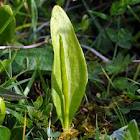
The adder’s tongue fern resembles the cuckoo-pint and the Arum or Calla lily, but you can see it in the months of June to August only (at least in Britain), as it unfurls a solitary leaf or frond. A spike growing in the middle of the leaf holds this fern’s reproductive spores, which is how it gets the name adder’s tongue. The rest of the year there is only the rhizome underground. Ophios means snake in Greek and glossa is tongue, so that is the meaning of its genus appellation, while vulgatum is Latin for common.
  It is native to Europe, including Britain and has a range which extends from Iceland through to North Africa and north and west Asia. It is related to the other British ferns, polypody, the maidenhair fern, hart’s tongue, bracken, moonwort and horsetail.
  Because the ancient herbalists believed that like cured like, and thought that the spike looked like a snake’s tongue, this fern was used as an antidote to snake bites. (They believed that red herbs and flowers were good for the blood and so on.)
  The leaves of this fern are reportedly edible when cooked and can be used as a green vegetable. The distilled water of the plant was used for eye problems, and the ointment Culpepper describes was know as Green Oil of Charity, made from two pounds (one kilo approximately) of leaves, ½ pint of oil and 1½ pounds of suet all melted together, and boiled until the leaves were crispy, then strained and used for ointment for wounds.
  In Britain the plant doesn’t grow very tall, perhaps to around ten centimetres, so it is difficult to spot it in long grass. It can grow to around 30 centimetres or approximately one foot, and is rare now except in southern England. The central spike can grow to around forty centimetres, with to rows of spores on it. It is thought to be a good indication of places where there were ancient meadows, as are couch grass and the early purple orchid.
  The English herbalist, Nicholas Culpeper, writing his Complete Herball in the 17th century has this to say of Adder’s tongue: -
  “It is temperate in respect of heat, but dry in the second degree. The juice of the leaves, drank with the distilled water of horse-tail, is a singular remedy for all manner of wounds in the breasts, bowels, or other parts of the body, and is given with good success to those that are troubled with casting, vomiting, or bleeding at the mouth or nose, or otherwise downwards. The said juice given in the distilled water of oaken buds, is very good for women who have their usual courses, or the whites flowing down too abundantly. It helps sore eyes. Of the leaves infused or boiled in oil, omphacine or unripe olives, set in the sun for certain days, or the green leaves sufficiently boiled in the said oil, is made an excellent green balsam, not only for green and fresh wounds, but also for old and inveterate ulcers, especially if a little fine clear turpentine be dissolved therein. It also stayeth and refresheth all inflammations that arise upon pains by hurts and wounds.”
INDIAN CORAL TREE: HISTORY, USES AND HEALTH BENEFITS OF THE INDIAN CORAL TREE


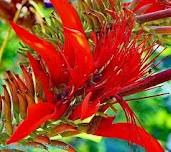
INDIAN CORAL TREE, TIGER’S CLAW, ERYTHRINA VARIEGATA 
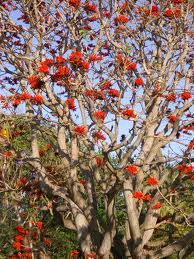
The Indian coral tree is as its name suggests native to the Indian subcontinent, and its range extends throughout South-east Asia to Malaysia. It was introduced in ancient times to the Pacific islands and to parts of Africa. The Indian coral tree is a member of the Leguminoseae or Fabaceae family of plants making it a relative of dhak, the pongam tree, ashoka (Saraca indica),the monkey pod tree, jhand, lentils, indigo, the butterfly pea, chickpeas, soya beans and lupins to name but a few.
  The tree is useful as a nitrogen fixer and helps poor soil increase its fertility. It is panted as an ornamental and a shade tree, and used for this last purpose in coffee and cacao plantations. It is also used as a trellis for vines and climbing plants and is used to support the betel nut (paan) vine, black pepper plants, as well as vanilla and yams.
  The bark of this tree is paper-thin and can be yellow through to brown, and the seed pods contain between five and twelve seeds. The tree can grow to around sixty feet although they rarely grow to heights of more than fifty feet (fifteen metres). Some people in Bangladesh use the seeds, a kidney-shaped bean that looks rather like a red kidney bean, as food, but mostly they are not eaten. The seeds contain oil and it has been suggested that this could be a source of biofuel in the future. The pods grow to between six inches and a foot. The trees have thorns on their branches, but nonetheless the pods are used for fodder. However this means that they make useful living fences to demarcate boundaries and deter animals.
  The bark and leaves of this tree are mainly the parts used in Ayurvedic medicine in the Indian subcontinent, with the juice from the leaves being put into ears to stop earache. The paste made from the tree parts is used for rheumatism and joint pains, applied to the affected areas, and it is also used for wounds as it has antiseptic properties, and for inflammation, including for eye problems. A powder is made to aid digestion, as an aphrodisiac and for erectile dysfunctions. It is also used to get rid of intestinal worms, for blood purification, to regulate menstruation, for infections of the urinary tract such as cystitis, obesity, fevers and externally for skin problems.
  It is believed to support the liver and nerves functions and is anti-inflammatory, analgesic (pain-relieving), and to dilate the blood vessels. An infusion of the bark and leaves is used for coughs as an expectorant. A preparation is also used for insomnia, to promote lactation in breast-feeding mothers, for lower back pain relief and knee pain as well as for rheumatism.
  Clinical studies have found that the isoflavonoids present in this coral tree can help protect bone mass in mice and have anti-osteoporotic effects (2007, Zhang Y. et al. Journal of Ethnopharmacology, Vol.109 (1) pp 165-9). However these actions have not been tested on humans.
  In a 2002 study conducted by Tanaka H. et al. the isoflavonoids were found to have antibacterial properties. More studies are underway to discover whether the traditional medicinal uses of this tree have scientific bases.
  

MOTHERWORT - HERB OF ANCIENT USAGE: HEALTH BENEFITS AND USES OF MOTHERWORT


MOTHERWORT, LION’S EAR, LEONARUS CARDIACA 
Motherwort is a native of mainland Europe, but has become naturalized in the British Isles, as it was commonly grown in gardens for its medicinal properties. It is the only one of the Leonarus genus which grows wild now in the UK. When not in flower it can be mistaken for mugwort.
  It is a member of the Labiatae or Lamiaceae family of plants and as such is a relative of mint, marjoram, basil and Holy basil, oregano, savory, thyme, lavender, lemon balm, bugle and hyssop among many others. It flowers between July and September and is best harvested and dried for later use in August.
  Motherwort has been used in the past to flavour lentil and dried pea soups and a tisane may also be made from its flowering tops. However as Culpeper mentions, it tastes bitter and is best used in a conserve with honey or sugar to sweeten it.
  If you go near the plant be careful as it has sharp toothed edges which can cause injury to the mouths of grazing animals and hands. It has been known to cause dermatitis, and its essential oil can cause photosensitivity. It should be avoided during pregnancy. As its name suggests it has been mainly used as a woman’s herb for labour pains and childbirth, to promote menstruation and for nervous and hysterical disorders (it has a sedative action). Like borage, which tastes much better, it was used to gladden the heart and spirits, and was useful as a nervine and cardiac tonic. It was thought that it could keep evil spirits away, perhaps meaning that a person would not be overcome by melancholy.
  Culpeper writing in the 17th century has this to say of its medicinal properties: -
Government and virtues. Venus owns the herb, and it is under Leo. There is no better herb to take melancholy vapours from the heart, to strengthen it, and make a merry, cheerful, blithe soul than this herb. It may be kept in a syrup or conserve; therefore the Latins called it Cardiaca. Besides, it makes women joyful mothers of children, and settles their wombs as they should be, therefore we call it Motherwort. It is held to be of much use for the trembling of the heart, and faintings and swoonings; from whence it took the name Cardiaca. The powder thereof, to the quantity of a spoonful, drank in wine, is a wonderful help to women in their sore travail, as also for the suffocating or risings of the mother, and for these effects, it is likely it took the name of Motherwort with us. It also provokes urine and women's courses, cleanses the chest of cold phlegm, oppressing it, kills worms in the belly. It is of good use to warm and dry up the cold humours, to digest and disperse them that are settled in the veins, joints, and sinews of the body, and to help cramps and convulsions.”
  In more modern times it has found a use in some thyroid treatments, and heart palpitations. The infusion can be made with one ounce of the fresh tops to one pint of boiling water left to steep before draining and drinking in small cupfuls three times a day. The alcohol extract of this plant is said to have an action superior to that of valerian.
  It can be used as a diaphoretic to promote sweating, and in recovery from fevers. The tisane or infusion can help in cases of neuralgia and it was generally regarded as an excellent general tonic. However it is not much used these days.

EUROPEAN PAEONY, LEGEND, HISTORY, USES AND HEALTH BENEFITS OF THE PAEONY


EUROPEAN OR COMMON PAEONY, PAEONIA OFFICINALIS 
The European paeony is native to mainland Europe, with its range extending from France, through to Albania. There is another variety of paeony which is native to Greece.
In Britain there used to be wild paeonies on the island of Steep Holme in the river Severn, close to the Bristol Channel, (interestingly there were none on the neighbouring island of Flat Holme, so they were probably introduced and became naturalized.) but these do not seem to have survived. This wild paeony is single-petalled and a deep pink, and was valued in the Middle Ages for it seeds rather than its flowers, so in paintings on altars in churches from this time, the paeony is portrayed with a ripe seed capsule.
  I grew up with paeonies in the garden and the plants we had were very old, and I know now that these bushy plants are renowned for their longevity. I loved their smell and colour and often tried to capture their beauty in drawings and paintings without much success. You can dry the petals and use them in tisanes which are good for colds, and the flowers can also be cooked and eaten as a vegetable I’m told (as can flowers from the kachnar tree Bauhinia variegata).
  The name paeony is said to have come from the name (Paeos) of a student of the Greek physician Asclepius. This acolyte of the great physician earned his jealous wrath when he cured the god of Hades of his wounds which he had received during the Trojan Wars. He was turned into the plant that now bears his name to escape death at the hands of Asclepius according to one myth. Another is that he cured the gods of Olympus of their wounds with the juice from this plant – although I suppose it would have been the juice from the indigenous Greek paeony which he used, not the European one.
  This wild paeony was cultivated by Benedictine monks in their monastery gardens in the Middle Ages and from these it became common in cottage gardens. John Gerard, writing in the 16th century, recommends paeony seeds as a way to prevent nightmare and melancholic dreams. The flowers and seeds especially were thought to have the ability to ward off evil, and the seeds were threaded sometimes to make necklaces for this purpose.
  The paeony has a few superstitions surrounding it and it was thought unlucky to dig up the roots, which was unfortunate as these have medicinal properties as well as the seeds.
 Pliny the Elder, probably relating a tale told by Theophrastus (c.327-287BC), relates this piece of cautionary information: you should dig the paeony root up only at night because if you are seen doing so by the woodpecker it will peck out your eyes.
  The seeds can be dry roasted and used as a condiment if ground when still warm and added to soups and stews as a spice. The root should be harvested in autumn and dried thoroughly in the sun for later use. It has antispasmodic properties and has been made into suppositories for intestinal and anal spasms. During the Middle Ages the root was dried, powdered and used to treat epilepsy and lunacy as well as to promote menstruation. No preparations of paeony should be taken during pregnancy.
  The tisane or infusion made from the dried crushed petals can be used as a lotion for varicose veins and piles and taken internally is good for coughs. One ounce of crushed petals to one pint of boiling water drunk in small cupfuls can be taken three times a day.
  In Christian symbolism, again in the Middle Ages, paeonies represented feminine beauty, wealth and healing powers. In medicine during those times the seeds were used in medicines to disperse blockages in the internal organs, especially to get rid of bladder stones, as they have diuretic qualities, for jaundice, stomach pains, diarrhoea and labour pains.
  This paeony is no longer used in medicine except in some homeopathic remedies.