ACONITE, POISONOUS PLANT: HISTORY OF USES OF ACONITE NAPELLUS


ACONITE, MONKSHOOD, WOLFSBANE, ACONITUM NAPELLUS 
Aconite has been used for pain relief and was in the British Pharmacopeias, but only that grown in Britain, however there is no scientific evidence to support its use as a cancer treatment, whether as a cure or for preventative purposes. Neither is there evidence for its other purported uses. Aconite is extremely poisonous as is datura or thornapple and aak. Aconitum napellus is an attractive flowering plant whose leaves, stems and roots were especially valued in medicine until the mid 1900s. However it has fallen into disuse because it is so poisonous.
  It has been used in traditional Asian medicine in China, Japan and in Ayurvedic medicine in the Indian sub-continent for centuries, but the poisonous principle is removed by processing the plant and it is used only in miniscule dosages. It is used as a pain-reliever in inflammatory problems such as gout, migraines, rheumatism and sciatica, but is used to cure the symptoms and not the disease itself.
  It is a member of the buttercup of Ranunculaceae family and as such is a relative of the Lesser Celandine, marsh marigolds, black cohosh, wood anemones and goldenseal. It grew in South Wales when I was growing up and looked to me like a delphinium (larkspur). It seems to like to grow on rocky, craggy places and aconite comes from the Greek akonos which means stone while napellus refers to the root shape which was thought to resemble a small turnip.
   It gets the name monkshood because the petals are thought to resemble a monk’s cowl.
  Aconite causes arrhythmia, heart failure and death and was Medea’s poison of choice in her potions, one of which was destined for Theseus, who did not drink it. The Greek myth says that aconite grew from the slobber of the three-headed dog, Cerberus who guarded the gate of Tartarus. Because of the association with this hell-hound it has been called Dog’s bane. Athena used its poison to turn Arachne into a spider for her impiety, and it was much feared by the ancient Romans. The Roman Emperor Claudius I was poisoned with it by his physician and the Emperor Trajan forbade its cultivation under pain of death. It was referred to as Hecate’s herb (Hecateis herba) in Mediaeval times and it was believed to have been an ingredient along with Belladonna of witches’ flying ointment.
  Aconite can be absorbed through the skin, whether broken or not so should not be used externally or internally.
  Pliny wrote that aconite could kill a mouse that was some distance away, and for this reason it was called mousebane by some. The name wolfsbane comes from the belief that it could turn people into werewolves or perhaps cure them of being wolf men. Its poison was also used to tip arrows to kill wolves.
  John Gerard, the English herbalist writing in the 16th century wrote that it was “so forcible that the herb only thrown before the scorpion or any other venomous beast, causeth it to be without force or the strength to hurt” until the plant was removed.
  In 1603, Ben Jonson the English playwright has this to say about aconite in his play “Sejanus, his fall
“I have heard that Aconite
Being timely taken hath a healing might
Against the scorpion’s stroke.”
Shakespeare in his play Henry IV part 2 Act 4 scene 4 mentions it in this way:-
“A hoop of gold to bind thy brothers in,
That the united vessel of their blood,
Mingled with venom of suggestion-
As perforce, the age will pour it in-
Shall never leak, though it do work as strong
As aconitum or rash gunpowder.”
  Much late in his poem Flowers, Thomas Hood (1799-1845) an English poet, mentions it in this way: -
 “The wolfsbane I should dread;
   Nor will I dreary rosemarye,
   That always mourns the dead;
   But I will woo the dainty rose,
   With her cheeks of tender red.”
It is best not to touch this plant especially if you have broken skin, and don’t be tempted to make your own poison with it –it has been too well documented in literature as a poison (Brother Cadfael books, Harry Potter and others).


FRAGRANT PREMNA TREE, WITH LOTS OF POTENTIAL BENEFITS: HEALTH BENEFITS AND USES OF THE FRAGRANT PREMNA TREE


 FRAGRANT PREMNA, ALAGAW, PREMNA ODORATA 
The Fragrant Premna is a small tree or shrub which can flower at 3 or 4 metres high, but which can grow to heights of 8 metres. It is a member of the mint or Lamiaceae family, or the Verbenaceae family. This being so it is related to marjoram, basil, Holy basil, oregano, savory, thyme, lavender, lemon balm, bugle, motherwort, self-heal, wall germander, cat nip, the Chaste tree, ground ivy, Jupiter’s sage and hyssop and a whole host of other plants. As one of the verbenas it is allied with vervain (Verbena officinalis) and lemon verbena.
  This tree or shrub is native to the Philippines, where it is used for a number of ailments in folk medicine. It has aromatic leaves which are fragrant when crushed, thus giving rise to the Latin name odorata, meaning fragrant. Its flowers, which are a green-white, grow in clusters as do those of the elder tree and its dark purple berries are also reminiscent of those of the elder.
  A decoction of the leaves mixed with sugar or honey and lemon juice is drunk for coughs, while a decoction of the fresh leaves is used for vaginal irritation. The fresh leaves, applied over the bladder area promote urination it is believed. An infusion of these is given for flatulence, and when children have tympanites (a swollen abdomen due to gas or air in the abdomen or the peritoneal cavities) the leaves are mixed with coconut or sesame oil and this lotion is applied to the swollen area. A decoction of the leaves and flowers is given to remedy fever, stomach pains and dysentery, while a decoction of the roots, leaves, flowers and fruit is given for chest complaints such as coughs and bronchitis.
  When the leaves are boiled in water, the liquid is used to bathe babies, and the boiled leaves are also applied externally for beriberi which is a deficiency of thiamin (vitamin B1). A decoction of the young shoots kills parasites too, and it is believed that if you chew the root and then swallow the resulting saliva, this is good for heart problems.
  Clinical trials have shown that extracts from the plant have antimicrobial and anti-inflammatory properties (Lunesa C.Pinzon et al. “Isolation and characterization of antimicrobial, anti-inflammatory and chemopreventive flavones of Premna odorata Blanco” Journal of Medicinal Plants Research, Vol.5 (13) pp2729-2735, 4th July 2011). It has potential in cancer treatment too but the study concludes with the sentiment that more research is needed to ascertain how the tree and its extracts can be used for the benefit of patients.

WALL OR COMMON GERMANDER, NO LONGER RECOMMENDED FOR INTERNAL USE: HISTORY OF USES OF WALL GERMANDER


WALL OR COMMON GERMANDER, TEUCRIUM CHAMAEDRYS 
Wall Germander is native to Europe and the Mediterranean region. It grows to about a foot high and wide, and is an evergreen shrub, naturalized in Britain because it was widely cultivated for medicinal purposes. It is a member of the mint family, (Labiatae or Lamiaceae family) and as such is related to marjoram, basil, Holy basil, oregano, savory, thyme, lavender, lemon balm, bugle, motherwort, self-heal, cat nip, the chaste tree, ground ivy, Jupiter’s sage and hyssop, among many other plants.
  It was used in Elizabethan and Jacobean knot gardens and planted as an ornamental. Bees love this plant and will ignore others and go to it in a herb garden. It usually has pink through to pale purple flowers, although these can be white, but this is rare.
  It has been found to cause hepatitis and jaundice so its use is not recommended. However in the past it was used as a diuretic for gout and as a diaphoretic (promoter of sweat in fevers); it was also used in tonic wines and as a stimulant, with the leaves generally being used, although the whole herb can be collected in July when the flowers are still blooming, and dried for later use.
  Germander is believed to be a corruption of chamaedrys, which means ground oak- so named because the leaves look like those of an oak tree. (Chamai means ground and drys oak in Greek.) The genus name, Teucrium is thought to refer to King Teucer of Troy, who was famed as an archer. One of the uses of the leaves is in an infusion to heal wounds as these have astringent qualities. This infusion can also be used as a mouth wash for bleeding gums, and was once used as an antidote to snake bites.
  The leaves have been used to flavour vermouths, and bitters, as well as liqueurs, and it has also been used in much the same ways medicinally as the bitter herb, horehound.
  It is said that King Charles V the Holy Roman Emperor was cured of gout after taking a treatment involving germander for 60 days. Today the plant is mixed with wild celery (Apium graveolens) and meadowsweet and Guaiacum officinale to treat rheumatoid arthritis.
  In one trial it exhibited analgesic (pain-relieving) and anti-inflammatory properties (“Analgesic and Anti-inflammatory Activity of Teucrium chamaedrys Leaves Aqueous Extract in Male Rats” Ali Pourmatabbed et al. Iranian Journal of Basic Medical Sciences Vol.13 (3) pp119-125, summer 2010.)
  Culpeper, writing in the 17th century has this to say of the plant:-
  “Government and virtues. It is a most prevalent herb of Mercury, and strengthens the brain and apprehension exceedingly when weak, and relieves them when drooping. This taken with honey (saith Dioscorides) is a remedy for coughs, hardness of the spleen and difficulty of urine, and helps those that are fallen into a dropsy, especially at the beginning of the disease, a decoction being made thereof when it is green, and drank. It also brings down women's courses, and expels the dead child. It is most effectual against the poison of all serpents, being drank in wine, and the bruised herb outwardly applied; used with honey, it cleanses old and foul ulcers; and made into an oil, and the eyes anointed therewith, takes away the dimness and moistness. It is likewise good for the pains in the sides and cramps. The decoction thereof taken for four days together, drives away and cures both tertain and quartan agues. It is also good against all diseases of the brain, as continual head-ache, falling-sickness, melancholy, drowsiness and dullness of the spirits, convulsions and palsies. A dram of the seed taken in powder purges by urine, and is good against the yellow jaundice. The juice of the leaves dropped into the ears kills the worms in them. The tops thereof, when they are in flowers, steeped twenty-four hours in a drought of white wine, and drank, kills the worms in the belly.”

WOOD ANEMONE, FLEETING STAR OF THE WOODS: HEALTH BENEFITS AND USES OF WOOD ANEMONES


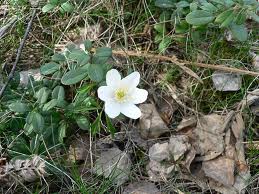
WOOD ANEMONES, ANEMONE NEMOROSA
Wood anemones as you might expect are found in woods and shady places. Like Tickle Me and wood sorrel, they close their flowers at the hint of rain and close at night, so that they are protected from dew. They are sometimes referred to as wood crowfoot as they are members of the buttercup or Ranunculaceae family of plants. As such they are related to the Lesser Celandine, marsh marigolds, black cohosh, and goldenseal.
  The whole plant contains protoanemonin which can cause skin and gastrointestinal irritation, although this turns to harmless anemonin when it is heated or dried. The plant is indigenous to most of Europe and western Asia. It can grow to around a foot in height but is usually around 8 inches high.
  It is called windflower as ‘anemone’ comes from the Greek anemos which means wind, so Pliny writes about it as the windflower, believing that the flowers only opened when the March winds blew.
  Its leaves have been used as a counter-irritant to rheumatic pains as stinking hellebore, another relative and of course stinging nettles. All above ground parts of the wood anemone have been used in previous times in folk medicine in Europe, for gout, headaches, some fevers and menstrual problems.
  It has something of a sinister reputation historically, although it is not known why this is unless it caused death when people ate the root or ingested other parts of the raw plant. The ancient Egyptians used it as a symbol of sickness, and the Chinese called it the “Flower of Death.” The Romans, on the other hand, would pick it to ward off fever.
  Culpeper says that the root may be chewed, but the fresh root will cause burning and mouth ulcers. This is what he has to write about it: -
Government and virtues. It is under the dominion of Mars, being supposed to be a kind of crow-foot. The leaves provoke the terms mightily, being boiled and the decoction drunk. The body being bathed with the decoction of them cures the leprosy. The leaves being stamped, and the juice snuffed up the nose, purges the head greatly: so doth the root being chewed in the mouth, for it causeth much spitting; and brings away many watery and phlegmatic humours, and is therefore excellent for the lethargy. And when all is done, let physicians say what they please, all the pills in the dispensatory purge not the head like to hot things held in the mouth: being made into an ointment, and the eye-lids anointed therewith, it helps inflammations of the eyes, whereby it is palpable that every stronger draweth its weaker light; the same ointment is exceeding good to cleanse malignant and corroding ulcers.”
  It is wise to remember that Culpeper was writing his Complete Herball in the 17th century, and the wood anemone is now known to have harmful side effects; it is best left in its habitat - or you might upset the fairies, who are said to sleep in the centre of the flowers at night when they close the curtains tightly for protection from the elements.
The wood anemone has been the subject of many poems, this sonnet by John Clare (1793 – 1864)
“The wood anemone through dead oak leaves
And in the thickest woods now blooms anew,
And where the green briar and the bramble weaves
Thick clumps o'green, anemones thicker grew,
And weeping flowers in thousands pearled in dew
People the woods and brakes, hid hollows there,
White, yellow and purple-hued the wide wood through.
What pretty drooping weeping flowers they are:
The clipt-frilled leaves, the slender stalk they bear
On which the drooping flower hangs weeping dew,
How beautiful through April time and May
The woods look, filled with wild anemone;
And every little spinney now looks gay
With flowers mid brushwood and the huge oak tree.”

and this poem by Emily Dickinson:

“Summer for thee, grant I may be
When Summer days are flown!
Thy music still, when Whipporwill
And Oriole -- are done!

For thee to bloom, I'll skip the tomb
And row my blossoms o'er!
Pray gather me --
Anemone --
Thy flower -- forevermore!”
  These poems are only two examples of the wood anemone’s appearances in poetry.