MAHUA FLOWERS: THEIR USES AND HEALTH BENEFITS


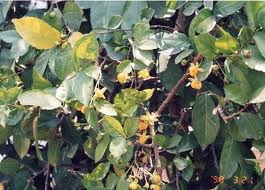
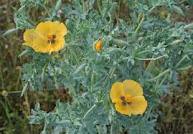
MAHUA FLOWERS FROM THE BUTTER NUT TREE, MADHUA LONGIFOLIA 
The Butter nut tree is native to the Indian subcontinent and grows in forests where the mahua flowers from it are collected from the ground by tribes’ people. The tree is a member of the Sapotaceae family and as such is related to the African Shea tree which produces the ingredient used in cosmetics, shea butter.
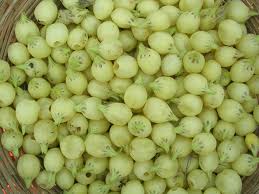
  The tree is an evergreen or semi-evergreen and grows to between 17 and 20 metres high, with a dense, spreading canopy. It is now cultivated in warm climates for its oil-bearing seeds. However in parts of rural India tribal people rely on the flowers of mahua as it is called (mahuva in Urdu) for their family income.
  The flowers do not remain on the tree for long, and some say that they bloom at night and fall to the forest floor at dawn. They bloom between March and May, or at least this is their peak season, and the fruits ripen during the rainy season as do mangoes.
  The flowers are dried after being collected from the forest floor and then sold to the state government in Orissa, for example, so that they can be made into an alcoholic drink. Unfortunately they are paid ridiculously low prices for their efforts and the flowers have been affected by climate change and are falling to the ground before they are mature because of unseasonable rain. They are also infested with red ants and these are not spotted until the flowers have been gathered, thus spoiling them.
  The flowers and trees have religious significance for these people and there is a legend that Shiva gave the trees to people so that they could give the gods wine with their sacrifices of animals. Shiva called a parrot, a tiger and a boar, and turned them into mahua trees; that is why, so it is said, that if you drink a little of the wine made from these flowers you repeat things as a parrot does. If you drink a little more of the wine you start roaring like a tiger, until finally, when you have drunk a lot, you lounge around on the floor like a boar.
leaf buds
  The flowers were used in garlands when a princess chose a bridegroom and they are still part of religious ceremonies today, especially in central India. The branches from the tree are also used in marriage ceremonies and the tree is sacred to some tribes in India.
  In Sanskrit madhu means honey and this is how the tree got its botanical name, as the flowers have a strong aroma which is reportedly musky and heady. Tamils use the flowers as sweeteners when there is no sugar from sugar cane available, although they use this with caution as excessive use of the flowers is believed to prevent people thinking clearly and could lead to complete lunacy.
  In traditional medicine, the flowers are used for a variety of purposes. An extract of the flowers is used for heart disease and to treat excessive vaginal discharge. This is also believed to be good for the eyes, TB, asthma, blood diseases, thirst and burning sensations. The flowers are also believed to be aphrodisiacs and to increase the quantity (but not necessarily the quality) of sperm.
  The distilled juice of the flowers is used to get rid of parasitical internal worms, tonsillitis and bronchial problems. The juice of the flowers is used directly on the skin to treat skin problems, and as nasal drops it is used for sinusitis. A decoction of the flowers quenches thirst, and a general health tonic is made with powdered dried flowers mixed with ghee and honey. The flowers are also used to promote lactation in breast-feeding mothers, and to cure cystitis, while the expressed juice is also used to staunch the bleeding of wounds.
  The flowers are not the only parts of the tree used, but the rest of the tree is dealt with in another post. Click here to read it.

TOOTHBRUSH OR SANDPAPER TREE: HISTORY, USES AND HEALTH BENEFITS OF THE TOOTHBRUSH TREE


TOOTHBRUSH TREE, SANDPAPER TREE, STREBLUS ASPER 
The toothbrush tree or sandpaper tree is a member of the Moraceae family so is related to the banyan, peepal, mulberry, shahtoot mulberry, Punjab fig, European fig, the Tropical fig (Ficus septica) and to the Jackfruit trees. It is native to the Indian subcontinent, southern China, Thailand, Myanmar, the Philippines, Malaysia and Sri Lanka.
  It is a small tree growing to around 10 metres with dense branches, and has small yellow fruit which look a little like loquats. In the Philippines it is known as Kalios and in India it is the Shakhotaka. Its leaves are like sandpaper, hence one of its English names, and these have been used as toothbrushes (the other English name) and for oral hygiene.
  It has been used in traditional systems of medicine for centuries and lends itself to the art of topiary and bonsai.
  The bark of the tree can be boiled in water and the resultant liquid is used as a disinfectant for wounds and skin problems. A decoction of the bark is used for fever, diarrhoea and dysentery, while the bark itself is chewed as an antidote to snake bites. In the Philippines a tea is made from the leaves and drunk as a beverage. The powdered root is used for diarrhoea and dysentery and can be made into a poultice for ulcers on the skin. The root is used for epilepsy, inflammation and boils, and the root extract is astringent and antiseptic. The bark exudes a latex when cut which is used in India for chapped hands and feet. It is also used for swollen glands, being put on them externally. The seeds are used for nosebleeds, piles and diarrhoea too.
 An extract of the leaves has been shown to have antimicrobial properties, and one study, undertaken by Subha Rastagi et al. “Streblus asper Lour, (Shakhotaka): A Review of its Chemical, pharmacological and Ethnomedicinal Properties” in Evidenced-Based Complementary and Alternative Medicine Vol. 3 (2) pp 217-222, stated that the tree possesses antioxidant, anti-allergic, antimalarial, anti-cancer, cardio-tonic and insecticidal properties. The volatile oil from the leaves showed “significant anti-cancer activity” as does an extract of the root according to a further study Abstract B73: “Chemopreventive effect of Streblus asper, a bonsai plant, on osteosarcoma cells: A Preliminary Study” Azman Seeni et al. Cancer Prevention Research 3 (Meeting Abstract Supplement) B73 January 7th  2010. This study suggests that the antioxidant compounds in the root extract such as caffeic acid may act as carcinogenic inhibitors, although further research is needed to substantiate the findings and to carry the work further.
  In Ayurvedic medicine the leaves are used to help promote the milk-flow of breast-feeding mothers, as well as being used as poultices for boils and skin ulcers. The roots are used for diarrhoea and dysentery while a decoction of the bark is also given for these ailments and for fevers. The latex from the tree is sometimes applied to the temples in cases of neuralgia and a paste made from the seeds is applied to leucoderma.
  In Bangladesh parts of the tree are used for syphilis and other STDs and for cholera, piles, wounds and as a mild pain reliever or analgesic.
  Clearly more research is needed to discover the mechanisms which cause this tree to have such beneficial effects on human diseases.
  

BULRUSH, THERE ARE BETTER HERBS TO USE: HISTORY, USES AND HEALTH BENEFITS OF BULRUSHES


BULRUSH, TYPHA LATIFOLIA 
The common bulrush grows in shallow water in all temperate, tropical and sub-tropical regions in the Northern hemisphere and is a native rush in Britain. It can grow to between 5 and 10 feet high, and is edible, although if it grows in polluted water, it should not be eaten as the plant soaks up the pollutants. The bulrush is also known as cattail and reedmace.
  The roots of the bulrush may be boiled and eaten as you would a potato; and if they are macerated and then boiled they will produce and edible sweet syrup. You can dry the roots and grind them to a powder which, if added to wheat flour enriches it, as the root is not only starchy but contains protein. This mixture can be used to make bread etc.
  The young shoots can be eaten raw or cooked in spring, and can be cooked and used as a substitute for asparagus; in fact they are sometimes called “Cossack’s asparagus.” They are said to taste like cucumbers. You can actually eat the shoots when they are up to 50 centimetres in length, and the base of the stem when it is mature, can be eaten too, either raw or cooked, although it is best to remove the outer layer of the stem.
  The flower spike may also be eaten before it is ripe, either raw or in a soup, and this is said to taste like sweet corn. When ripe the seeds may be eaten either raw or roasted, although they are difficult to harvest. These have a nutty taste and may also be ground to be added to flour for baking purposes. They also produce an edible oil.
  The pollen may also be eaten as it is protein-rich and can be added to flour. To gather the pollen you can shake the flower spike over a wide shallow container and then, with a fine brush, remove the remainder.
  The whole plant has been used medicinally too, the dried pollen may be used on wounds as it will remove blood clots being an anticoagulant, although when it is roasted with charcoal it becomes haemostatic, and is used for haemorrhages, painful menstruation and kidney stones, as well as uterine bleeding, cancer of the lymphatic system, abscesses and post-partum pains.
  However bulrushes should not be used during pregnancy.
  A decoction of the stems has been used for whooping cough, and the roots have diuretic properties and promote the milk flow in breast-feeding mothers. They have been used in tonics and for their refrigerant properties. Pounded to a jelly they can be used as a poultice for wounds, cuts, burns and scalds.
  The flowers have been used for stomach pains, lack of a woman’s periods, and irregular ones, as well as for cystitis. Eating the young flower heads is supposed to stop diarrhoea. The downy material from the seeds has been used to line a baby’s nappy and for wound dressings.
  In autumn the leaves were gathered for thatching material, they can also be made into paper, and rayon has been made from their pulp. The stems were used for rush lighting, and the pollen, being highly inflammable has been used to make home-made fireworks. The stems can also be woven into mats, hats, and seats for chairs.
  Despite these uses for bulrushes, Nicholas Culpeper, the 17th century English herbalist was very scathing about all rushes, including bulrushes, which he names particularly. He wrote this about rushes:-
“The seed of the soft rushes, saith Dioscorides and Galen (toasted saith Pliny) drunk in wine and water, stayeth the lask and women’s courses, when too abundant; but it causeth head-ache; it provoketh sleep, but must be given with caution. The root boiled in water to one-third helpeth the cough.
  What I have written here concerning rushes is to satisfy my countrymen’s question: Are our rushes good for nothing? Yes, and as good to let them alone as taken. There are remedies enough without them for disease, and therefore as the old proverb is, I care not a rush for them: or rather, they will do you as much good as if one had given you a rush.”
  Clearly he didn’t like them much or think that they were efficacious in the treatment of any illnesses. Other plants were better.

YELLOW HORNED POPPY - RESEMBLES LARGE BUTTERCUP: HISTORY, USES AND HEALTH BENEFITS OF THE YELLOW HORNED POPPY


YELLOW HORNED POPPY, GLAUCIUM FLAVUM 
The yellow horned poppy is a member of the Papavaraceae or poppy family of plants and so is related to another British wildflower, the Greater Celandine as well as to the poppies. The 16th century herbalist John Gerard (1545-1612), describes it very well so I have reprinted his description here:
 “The yellow horned poppy hath whitish leaves very much cut or jagged, somewhat like the leaves of garden Poppie, but rougher and more hairie. The stalks be long, round, and brittle. The floures be large and yellow, consisting of foure leaves; which being past, there come long huskes or cods, crooked like an horn or cornet, wherein is conteined small black seede. The roote is great, thicke, scalie, and rough, continuing long.”
  So now you know why it is called the horned poppy- its seed pods are swollen and pointed, sometimes with horn-like pieces coming from them.
  The yellow horned poppy is a protected species under the UK’s Wildlife and Countryside Act of 1981, so please don’t pick this flower. It is believed to have the largest seed pod of any of Britain’s native plants. It can live for up to five years and only flowers in its second year of growth during the months of June to September. It lives on single banks close to the sea and has also been called the Sea poppy. Its botanical synonym is Glaucium luteum.
  It is psychoactive and there is one report from the Royal Society of 1698 of a man who mistook this plant for that of sea holly or eryngoes. He baked the root in a pie and ate it hot, whereupon he became a victim of its hallucinatory and cathartic actions and mistook the content of his chamber pot for gold!
  The plant contains a yellow latex in its stems, and the seeds are oil producing. The oil has been used for lighting purposes as it burns cleanly and has also been used in soap-making. It contains the alkaloids glaucine, protopine, chelidonine, chelerythrine and cordine as well as fumaric and chelidonic acids.
  Glaucine is known to be a good ingredient for cough medicine and it has also been investigated for its ability to inhibit the growth of cancerous cells in vitro. Studies are being carried out around the world to investigate these actions and those of the other alkaloids present in the yellow horned poppy further. It has been found to have antiviral and antibacterial properties and to be effective against coughs and to help with bronchial problems.
  Writing in the 17th century, Nicholas Culpeper had this to say about the medicinal properties of the plant:-
Virtues. Like its species, it is under the Sun in Leo; and is aperitive and cleansing, opening obstructions of the spleen and liver, and of great use in curing the jaundice and scurvy: some reckon it cordial, and a good antidote against the plague. Some quantity of it is put into aqua mirabilis. Outwardly it is used for sore eyes, to dry up the rheum, and take away specks and films, as also against tetters and ringworms, and scurfy breakings-out. The root dried and powdered, is a galsamic and sub-astringent. It is given against bloody-fluxes, and in other hæmorrhages, half a drachm for a dose.”