MASTERWORT, ONCE BELIEVED TO HAVE POWERFUL HEALING PROPERTIES: HEALTH BENEFITS AND USES OF MASTERWORT


MASTERWORT, MEISTERWURZ, PEUCEDANUM OSTRUTHIUM 
Masterwort was called “the divine remedy” in the Middle Ages, and believed to be a wonder herb, capable of curing most ailments. Its leaves were used to flavour soups and its root is still used to make Meisterwurzbrand, a liqueur, in the Tyrol region of the Alps.
   It is a member of the Apiaceae or Umbelliferae family of plants, and as such is related to the carrot, celeriac, lovage, opoponax, Alexanders (black lovage), thapsia, cow parsley, sweet Cicely, hemlock, pignuts, lesser and greater burnet saxifrage, ground elder, rock samphire, fennel, sea holly and sanicle, to name just a few of its relatives. It is a close relative of angelica, for which it is sometimes mistaken as it smells very similar. Unfortunately masterwort has a sap in its aerial parts which can cause dermatitis on contact with the skin. It was much used at one time and being a native of Southern Europe, was cultivated in monastery gardens in Britain and Ireland. It is now naturalized in these countries. Its botanical synonym is Imperatoria ostruthium, and another English name for it is Hog’s fennel.
  Hildegard von Bingen mentions it in glowing terms in her “Physica” written between 1150 and 1160, as Astrenica and it was also previously known as Magistranta. All its names reflect the way herbalists thought of it – a powerful remedy.
  It is said to contain myristicin which is supposed to be a psychotropic, found in nutmeg, and responsible for euphoria. The root has been chewed to relieve toothache, and in the USA was once used to calm hysteria and delirium tremens. This is interesting as the root of masterwort was thought to impart strength and courage to its bearer, as well as protection, which was a good thing, as it was believed that if the root were scattered around, any lurking evil spirits would manifest themselves.
  The root is the main part used in medicine, and this is said to be best gathered in spring or autumn and dried for later use.
  Nicholas Culpeper, the English herbalist, writing in the 17th century had this to say about it:-
“Government and virtues. It is an herb of Mars. The root of Masterwort is hotter than pepper, and very available in cold griefs and diseases both of the stomach and body, dissolving very powerfully upwards and downwards. It is also used in a decoction with wine against all cold rheums, distillations upon the lungs, or shortness of breath, to be taken morning and evening. It also provokes urine, and helps to break the stone, and expel the gravel from the kidneys; provokes women's courses, and expels the dead birth. It is singularly good for strangling of the mother, and other such like feminine diseases. It is effectual also against the dropsy, cramps, and falling sickness; for the decoction in wine being gargled in the mouth, draws down much water and phlegm, from the brain, purging and easing it of what oppresses it. It is of a rare quality against all sorts of cold poison, to be taken as there is cause; it provokes sweat. But lest the taste hereof, or of the seed (which works to the like effect, though not so powerfully) should be too offensive, the best way is to take the water distilled both from the herb and root. The juice hereof dropped, or tents dipped therein, and applied either to green wounds or filthy rotten ulcers, and those that come by envenomed weapons, doth soon cleanse and heal them. The same is also very good to help the gout coming of a cold causey.”
   The infusion or tisane of the chopped root is said to be good for migraines, and it has also been used for asthma. There has not been much research into this plant except by manufacturers of cosmetics who seem to think along with the ancient Romans that it can keep the skin youthful. They were so enamoured of masterwort that some say they were responsible for introducing it to the rest of Europe

BAMBOO-NOT JUST FOR PANDAS AND BALE MONKEYS: HEALTH BENEFITS AND USES OF BAMBOO: RECIPE STIR-FRIED BAMBOO SHOOTS


BAMBOO, BAMBUSA VULGARIS 
There are many different species of bamboo, all members of the grass or Poaceae family so it is related to rice, black rice, Kans grass, maize, sorghum, millet, rye, barley, oats and wheat just to name a few of its relatives. Bamboo is a favourite food of the Giant panda and the Bale monkey (which was only discovered by Westerners in 1902), which lives in Ethiopia and is dependent on bamboo for its survival. The Asian elephant likes them too, but is not as picky an eater as the Giant Panda or the Bale monkey.
  There is a traditional belief that a bamboo grove was a favourite dwelling place of Buddha and it is said that in such a grove you find tranquility and it also stimulates creativity.
  Some bamboo is used for timber and is a hard one when treated, preferable to hard or soft wood which takes years to grow. Bamboo could be the timber of the century as it can grow to its peak in 5 years and can be harvested after one, so is a sustainable crop. It can also absorb more carbon dioxide from the atmosphere than an equivalent stand of trees, so if more were planted, it could help with the world’s pollution problem.
  In ancient China, bamboo was a writing material which faded into obscurity when paper was manufactured in the 4th century AD or thereabouts. Now it has numerous uses- 1,500 is a figure that has been mentioned. It is useful as fibre as it absorbs sweat and has antibacterial and anti-odour properties. You can now get socks made from bamboo fibre, for example. It has been used to make bicycle frames, for construction (whole houses have been made from it which are earthquake resistant), bridges (there’s one suspension bridge in Sichuan province China, which is at least a thousand years old), fly fishing rods, and many more uses.
  Thomas Edison used bamboo for a filament in his light bulb which is still working in the Smithsonian museum and he used it as needles for his phonographs too. In Japan and other Asian countries, tattoo needles are made from bamboo. In 2005 Asus made a laptop case with it, so you can see that it is very versatile.
  The name “bamboo” is onomatopoeic, as it is said that this is the noise it makes when it is laid in a fire to scare away wild animals. Marco Polo, the Italian adventurer reported this in 1270.
  The material made from bamboo is UV resistant and so can block those harmful rays, and it is also hypoallergenic and heat regulating.
  Bamboo is the fastest growing known plant and this has led to its use as a torture plant. It can grow inside the body for 2 to 4 days if conditions are right, and the poor person subjected to this form of torture would have an excruciating death.
  This grass can also be made into biomass and charcoal. A power station in the Philippines runs on bamboo chips. Clearly it has potential as a fuel as it also makes good charcoal which is a deodorizer.
  The joints or culms of bamboo exude a sap which is rich in silica and this supports many of the body’s functions. It should be no surprise to learn that bamboo has been used in traditional medicine systems in Asia for thousands of years. In Ayurvedic medicine practised in the Asian subcontinent the sap is known as tabasher and is used in Tibet with other ingredients for lung diseases. This substance contains more silica than is found in horsetail and it is the richest source of organic silica known. It is believed that silica can help protect against Alzheimer’s disease, cardio-vascular disease, can help delay the aging process of the skin as it provides a boost to the collagen and elasticin which maintain the skin’s flexibility and elasticity so preventing wrinkles forming. It also assists in healing bones which have been fractured, and in promoting healthy hair, nails, lessening bone mass loss, helping joints retain their flexibility and easing joint pains.
  Bamboo vinegar is a by-product of the charcoal-making process and this has anti-inflammatory and anti-fungal properties, and is added to bath water, used for eczema and other skin problems.
 The leaves of bamboo contain flavonoids which have antioxidant properties. It is thought that these flavonoids may promote blood circulation, reduce inflammation and inhibit allergic reactions. The leaves are used in traditional medicine for their cooling, astringent properties, for fevers, wound healing, for eye problems and to regulate a woman’s menstrual flow. Juice from the leaves is also used to make bamboo-flavoured beer.
  Bamboo is used to stop vomiting, and mainly for coughs, bronchitis and other respiratory complaints. In some countries it is also thought to be an aphrodisiac and is also used to remedy STDs.
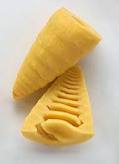
  Bamboos shoots, the tender young ones are edible and used extensively in South-East Asian cuisine. They taste sweet and are ubiquitous in stir-fries in the UK. These are rich in minerals and a useful source of the B-complex vitamins.
  There is no doubt that the bamboo has a lot to offer us and there are several research studies being carried out in institutes and universities around the world to discover just how useful it could be in the future.


STIR-FRIED CHICKEN AND BAMBOO SHOOTS
Ingredients
½ chicken breast, boned and thinly sliced
bamboos shoots, sliced
baby corn
1 inch root ginger peeled and finely chopped
2 cloves garlic, finely chopped
2 tbsp peanut oil
1 tbsp sesame oil
1 tbsp soy sauce
½ handful fresh chives, chopped
1 red or green chilli finely chopped
white wine (optional for thinning sauce)

Method
Heat the oils together in a frying pan or wok and when hot add chicken. Fry for 2 minutes then add the vegetables, chilli, garlic and ginger. Fry for another 2 mins and add the soy sauce and chives.
Heat through and serve on a bed of rice.
This has Taste and is a Treat.

Note: Add as many vegetables as you require.

CALAMINT -"LET NO WOMAN BE TOO BUSY WITH IT": HISTORY, HEALTH BENEFITS AND USES OF CALAMINT


CALAMINT, CALAMINTHA OFFICINALIS
Calamint gets its name from the Greek kala or kalos meaning good; it is a ‘good’ mint because it was thought to have the power to drive away venomous beasts and especially the king of the serpents, the dreaded basilisk. (Remember Harry Potter?) It is a member of the mint or Labiateae or Lamiaceae family of plants and is closely related to both catnip and ground ivy and with horsemint, peppermint, purple, yellow and white dead nettles, marsh woundwort, the teak tree, marjoram, basil, Holy basil, oregano, savory, thyme, lavender, lemon balm, Scarlet bee balm as well as bugle, motherwort, self-heal, the chaste tree, Jupiter’s sage, wall germander, Fragrant premna and hyssop to name just some of its relatives.
  It is also known as Mill Mountain, Mountain Balm or Mountain Mint and Basil Thyme, and can be used fresh or dried- leaves and flowering tops in a calming tisane. It can grow to around a foot high and can be found on mountains, in hedgerows – virtually anywhere, although its light purple flowers are insignificant. These bloom around July and August and the leaves and are best collected at the end of July or just before, when they are at their peak. This tisane will help relieve flatulence and stomach problems. A conserve of the flowering tops was made and given for hysterical conditions.
  Nicholas Culpeper writing his herbal in the 17th century had this to say of calamint: -
“Government and virtues. It is an herb of Mercury, and a strong one too, therefore excellent good in all afflictions of the brain; the decoction of the herb, being drunk, bringeth down women's courses, and provoketh urine; it is profitable for those that are bursten, or troubled with convulsions or cramps, with shortness of breath, or choleric torments or pains in the belly or stomach; it also helpeth the yellow jaundice, and being taken in wine stayeth vomiting; taken with salt and honey, it killeth all manner of worms in the body, it helpeth such as have the leprosy, either taken inwardly drinking whey after it, or the green herb outwardly applied; it hindereth conception in women, being either burned or strewed in the chamber; it driveth away venomous serpents. It takes away black and blue marks in the face, and maketh black scars become well-coloured, if the green herb be boiled in wine, and laid to the place, or the place washed therewith: being applied to the huckle-bone, by continuance of time it spendeth the humours which cause the pains of the sciatica; the juice, dropped into the ears, killeth worms in them; the leaves, boiled in wine, and drunk, provoke sweat, and open obstructions of the liver and spleen. It helpeth them that have a tertian ague, the body being first purged, by taking away the cold fits; the decoction thereof, with some sugar put thereto, is very profitable for those that are troubled with the overflowing of the gall, and also for those that have an old cough, and that are scarce able to breathe by shortness of their wind; that have any cold distemper in their bowels, and are troubled with the hardness of the spleen; for all which purposes both the powder called diacaluminthes, and the compound syrup of calamint, (which are to be had at the apothecaries,) are most effectual.”
Culpeper ends his description of its virtues with this warning: “Let no woman be too busy with it, for it works very violent upon the feminine subject”!!
  It was clearly used for a number of ailments, although the idea of using it as a contraceptive by “being either burned or strewed in the chamber” shows just how little the people of the 17th century understood about such  practices. The “huckle-bone” is the hip bone.
  There have been numerous studies on the properties of calamint, and it should be pointed out that its volatile oil, found in the leaves can be used in cookery. Like peppermint it is also used to flavour some pharmaceutical products. The oil has been found to have “non-selective central nervous system-depressant “properties as far as rats are concerned that is. (Journal of Medicinal Food Vol.14 (3) pp292-300, “Chemical composition and biological activities of Calamintha officinalis Moench essential oil” Monforte M.T. et al. 2011.)
  Another study has shown that “Probably the gastroprotective effect depends on a synergistic action of all the compounds occurring in C. officinalis leaves, even if the antioxidant potential of the leaves plays an important role by removing damaging agents from the gastric mucous.” “Protective Effect of Calamintha officinalis Moench Leaves against Alcohol-induced Gastric Mucosa injury in Rats” Monforte M. T. et al. Journal of Phytotherapy Research 2010.
  Calamint also shows possibilities for diabetes sufferers, and probably more evidence to support the traditional use of calamint will be found in the future.

KAPOK TREE - SAVED FROM BEING ENDANGERED BY MAN-MADE STUFFING: HISTORY AND HEALTH BENEFITS OF THE KAPOK TREE


KAPOK TREE, CEIBA PENTANDRA 
The kapok tree towers over the others in its native rainforests in South America and has made its way to West Africa where it has established itself. It is thought that the seeds floated between the continents of South America and Africa. In other parts of the world’s tropics, this tree has been planted as in the 1940s the kapok it produces was in demand for stuffing soft furnishings, car seats and life preservers. Now synthetic materials are used and perhaps this has saved the Ceiba pentandra from near extinction. However it is in danger in Costa Rica where it is felled to make pallets.
  Luckily the wood is not highly prized in the West but is used by people where it grows for coffins, dugout canoes and carvings. The kapok is the silky fine hairs which are attached to the seeds which grow in fruit after the white or perhaps pink flowers have fallen.
  This tree used to belong to the Bombacaceae family but it has been moved to the Malvaceae family. It is related to Bombax ceiba, the red silk cotton tree, which also produces kapok, as well as to the dinner plate tree, hollyhocks, the musk mallow, common mallow, Indian or country mallow, marsh mallowhibiscus, durian fruit and okra to name but a few of its relatives.
  In the rainforest it gives home and shelter to the bromeliads, frogs, birds and insects which find the nooks and crannies in its trunk very inviting. The flowers have a particularly unpleasant pungent odour which attracts the bats which are believed to pollinate it. The seeds in the fruit are oil-producers and this can be made into soap.
  The kapok tree has its medicinal uses too and these vary depending on where it grows, In Samoa the bark is used for asthma, while in the Philippines where trees were planted, the bark is regarded as useful for fever, as a diuretic, for diarrhoea and as a purgative. It is also applied to swollen fingers and wounds, while an infusion is used as mouthwash.
  A decoction of the flowers is given for constipation and an infusion of the leaves is used for coughs, hoarseness, catarrh and uterine discharge. The tender young leaves are used for gonorrhoea, as are the tender tap roots, which are also used in cases of dysentery. The unripe fruit is demulcent, emollient and astringent so useful to soothe the mucous membrane in cases of bronchitis and so on. A decoction of the roots is given for diarrhoea and chronic dysentery while the gum from the bark is astringent and styptic so good for wound healing. It is sometimes given in milk to children who have diarrhoea or who are incontinent.
  Clinical studies have shown that the stem bark has liver protective properties and the tree has antioxidant properties, (leaves and stem bark) while root extracts have been found to have anti-diabetic properties.
  This tree may have lost its raison d’être as far as  kapok for stuffing  goes, but it could have many health benefits for us.