SMALL-FLOWERED CHASTE TREE: HEALTH BENEFITS AND USES OF VITEX PARVIFOLIA


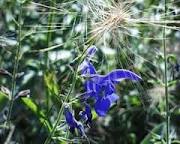
SMALL-FLOWERED CHASTE TREE, MOLAVE, VITEX PARVIFOLIA
The chaste tree (Vitex agnus-castus) is native to the Mediterranean region, while this is its close tropical relative. It is called Molave in the Philippines where it is a native. Native trees are also found in parts of Indonesia, but in other parts of the world it is believed to have been introduced. However it was listed in the IUCN Red list as Vulnerable in its native habitats in 1998 as it has been felled for its highly prized timber although there have been moves to replant trees which had been indiscriminately felled. The timber is prized in the tropics as it is termite and fungus resistant, making it valuable in the tropics.
  The tree is a medium height one which grows to between 30 and 38 metres high. It has smaller blue-lilac flowers than it Mediterranean relative, but is very attractive when in bloom and later the fruit appears, which is blue-black, and contains between one and four seeds.
  As a member of the Lamiaceae or Verbenaceae family it is also related to sage, lemon verbena, Prunella vulgaris (self-heal), Jupiter’s sage, horehound, Cretan dittany, Bugle, Peppermint, ground ivy, Scarlet Bee Balm, motherwort, wall or common germander, Fragrant Premna, the teak tree, marsh woundwort, white, purple and yellow dead nettles, Lantana camara or yellow sage and vervain, to name but a few of its relatives.
  The timber is used for a multitude of purposes including construction, houses, ship building, railway sleepers, and carving. The wood exudes a yellow resin-type substance when treated with lime and when the wood shavings are soaked in water a yellow weak dye is produced.
  The bark and wood are used in traditional systems of medicine in the Philippines and Indonesia, and in some parts of India where it is mixed with the bark of Terminalia cattapa or the Indian almond tree and used in baths for women who have just delivered a baby.
  It is used as a styptic, to heal damaged tissue in the form of a paste, and is mainly used as an emetic, to produce vomiting in cases of poisoning. For this purpose a decoction is made from the wood and the bark of the tree. The bark is also used in a decoction or infusion for diarrhoea, and in South East Asia it is used for stomach problems, anorexia, blindness, leprosy, intestinal worms and rheumatic swellings.
  The tree has now been planted in South America and other parts of the tropics in attempts to save it from extinction. The leaves are used as fodder and the timber for firewood. Hopefully this beautiful tree will be saved from the threat of extinction.

FLEABANE, LITTLE-USED PLANT TODAY: HISTORY OF USES OF FLEABANE


FLEABANE, PULICARIA DYSENTERICA  
This common fleabane is native to Europe and western Asia. It is a member of the daisy family or Asteraceae or Compositae family of plants, so if you are allergic to these, keep away from fleabane. As a member of this family it is related to pellitory or Roman chamomile, marigolds, purple goat’s beard (salsify), yellow goat’s beard, elecampane, the ox-eye daisy, holy thistles, costmary, tansy, feverfew, groundsel and yarrow, to name but a few of its relatives.
  A botanical synonym for it is Inula dysenterica Linn., while it is also known in English as fleabane mullet. It can grow to heights of around two feet and it looks like a golden daisy. Pulix, the root of the name of the genus, is Latin for flea.
  The leaves and roots of fleabane were used for dysentery, as the Latin name suggests as they have astringent properties. A paste made from the leaves has also been used for wounds and cuts, applied externally to heal them. The bruised leaves have a slightly soapy smell, and they were used in mediaeval times to repel fleas and other insects. The leaves were burned to rid a house of pests, hence the common name fleabane.
This is what the English herbalist Nicholas Culpeper, writing in the 17th century has to say about it:-
“Names: It is called also in English, mullet and in Latin conyza.
 Government and virtues. It is hot and dry in the third degree. The herb being spread under foot and smoked in any place, will drive away venomous creatures- and will kill and destroy fleas and gnats. An ointment of the roots and leaves is used with success for the itch.”
  He does not mention its use in dysentery as this was a continental remedy and the plant was not much used for medicine in Britain. There were other plants that were deemed efficacious for this.
  Modern clinical trials have shown that extracts of the plant have antimicrobial and antibacterial properties against some bacteria. It is thought that the insect repelling properties of the plant are due to its thymol content, as this has proved to have the ability to kill houseflies. Interestingly it has also been discovered that plants from different countries have different bioflavonoids in them, some have kaempferol while others contain more quercetin and so on.
  There is another plant which Culpeper calls flea-wort which was used in medicine in Britain, but this is not that plant, and they have different characteristics.

EUROPEAN LABURNUM: PRETTY BUT POISONOUS: HISTORY OS USES OF LABURNUM


LABURNUM, LABURNUM ANAGYROIDES
The laburnum tree is cultivated widely in Europe, particularly in Britain, because of its yellow flowers which hang in clusters but which later give way to poisonous seeds. I once lived close to one of these trees and can say that nothing could grow under it. It is a member of the Leguminoseae or Fabaceae family and so is related to the Indian laburnum or amaltas, carob, peas, beans such as the green bean, borlotti bean, soya beans, chickpeas and choliya, the tree from which we get gum Tragacanth, the butterfly pea, the trees, dhak, jhand, the Indian coral tree, the Borneo or Pacific teak, the Lead tree (Ipil –Ipil), the pongam tree, the monkey pod tree, ashoka, indigo, lentils, alfalfa, field restharrow and a whole host of other plants.
  A botanical synonym is Cytisus laburnum, so it is a close relative of broom, Cytisus scoparius.
  It looks very pretty, but it is poisonous and should be treated with care. It is indigenous to the mountainous regions of France, Germany and Switzerland, but can now be seen virtually all over Europe. Unfortunately the seeds can kill animals, and people. They contain the poisonous alkaloid, cystine, which may be a perfect insecticide, but cannot be used, for example to kill head lice in children (as can Stavesacre or Lousewort) because it may be absorbed through the skin. The poisoning can be fatal from ingestion of this plant, although there are some reports that this can be remedied by administering a violent emetic and then dosing yourself with whiskey or poisoned before having one!)
  It has been suggested that the seeds could be used for whooping cough and asthma, but again this has not been used because of the possibility of death occurring from the dosage which was meant to cure. (This is another plant, like aconite, either Monkshood or wolfsbane, which is best avoided.)
We know that this tree was introduced into England some time before 1597 as John Gerard, the 16th century apothecary and herbalist, wrote of having one in his garden. He called it Bean trefoil or Anagyris. The laburnum tree is called Faux ébénier in French - False ebony as its wood is used instead of ebony. It is hard and durable but coarse-grained and need to be highly polished. However it is used by turners and may be used for furniture or decorative items.
  This tree may be attractive when it is in flower, but if you have one near you – take care!

STAVESACRE - INSECTICIDE, BUT POISONOUS: HISTORY, USES AND HEALTH BENEFITS OF STAVESACRE


STAVESACRE, LOUSEWORT, DELPHINIUM STAPHISAGRIA 
Stavesacre is a really pretty tall flowering plant which is highly toxic. It contains diterpene alkaloids which can prove fatal. The symptoms begin with euphoria, followed by depression and extreme sensitivity of the nerves, then paralysis, the slowing of the pulse and respiration until finally it causes death by asphyxiation. It acts in much the same way as Monkshood or aconite (also blue-flowered).
  Stavesacre is clearly a corruption of its Latin name, staphisagria (say it and you’ll see how!) It was given the name lousewort, because its main use was to kill parasites, especially head lice in children. It was much used in the Middle Ages, when there were hygiene issues!
  Stavesacre is a member of the buttercup family, or Ranunculaceae, making it a relative of Lesser Celandine, marsh marigolds, black cohosh, wood anemones, goldenseal and wolfsbane (another aconite). It is a native of the Mediterranean region and southern Europe, and can grow to around four feet high, so is quite conspicuous.
  The seeds are the main parts used, and these are collected and dried for later use, although given the toxicity of this plant is best left alone. It was known to Dioscorides and Pliny who both mention its use as a purgative and for killing parasites and insects externally. It has been used for skin problems and was thought to be an effective wart remover.
  Nicholas Culpeper, the 17th century English herbalist had this to say about it: -
“Government and virtues. It is seldom given inwardly, being of a hot burning taste, though Sylvius de la Boe commends it from gr. xii. to a scruple in a dose, which purges upwards and downwards, causing a great flux of spittle; and is serviceable against the lues neverea. It is sometimes used in masticatories and gargarisms for the toothach. The vulgar use the powder of it to kill lice. The seeds are kept by the druggists, and they have been given in small doses against rheumatic and venereal disorders; they vomit and purge, and that in so rough a manner, that it is better to omit their internal use entirely. Chewed in the mouth, they excite a very large discharge of watery humours from adjacent parts, and frequently prove serviceable in disorders of the head; but they are chiefly used to destroy lice in children's heads, for this purpose the seeds coarsely powdered are to be strewed among the hair, and it never fails of destroying them.”