COMMON FIGWORT FOR RELIEF OF SCROFULA: HISTORY, USES AND HEALTH BENEFITS OF FIGWORT


KNOTTED FIGWORT, SCROPHULARIA NODOSA
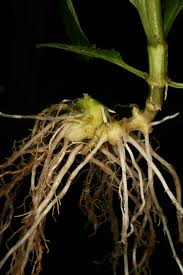
The knotted figwort is so-called because of the knobbly bits that form on its roots. Perhaps it is called figwort because the immature flowers look like tiny figs before they bloom. It is a member of the Scrophulariaceae family which makes it a relative of mullein, toadflax, foxglove, eyebright, snap dragon and brahmi or water hyssop among other plants.
  The name Scrophularia was given to this plant and the members of its family as it was believed that they could effect a cure for scrofula, which in the Middle Ages was known as the “King’s Evil” Morbus Regis in Latin. Scrofula is a tubercular swelling of the lymph glands, but in the 11th century, in England and France it was believed that the touch of the king could cure the disease. It began with Edward the Confessor, Edward I (1003/4 – 1066) and Philip I (1052-1108) of France. It was believed that the later generations of Kings inherited this royal touch which could cure the disease. When all else failed, I guess, the peasants turned to knotted figwort for a cure.
  During the Renaissance, and perhaps much earlier, it was recommended that this figwort was taken both internally and externally with the tisane of the root or the pounded root placed on the skin to get rid of all abscesses, sores, psoriasis, eczema and any other skin problem. The Romans used it for piles.
  In Welsh it was called Deilen Ddu, the good leaf, which shows the high repute in which this figwort was held. In Ireland it was known as Rose Noble and throatwort. In French it is the herbe du siège referring to the fact that the tuberous roots of this plant were eaten by the people of La Rochelle during the siege of the city by Richelieu’s troops in 1628.
(The roots are edible but do not taste good, so are only utilized as food in extremis.)
  Nicholas Culpeper, writing his herbal in the 17th century had this to say about the health benefits of figwort:-
“Government and virtues. Some Latin authors call it cervicaria, because it is appropriated to the neck; and we, throatwort, because it is appropriated to the throat. Venus owns the herb, and the Celestial Bull will not deny it; therefore a better remedy cannot be for the king's evil, because the Moon that rules the disease, is exalted there. The decoction of the herb taken inwardly, and the bruised herb applied outwardly, dissolves clotted and congealed blood within the body, coming by any wounds, bruise or fall; and is no less effectual for the king's evil, or any other knobs, kernels, bunches, or wens growing in the flesh wheresoever; and for the hæmorrhoids, or piles. An ointment made hereof may be used at all times when the fresh herb is not to be had. The distilled water of the whole plant, roots and all, is used for the same purposes, and drieth up the superfluous virulent moisture of hollow and corroding ulcers; it taketh away all redness, spots, and freckles in the face, as also the scurf, and any foul deformity therein, and the leprosy likewise.”
  Figwort is native to Europe including Britain, and to temperate Asia. It is best harvested as it comes into flower and then can be dried for later use. It can detoxify the body as it has laxative, mild diuretic and purgative effects, which is why it was taken internally as well as being applied to the skin, in the belief that it purified the blood. A decoction of the root was used to relieve sprains and swellings, inflammation and burns. Bruised leaves were also used on burns and scalds. An ointment was made from the plant, and it was a specific remedy for scrofulous sores and gangrene.
  The plant contains saponins, hesperidin, cardio-active glycosides, anti-inflammatory glycosides, alkaloids, flavonoids, iridoids and other substances which contribute to its actions. Harpagoside, an iridoid, is found in the knotted figwort, which is also present in devil’s claw, and is believed to have anti-inflammatory action of use in the treatment of arthritis.
  Diosmin, a flavonoid glycoside, is also present and this is believed to have a vascular-protecting action. The flavonoids present in the plant mean that it has antioxidant properties, anti-mutagenic actions and anti-inflammatory ones too.
  It is a heart stimulant and has antibacterial and antifungal properties, according to one study. It is believed to have a stimulating effect on blood circulation too, but more research needs to be done into the plant before scientists can positively identify the reasons for its apparent actions.
 

EYEBRIGHT - THE JOY-BRINGING HERB: HISTORY, USES AND HEALTH BENEFITS OF EYEBRIGHT


EYEBRIGHT, EUPHRASIA OFFICINALIS 
Eyebright is a plant which is native to western Europe including Britain and to East Asia. It is a member of the Scrophulariaceae or figwort family, so it is related to mullein, toadflax, foxglove, snap dragon and brahmi or water hyssop to name just a few of its relatives. It is the only one of the Euphrasia genus to be native to Britain.
  To me it looks a little like a viola but different colours. However I haven’t seen one in the wild for quite some time.
   As its name suggests Eyebright has been a remedy for eye complaints for centuries, although seems not to have been used by the Romans, as there is no mention of it in Pliny's or Dioscorides' works.
  It was, in Elizabethan times, used as a tisane and in an Eyebright ale and wine, used to clear the sight and for any eye problems that occurred. There has not been much research into the properties of this plant but some scientists have warned people not to use the herb for ophthalmic problems, although the European Medical Agency have basically said that there is insufficient evidence to say if it works or not, but it seems to, without any reported ill-effects.
  Nicholas Culpeper, the 17th century English herbalist had this to say of Eyebright:-
“Government and virtues. It is under the sign of the Lion, and Sol claims dominion over it. The juice or distilled water of eye-bright, taken inwardly in white wine or broth, or dropped into the eyes, for divers days together, helps all infirmities of the eyes that cause dimness of sight. Some make conserve of the flowers to the same effect. Being used any of the ways, it also helps a weak brain, or memory. This tunned up with strong beer, that it may work together, and drank; or the powder of the herb mixed with sugar, a little mace, and fennel-seed, and drank, or eaten in broth; or the said powder made into an electuary with sugar, and taken, has the same powerful effect to help and restore the sight decayed through age; and Arnoldus de Ville Nova says, it has restored sight to them that have been blind a long time before.”
  Arnaldus de Villa Nova lived between circa 1235 and 1311, and was an alchemist, astrologer and physician. He was the reputed author of many works including the first book on wine to have a mass (at the time) circulation. In quoting him, Culpeper demonstrates the antiquity of the use of the plant, and it should be noted that the medicinal wisdom of that time was very different from that of today.
  The genus name, Euphrasia comes from the Greek and could refer to one of the three Graces of mythology (Euphrosyne) who was renowned for her joy and mirth. It might also refer to the song bird, the linnet, which, it was said, removed the film from her nestlings’ eyes with this herb. Linnet is Euphrosyne in Greek. If your dimmed sight was restored, it would certainly make you feel joyful, so I guess that is the logic behind the herb’s name.
  The whole plant is said to have astringent properties (due to its tannin content) as well as being a diuretic, and digestive. The infusion of the plant can be taken internally or used as an eyewash. It has been dried and used in herbal tobacco for chest ailments. The iridoids in the plant are believed to be anti-inflammatory which is why it can relieve pain in the eyes.
  Eyebright contains the flavonoids apigenin, luteolin, kaempferol, rhamnatin and quercetin among others so will have antioxidant properties.
  Culpeper has this remedy in his herbal, which he calls “A Marvellous Water for the Sight”:-
 “… leaves of red roses, mints, sage, maidenhair (fern), (or leave out sage and mint) and take eyebright and vervain, bittony (betony), such of the mountain and endive (chicory) of each six handfuls; steep them in white wine 24 hours; then distil them in an alembic; first water is like silver, the second gold, the third like balme; keep it close in glasses.”
  Another remedy was similar but used the following ingredients, fennel, eyebright, roses, white celandine, vervain and rue and a handful of each with the liver of a goat. However this one is certainly not to be recommended.
  A more modern remedy using eyebright is to take equal parts of chamomile flowers and the eyebright herb (aerial parts) and infuse in 0.25 litres of freshly boiled water and leaves to steep for 15 minutes before straining through muslin and using as an eyewash. Alternately you can take three parts eyebright, and one part each of melilot and plantain dried, and add 1 soupspoon full to a cup of boiling water; again leave to steep for 15 minutes before straining and using as an eye compress.
  Eyebright has been mentioned by some of the great poets of English literature such as John Milton who wrote these lines in Paradise Lost Book XI after Adam’s Fall from Paradise: -
   “….Of nobler sights
Michael from Adam’s eye the film removed,
Then purged with euphrasine and rue
His visual orbs, for he had much to see.” 
Edmund Spenser also makes reference to Eyebright in the second book of the Faerie Queene and writing later, the Pre-Raphaelite poet, Dante Gabriel Rosetti wrote in his poem The Love-Moon:-
“How canst thou gaze into those eyes of hers
Whom now they heart delights in, and not see
Within each orb Love’s philtred euphrasy
Make them of buried troth remembrances?”
“With Euphrasy to purge away the mists
Which, humid, dim the mirror of the mind;”
  Clearly the herb had its followers, and is probably safe to use, although you should, of course, only do so under medical supervision.

BURMESE ROSEWOOD TREE- THREATENED IN NATIVE HABITAT: HISTORY, USES AND HEALTH BENEFITS OFTHE BURMESE ROSEWOOD TREE


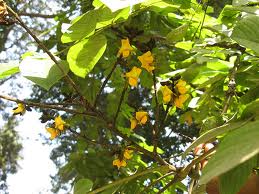
BURMESE ROSEWOOD, NARRA, AMBOYNA WOOD, PTEROCARPUS INDICUS 
This rosewood tree is native to south and south-east Asia and some Pacific islands. It is listed as Vulnerable in the IUCN Red List and has been extinct in Vietnam for 300 years or so. It is valued for its timber which is used in construction, boat and canoe building, furniture, tools and carvings. The heartwood is a beautiful light yellowish-brown through to red-brown while the sap wood is a creamy pale yellow. The heartwood yields a red dye.
  Narra is the Philippino name for this tree, although the same name can refer to other members of the Pterocarpus genus. It is valued not only for its timber but also for its medicinal properties. The tree has been introduced to the Caribbean islands, the Indian subcontinent and Sri Lanka, the Congo, Sierra Leone and Tanzania in the African continent, and Pacific islands to which it is not native. It is a member of the Fabaceae or Leguminoseae family of plants and so is a relative of the amaltas (Indian laburnum), the European laburnum, carob, peas, beans such as the green bean, borlotti bean, soya beans, chickpeas and choliya, the tree from which we get gum Tragacanth, the butterfly pea, the trees, dhak, jhand, the Indian coral tree, the Borneo or Pacific teak, the Lead tree (Ipil –Ipil), the pongam tree, the monkey pod tree, ashoka, indigo, lentils, alfalfa, field restharrow and a whole host of other plants.
  The genus name, Pterocarpus comes from the Greek, pteros meaning winged and karpos meaning fruit, which describes the seeds of this genus. It is known by other botanical names, which are not accepted, Pterocarpus camlinensis Kanch., and Pterocarpus draco as well as Pterocarpus indica.
  It is a useful tree as it fixes nitrogen in the soil and the leaves which fall help to enrich the soil. However it cannot be grown with food crops because it gives shade and is a tall tree which can reach heights of 35 metres plus. It is, however, a useful windbreaker and living fence.
  It has lost some of its natural habitat which has contributed to its decline, but the illegal logging and exploitation of this tree for its timber is the main factor in this decline. In the Philippines in recent years, the tree has become a source of popular herbal remedies for such diverse health problems as headaches, rheumatoid arthritis, leprosy, T.B., menstrual cramps, diabetes and flu. As the bark and wood are employed in herbal remedies this growth in popularity may cause further depletion of these trees.
  Traditionally in the Philippines the bark has been used in a decoction for diarrhoea, and the root extract for syphilitic sores, a decoction of the gum or resin from the trunk of the tree has been used for diarrhoea and dysentery, while an infusion of the leaves has been used for stomach problems, and sprue, which is a tropical disease affecting the throat, mouth and digestive system. The infusion is also used for arrhythmia, and heart palpitations, rheumatism and leucorrhea.
  The fresh young leaves are used for skin problems including prickly heat rash, and sores, and they are also used for the same purposes in Indonesia.
  In Malaysia the juice extracted from the roots is used for syphilitic sores and mouth ulcers. The bark is used in Papua New Guinea for T.B. headaches, sores and as a purgative, while in the Solomon Islands it is used for dysentery, heavy menstruation, and gonorrhoea. It is also used for similar purposes in Vanuatu, but it is also used as a vulnerary there (for wound healing).
  The tree has many medicinal properties it would appear, and it would be sad if it became extinct because of our beliefs that it is medicinally useful. Unscrupulous people are not above illegal logging to make a profit on the next “wonder plant.”

FLIXWEED OR FLUXWEED - POPULAR OLD REMEDY FOR DYSENTERY: HISTORY, HEALTH BENEFITS AND USES OF FLIXWEED


FLIXWEEED, FLUXWEED, DESCURAINIA SOPHIA 
This plant is native to Europe, North Africa and both temperate and tropical Asia. In the past it was used in traditional medicine for dysentery, hence the name fluxweed. It is sometimes called mustard tansy, (Not Tansy) although there is another plant with this name, Descurainia pinnata, a close relative.
  Fluxweed is in the Brassicaceae or Cruciferae family which makes it a relative of the Savoy cabbage, red cabbage, broccoli, kale, kohlrabi, brussel sprouts and collard or spring greens. It contains vitamin C and is edible as is scurvy-grass. Its tender young shoots and leaves may be cooked and used as a vegetable or a pot herb although they are somewhat bitter; they may also be added raw to salads. The plant is, after all a member of the mustard group of plants. The seeds are edible both raw and roasted and may be added to cornmeal to make bread or polenta and can also be used to thicken soups and sauces. Ground and then made into a thin paste with water the seeds form the basis of a cooling, nourishing drink.
  In German the herb is known as Sophienkraut the herb of Saint Sophia who was invoked in past times to prevent late frosts occurring by people who had arable crops such as rye, barley and oats.
  The ancient herbalists called this plant “Sophia chirurgerum” the ‘wisdom of surgeons’, showing how highly esteemed it was. It was renowned for its wound healing properties in the past.
  It was also considered to be effective for sore and ulcerated throats, when equal parts of the juice of fluxweed and honey and vinegar were mixed and taken as a gargle.
  The whole plant has been used as a poultice for toothache, and the flowers and leaves have astringent properties, which is why it is good for dysentery and wound healing. The seed is considered to be a cardio-tonic, demulcent (soothing the mucous membranes) a diuretic, expectorant used for coughs, a laxative and tonic, as well as being able to reduce fevers. The seeds are sometimes used in a poultice, ground, and put on burns scalds and sores.
  Writing in the 17th century, the English herbalist Nicholas Culpeper has this to say of it:-
“Government and virtues. This herb is saturnine also. Both the herb and seed of Flux-weed is of excellent use to stay the flux or lask of the belly, being drank in water wherein gads of steel heated have been often quenched; and is no less effectual for the same purpose than Plantain or Comfrey, and to restrain any other flux of blood in man or woman, as also to consoladate bones broken or out of joint. The juice thereof drank in wine, or the decoction of the herb drank, doth kill the worms in the stomach or belly, or the worms that grow in putrid and filthy ulcers, and made into a salve doth quickly heal all old sores, how foul or malignant soever they be. The distilled water of the herb works the same effect, although somewhat weaker, yet it is a fair medicine, and more acceptable to be taken. It is called Flux-weed because it cures the flux, and for its uniting broken bones, &c.. It is uniting broken bones, &c. Paracelsus &c extol it to the skies. It is fitting that syrup, ointment, and plaisters of it were kept in your house.”
  In clinical trials it has been found to have analgesic (mild pain-killing) properties plus antioxidant, antipyretic, antimicrobial and anti-inflammatory ones. One or two studies claim that it has some anticancer properties too and inhibits the growth of cancerous cells. It also has insect repellant properties and repels in particular, mosquitoes and sand flies.
  Fluxweed is cultivated in Afghanistan and China and used for digestive problems, so it’s a very versatile herb.