MOTHER OF THYME OR WILD THYME, OFTEN CULTIVATED: HISTORY, USES AND HEALTH BENEFITS OF MOTHER OF THYME


MOTHER OF THYME, WILD THYME, CREEPING THYME, THYMUS SERPYLLIUM 
Wild thyme or mother of thyme is less common than common thyme which also grows wild. It has been cultivated for century in gardens in Europe and is native also to North Africa, western Asia and Scandinavia. It is closely related to ajwain and thyme, and is a member of the mint or Labiatae or Lamiaceae family of plants. As such it is a relative of calamint, sage, Jupiter’s sage, peppermint, horehound, self-heal, the chaste tree and the small-flowered Chaste tree, ground ivy, the teak tree, yellow, purple and white dead nettles, motherwort, fragrant premna, common germander, Cretan dittany, bugle, Scarlet Bee Balm and marsh woundwort, oregano and other culinary herbs. In Urdu it is called Ban Ajwain.                                                                                  
  The leaves contain an essential oil which is used in perfumery, and you can make your own fragrant water by steeping the flower heads in salt and water for at least 24 hours. The leaves can be added to soups and stews, or to bouquet garni for flavouring and they also go well with vegetable dishes, and are used to good effect with courgettes and mushrooms.
  The essential oil distilled from its leaves is used as a disinfectant, as mouthwash, and it is also an insect repellant. It also has antiseptic and fungicidal properties. A Romanian study has found that the plant possesses antioxidant properties and other studies have shown that it has antimicrobial properties and can be used against candida.
  The Romans believed that it was a mood enhancer and gave it to those who suffered from melancholia. It was later believed to be a favourite flower of fairies in much the same way as bluebells were, and it was a fairy playground where the plants proliferated. Shakespeare used this idea in his play “A Midsummer Night’s Dream” Act 2 scene i: -
“I know a bank whereon the wild thyme blows,
Where oxlips and the nodding violet grows
Quite over-canopied with luscious woodbine,
With sweet musk-roses, and with eglantine:
There sleeps Titania some time of the night,
Lulled in these flowers with dances and delight;
And there the snake throws her enamelled skin,
Weed wide enough to wrap a fairy in.”
 In European traditional medicine it has been used to get rid of flatulence and intestinal worms, for its deodorizing properties, as an antispasmodic, expectorant, and general tonic. In India and Pakistan it is used in the treatment of whooping cough, asthma, and respiratory inflammation because of its antispasmodic properties. It is also used for back-ache.                                                                                                              
  In Wales it used to be planted on graves, and an old folk tale says that it was the fragrant herb which formed the Virgin Mary’s bed.
  A tisane made with the leaves and flowers (1 ounce of dried herb to 1 pint of boiling water left to steep for 15 minutes before straining and drinking in 1 tablespoon doses frequently) was given for chest complaints, weak digestion and flatulence. Mixed with rosemary and lemon balm with a little honey to sweeten it, the tisane was given for nervous complaints and headaches (especially, says Culpeper, those caused by a hangover).
  Writing in the 17th century, the English herbalist, Nicholas Culpeper has this to say about Mother of Thyme: 
“Government and virtues. The whole plant is fragrant, and yields an essential oil that is very heating. An infusion of the leaves removes the head-ach, occasioned by the debauch of the preceding night.
Mother of Thyme is under Venus. It is excellent in nervous disorders. A strong infusion of it, drank in the manner of tea, is pleasant, and a very effectual remedy for head-achs, giddiness, and other disorders of that kind; and it is a certain remedy for that troublesome complaint, the night-mare. A gentleman afflicted for a long space of time with this complaint in a terrible manner, and having in vain sought for relief from the usual means employed for that purpose, was advised to make trial of the infusion of this plant, which soon removed it, and he continued free for several years, after which the disorder sometimes returned, but always gave way to the remedy.”

FROSTWORT OR ROCK ROSE, FOR RELIEF OF SCROFULA: HISTORY OF USES OF FROSTWORT OR FROSTWEED


FROSTWORT, FROSTWEED, ROCK ROSE, HELIANTHEMUM CANADENSIS
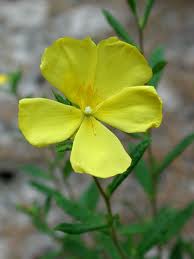
Frostwort is native to North America, and was regarded as a curiosity by early botanists. In the early morning, moisture from the soil is driven upwards through the roots and this causes cracks just where the base of the stem rises above the ground. The stem bursts and this moisture becomes particles of ice in the cold temperatures in winter. This is why it is called the Frostwort or Frostweed.
  Frostwort has other synonyms for its genus, these being, Cistus canadensis, LinnĂ© and Croeanthemum canadense. Helios is the Greek word for sun, and anthemum means flower so its genus names mean sunflower from Canada.
  Professor Amos Eaton (1776-1842) noted the phenomenon but did not know how it was caused. This is what he observed:                                                           
  “In November and December of 1816 I saw hundreds of these plants sending out broad, thin, curved ice crystals, about an inch in breadth, from near the roots. They were melted away by day, and renewed every morning for more than 25 days in succession.”
  Like figwort in Europe this plant was used to treat scrofula, although it is not in the Scrophulaceae family, but the Cistaceae one. The whole plant was used in traditional medicine, being bitter and astringent due to the presence of tannins. The stem and leaves of the plant are covered in soft white hairs, and it is a branching plant with the branches growing longer than the main stem. It produces yellow flowers between the months of May and July. It grows to between 8 inches and 2 feet.
  The plant is used in infusions and stronger decoctions to treat a number of illnesses. An infusion of it is used for diarrhoea and dysentery and an infusion of the leaves is used for kidney problems and a gargle for sore throats. This is the tisane. The stronger decoction of the leaves was used for scrofula and was also used as an eyewash for infections and for skin problems externally. A poultice of the leaves was also applied in cases of skin problems. It was thought to be very efficacious as a wash for scrofulous sores and ulcers on the skin.
  The plant produces an oil which was said to be a good treatment for cancer. Traditionally the plant was used for secondary syphilis and a number of other ailments. There is no or little scientific evidence as yet to support the traditional uses of Frostweed.

HARDY OR BABY KIWI FRUIT AND TARA VINE: HEALTH BENEFITS OF BABY KIWI AND BABY KIWI AND ORANGE SODA RECIPE


BABY OR HARDY KIWI, TARA VINE, ACTINIDIA ARGUTA
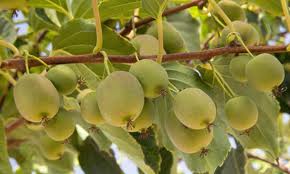
In comparison to the kiwi (Actinidia delicosa) we know, this one is tiny, with a smooth, rather than brown hairy, skin which can be eaten safely. It is about one third of the size of its hairy relative, and comes in a variety of colours, green, yellow and red. It can grow in very cold climates withstanding temperatures of -34° C or -30°F, hence its name the Hardy kiwi. This baby kiwi is native to Siberia,, China and Japan, but is now being cultivated in the West where growers are trying to increase the vine’s yields of fruit. It is currently being produced in South America, Britain, New Zealand, Australia, parts of the USA, Canada and Europe.
  This baby kiwi (which grows to lengths of 2 or 3 centimeteres) has five times the vitamin C of blackcurrants and is sweeter than the bigger kiwi fruit which is native to southerly climates. It flowers between June and July and the fruits ripen around October. The vine can grow to around 50 feet if it is well-supported.                                           

  This baby kiwi and its vine were first described by Philipp Franz von Siebold and Joseph Gerhard Zuccarini in 1843 on their Far Eastern travels. They gave it the genus name Trochostigma argutum.
  Interestingly, in parts of New England where it is being grown now, it has invaded woodland and may soon be a listed invasive species in some North American states.                                   
  The Chinese have traditionally used this fruit for digestive problems and eat it either fresh or dried. In Russia it is made into a paste with the red berries from the Magnolia vine to counteract their possible tartness.
  The vine is full of sap, which can be tapped in spring and drunk as a spring tonic. Scientists have found that this baby kiwi may have potential health benefits, as it has been used in China to treat oesophageal cancer, and stomach cancers. In the lab, in vitro, it has been found to have an inhibitory effect on human liver carcinoma cell lines (HEPG2) and on HT-29, human colonic cancer cell lines. However more research is needed before the activities can be confirmed.
  In China the fruit is also used traditionally to get rid of flatulence to promote blood circulation and to help in the treatment of jaundice and dysentery.
  You may like to try this recipe for a healthy drink if you find any of these sweet baby kiwis.
 
KIWI AND ORANGE SODA
Ingredients                                                                                                   
½ cup of freshly squeezed orange juice
1/3 cup pureed baby kiwi flesh
¾ cup of soda water
red kiwis
Garnish
Sprigs of fresh mint or lemon slices

Method
Combine the kiwi puree and orange juice in a blender.
Add about half a cup of this mixture to a tall glass, and top it up with soda water. Add ice and a garnish if you wish.
This has Taste and is a Treat.

MAGNOLIA VINE, WU WEI ZI - ANOTHER STRESS RELIEVER: HISTORY, HEALTH BENEFITS AND USES OF THE MAGNOLIA VINE


MAGNOLIA VINE, WU WEI ZI, PINYIN, SCHISANDRA CHINENSIS 
The Magnolia Vine is native to East Asia, China, Japan and Korea. It is known as Wu Wei Zi in China, which means “five-flavour berry”, or pinyin. It is a member of the Schisandraceae family and it is also known by other genus names including Schisandra japonica, Kadsura chinensis, Maximowiczin chinensis and Sphaerostema japonicum.
  In China it is one of the Fifty Fundamental Herbs as is Marlberry, (Ardisia japonica), cinnamon, the tea plant Camellia sinensis, milk vetch or Huang qi (Astragalus membranaceus) and jamalgota (Croton tiglium), among others.                         

  It is often used in China as a substitute for Asian ginseng, Panax ginseng, as a tonic for both male and female reproductive organs. In other words, it is considered to be an aphrodisiac. It has been used for thousands of years in China to improve the ageing memory, and for a multitude of illnesses. The parts used are the red berries which hang from the woody vine in bunches, rather like small red grapes or red currants. These are dried and used to improve stamina and lessen fatigue. In the dim and distant past they were used by travelers to combat weariness on long and difficult journeys.
  The fruit can be eaten straight off the vine or cooked, as well as dried. In Russia a paste is made of the berries along with those of Actinidia arguta, to balance the acidity. The berries contain sugars and are sour-sweet to taste.
  Some of the first scientific studies on the berries were carried out in the former USSR and it is now in the State Drug Register and the Pharmacopoeia of the Russian Federation. They first discovered its qualities as an adaptogen, a substance which helps to relieve stress, whether physical, mental or emotional, so it is used rather like rose root, milk vetch, American ginseng and Eleuthero. It can help to lower blood pressure and has potent antioxidant activities, making it heart- protective and of course a useful anti-cancer treatment. The seeds seem to have most potency against cancer according to some studies.                                                                                         
 The berries stimulate the immune, endocrine (glandular), central nervous, gastro-intestinal and cardiovascular systems, and the extracts from them increase physical endurance, mental performance, and lessen depression, and some of the symptoms of alcoholism such as delirium tremens. Extracts have shown to be liver-protective in studies on rats but these effects have not been studied in humans.
  It is believed that it produces mental clarity by detoxifying the body and it is thought that glutathione is the enzyme responsible for this action.
  It has been proven to help ward off colds and flu because of its action on the immune system, and it has been used to treat pneumonia, asthma, sinusitis, and many other diseases. A decoction of the branches and twigs has been used as a treatment for coughs, dysentery and gonorrhoea. Apparently the berries also have astringent properties making them good for wound healing.
  The branches have a gummy substance in them and this has been used to size paper and as a dressing for hair; while the dried wood is aromatic and can be used in pot pourri.
  Further studies are needed to discover if it really does help to lower blood sugar levels and to have an anti-cancer effect. The magnolia vine is a plant to watch out for in the future.