MEXICAN MINT MARIGOLD - PLANT OF THE AZTECS: HISTORY, HEALTH BENEFITS AND USES OF MEXICAN MINT MARIGOLD


MEXICAN MINT MARIGOLD, TAGETES LUCIDA
The Mexican mint marigold is native to Mexico and Central America to Guatemala. The 16th Century Spanish explorers called it “cloud plant” and it has since acquired many other names such as sweet mace, yerba anis, Spanish tarragon, and it is substituted for French tarragon (Artemisia dracunculus) in cooking. It is a member of the Asteraceae or Compositae family so is related to that tarragon as well as to the common wormwood, southernwood, daisy, sunflower, pellitory or Roman chamomile, marigolds, bur marigoldspurple goat’s beard (salsify), yellow goat’s beard, the Sea Aster or Sea starwort, michaelmas daisies, elecampane, the ox-eye daisy, holy thistles, costmary, tansy, feverfew, groundsel, fleabane and yarrow, just to list a few of its relatives.                                                                                                                
  It was a herb much used by the ancient Aztecs, who, so legend has it administered it to their sacrificial victims before they were killed. It was believed to have sedative an psychotropic effects.

  In medicine it was used for all manner of ailments, including the common cold, colic, malaria and intermittent fevers, and a poultice of the leaves was applied to snake bites. They also used the herb for gout, swellings, digestive problems and so on.
  The plant can help to repel worms in a garden, and also slugs, but to a lesser extent; it exudes a substance from its roots that protects it from weeds such as couch-grass and this also repels bugs.
  The dried plant was burnt as incense and also when burnt it repels insects and is considered an effective insecticide.
  The plant grows to heights of around three feet by one and a half feet, and blooms in August and September. It was used as one of the flavourings in the Aztecs cocoa-based drink, chocolatl, and both the petals and leaves are edible.                                                                                                            
  The Aztecs rubbed the flowers and leaves into their hands and then washed them, leaving their hands smelling sweet. The leaves are used to make a tisane which tastes like liquorice and anise mixed.

  Extracts of the plant have been found to have antimicrobial, antifungal and antibacterial properties as well as antioxidant ones.  The whole plant can help with digestion, and is a diuretic, and used to bring down the temperature in fevers. It depresses the Central Nervous system, and is reputed to lower blood pressure and to be a narcotic and sedative. However its narcotic and hallucinogenic effects have yet to be scientifically explained.
  The Huichol people smoke it with Nicotiana rustica a wild tobacco, for the psychotropic effects it has been reported. Methyl eugenol has been extracted from the plant and this has a slightly narcotic effect. Anethole, also present in it has similar effects to adrenaline which the body produces naturally, and this can be a mild stimulant.
  The tisane from the leaves or a stronger decoction is taken to relieve diarrhoea, nausea and vomiting, hiccups and fevers. It tastes very pleasant and can be sweetened with honey if required.                                                            
  The plant can be made into garlands and can be harvested when still in flower and dried for later use. The flowers produce a yellow dye, and it figures prominently in the Day of the Dead celebrations, when it is place on the graves of deceased family members.

  The genus name Tagetes is believed to have come from the myth of the Etruscan god, Tages who was supposed to be the grandson of Jupiter, a boy who sprang or was ploughed up from the earth, and who had the wisdom of a sage despite his youth. “Lucida” means clear and bright and either refers to the visions one has if one uses the plant for it psychotropic effects, or to the brightness of the flowers which may have reminded people of the brightness of the sun.
  

ICELAND MOSS - ACTUALLY A LICHEN: HEALTH BENEFITS AND USES OF ICELAND MOSS


ICELAND MOSS, CETRARIA ISLANDICA 
Iceland moss is a lichen and not a moss, and grows prolifically in Iceland, hence the name. It is in the Parmeliaceae family of plants and grows to a mere four inches high but has a spread of around two feet. 
It can be found in the Arctic, in Britain, particularly in Scotland, Northern England and North Wales, in North America and south western Ireland. It can be almost any colour in the spectrum from light grey through green to dark brown. Another name for Iceland moss is eryngo-leaved liverwort,.
  In traditional medicine it has been used for pulmonary complaints, peptic and duodenal ulcers and gastric problems. It has a soothing action on the mucous membranes and was used for coughs, bronchitis and other chest complaints as well as for food poisoning and T.B. It is also used to promote appetite. It is said to be good to stop vomiting and feelings of nausea too.
  Today it can be found as an ingredient in toothpaste, and as a baking ingredient. It can be dried and ground and used with wheat flour to make bread. It can also be used to make confectionary, in which case it is made into a jelly and combined with lemon, sugar, chocolate, or almonds. In the 19th century it was drunk with cocoa sweetened with sugar for a really wholesome drink in cases of colds and flu.
  The whole herb can be used although it has some lichen acids in it which have to be leached out before using internally. This is a tedious process, involving pounding the dried herb to a powder and soaking it in lye or filtering it through ash. Alternatively a jelly can be made from the whole plant by boiling it in water and changing and discarding the water twice- much easier to do. This process removes the bitterness of the plant.
  In traditional medicine systems in Europe Iceland moss is used to treat cancer and as an antibiotic, demulcent (soother).and tonic for the stomach. It is also believed to be a galactagogue, which means that it increases the flow of breast milk in breast-feeding mothers. Externally it is used to treat excessive vaginal discharge, boils, impetigo and to heal stubborn wounds.    
   The German Commission E has approved its use for loss of appetite, inflammation of the mouth and throat, coughs, bronchitis and dyspepsia. The whole plant gives a brown dye, and the antibiotic principle from the plant is used in disinfectant. The plant has potent antioxidant properties and has been found to boost the immune system. A new polysaccharide was found in the plant in 1994 which showed “immunostimulating activity” in vitro (Planta Medica 1994 Vol. 60 (6) pp 527-8 “Immunologically active polysaccharide from Cetraria islandica” Ingolfsdottir, K. et al)
  It has been deemed safe for use because it has been traditionally used in medicine for centuries. Research still needs to be done to allay criticisms of the German Commission E’s decision                                                                                              


BLOOD FLOWER, PERHAPS AN AGENT THAT WILL ASSIST IN OUR FIGHT AGAINST CANCER: HEALTH BENEFITS AND USE OF BLOOD FLOWER


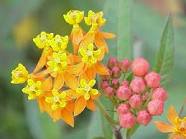
BLOOD FLOWER, MEXICAN BUTTERFLY WEED, ASCLEPIAS CURASSAVICA 
This flower is native to the South American continent although it has now spread throughout the tropics and subtropics. It is related to the common milkweed, and is in the Asclepiadaceae family, and is a relative of aak (Calotropis procera).
  The genus name Asclepias is in honour of the Greek god of medicine, Asklepius or Asklepios, who was the son of Apollo, but who was brought up by Chiron the centaur who trained him in the art of medicine. Unfortunately Asklepius angered Zeus the Father of the gods because he upset the balance and natural order of nature by bringing the dead back to life. He was killed by Zeus’ thunderbolt and became a constellation. Because of this association with the god of medicine, we understand that the genus was considered to have medicinal properties by ancient peoples.
    The beautiful flowers of this plant attract the Monarch butterfly which lays eggs on it and also hummingbirds. The different coloured flowers on the same flower head remind me of those of Yellow sage or Spanish Flag,(Lantana camara). The flowers bloom between June and October, giving way to downy seeds.
  The sap from these plants can cause dermatitis, but diluted and used to get rid of intestinal worms. It is poisonous if ingested. Although the plant is not native to Australia the Aborigines there use it to kill fish and believe it to be a love charm.
  The roots are used in traditional medicine systems for their anodyne (pain relieving properties) and extracts of the roots have been shown to have antimicrobial, antifungal and antibacterial. (“Evaluation of antimicrobial activity of root extract of Asclepias curassavica”, Hemavani. C. and B. Thippeswamy in Recent Research in Science and Technology 2012, Vol. 4 (1): pp.40-43)
They are insecticidal too, and were used to clear buildings of insects, particularly fleas.                                                          
  In the Ayurveda system of medicine in the Indian subcontinent the plant is used to promote sweating in fevers, to get rid of intestinal worms, as a purgative and emetic, (so the system is cleansed thoroughly by expelling excrement and vomiting) for stomach tumours, piles, and gonorrhoea. The milky latex is used to get rid of warts and corns.
  In traditional medicine in China it is used for fever, to improve blood circulation and control both external and internal bleeding. The whole plant is dried and then made into a decoction as a cardiac tonic, for tonsillitis, bronchitis and pneumonia as well as for urethritis, and both internal and external bleeding. The latex from the plant is used to inhibit Candida growth.In some countries it is substituted for sarsaparilla in medicine.
  The root has antioxidant properties and antibiotic ones according to the research evaluation mentioned above.
  Calotropin has been isolated from the plant and this is a cytotoxic principle in vitro against cancer of the nasopharynx. “Calotropin, a Cytotoxic Principle Isolated from Asclepias curassavica L.”; S Morris Kupchan, John R Knox et al in Science 25 Dec 1964: Vol. 146. no. 3652, pp. 1685 – 1686.
   It has been used to staunch bleeding and has styptic properties and this has been borne out by the following research which concluded thus: “Cysteine proteases from Asclepias curassavica latex exhibited strong pro-coagulant action and were found to be specific in its action (Thrombin like). This could be the basis for the use of plant latex in pharmacological applications that justify their use as folk medicine.” (Journal of Ethnopharmacology. 2009 May 4; 123 (1):106-9. Thrombin like activity of Asclepias curassavica L. latex: action of cysteine proteasesShivaprasad H. V. et al.)
  It has also shown to have some Chemopreventive properties as outlined in Chemopreventive potential of β-Sitosterol in experimental colon cancer model - an In vitro and In vivo study” by Albert A Baska, Savarimuthu Ignacimuthu, Gabriel M Paulraj and Khalid S Al Numair in BMC Complementary and Alternative Medicine 2010.
  This plant clearly has some potential health benefits for us, as more research will doubtless show. It is not only here for the benefit of the Monarch butterfly.

JOINTFIR OR MORMON TEA PLANT: PROBABLY DOES NOT CONTAIN EPHEDRINE: HEALTH BENEFITS OF MORMON'S TEA


MORMON TEA PLANT, JOINTFIR, EPHEDRA NEVADENSIS 
The evergreen shrub known as Jointfir, or Mormon Tea plant is native to the south-western US. As the Mormons are not allowed to drink coffee because it is a stimulant (containing, as it does, caffeine) the twigs of this plant are used to make a tisane or tea, hence the name. The plant does not have leaves as such but has spiky green twigs, which resemble a fir tree’s needles (for example those of the European silver fir).
  The flowers are reminiscent of those of the Greek mountain tea plant, and these bloom in April through to the end of June. The fruit is a smooth brown nutlet which can be cooked although it tastes bitter, and it may be roasted and ground to make flour for using in making bread.
  This plant is in the Ephedraceae family, making it a close relative of the Sea grape, Ephedra distachya. Because it is in the Ephedra genus, it was supposed that it has the same properties as other plants in that genus; but it seems that this is not the case. This plant contains no, or very few, Ephedra alkaloids, according to the European Food Standards Agency’s (EFSA) report of 2009. That being the case, most of what has been written about the plants’ psychoactive properties online is probably not true.
  Mormon tea is made by taking the twigs of the plant and infusing them to make a tea or tisane. Both the fresh and dried twigs can be used, and for drying purposes the green twigs can be harvested at any time of the year.
  Traditionally the tea was made by Native Americans who used it medicinally as a blood purifier, diuretic and to lower the temperature of the body during fevers. It was also used as a general tonic and for kidney, urinary-genital problems and STDs.
  The plant does not contain ephedrine, or at least, not much, so all the literature regarding this compound does not apply to this particular member of the Ephedra genus.            
  The fruit from the plant can be eaten raw, although it is a little bland, but sweet, and the twigs can be chewed to treat the symptoms of asthma, but not the root cause. It makes respiratory problems easier, but does not cure them.
  There are rarely any side effects if you drink Mormon tea in moderation, although you may experience some if it is drunk to excess.
  The plant does contain the compounds, kynusenates, which have antimicrobial properties, and it is a very effective diuretic and because of this property, it can contribute to weight loss.